



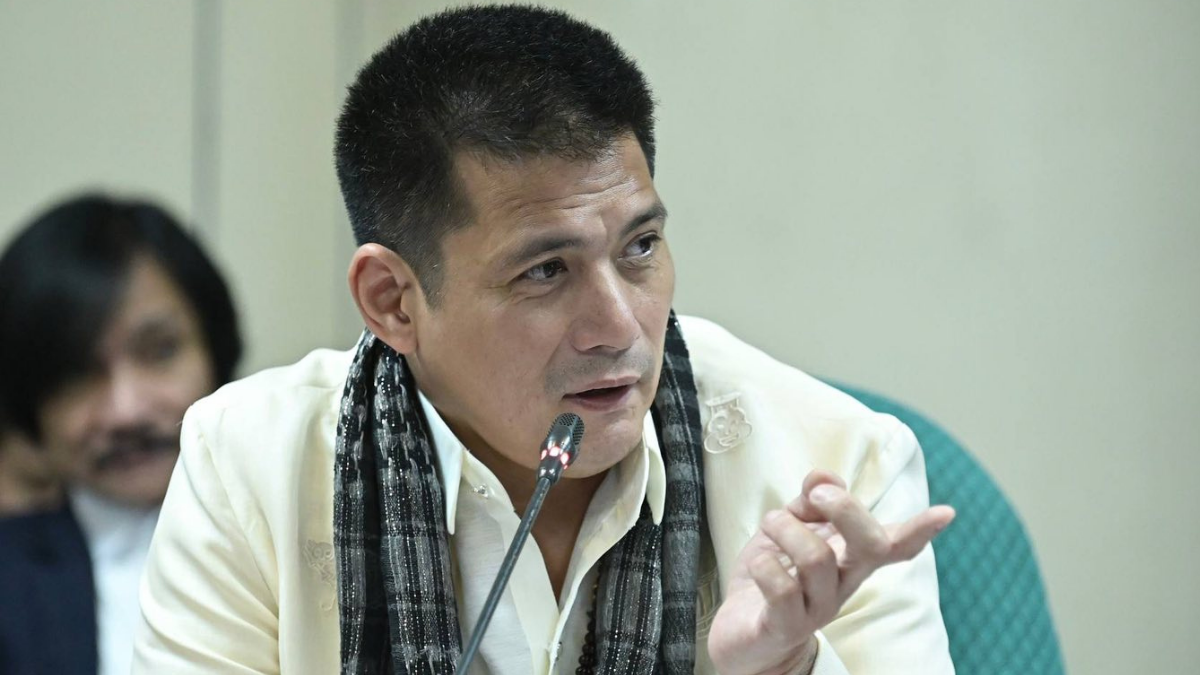

Whether online character assassination should be treated as a security concern that allows swift removal of posts became a point of contention during a Senate hearing on disinformation, after Sen. Robin Padilla challenged current limits on social media enforcement.

The question surfaced as the Senate committee on public information and mass media reviewed proposals intended to curb the spread of fake news. Padilla raised the issue directly with law enforcement and justice officials, arguing that reputational attacks against senior officials could carry broader implications for public order.
Police Colonel Alex Lorenzo of the Philippine National Police Anti-Cybercrime Group (ACG) outlined the hurdles authorities face when dealing with harmful online content. He said social media platforms permit immediate takedowns only under specific categories set by their own rules, citing national security threats, terrorism, and cases involving women and children as examples recognized by Meta, formerly Facebook.
Padilla interrupted to question those limits, pointing to what he described as a recent character attack against Senate President Vicente “Tito” Sotto III. He argued that targeting the country’s third-highest-ranking official could reasonably be viewed as a national security concern. “Isn’t that a threat to national security, since that person holds the third-highest position in our country? First is the president, then the vice president, followed by the Senate president. Wouldn’t that be considered a security threat, Sir?” he asked.
Lorenzo responded that the ACG does not have unilateral authority to order removals, explaining that the group can only submit requests to platforms, which then assess them using their community standards. When Padilla pressed on whether character assassination could be added as a basis for immediate action, Lorenzo reiterated that such standards are determined by the companies themselves.

For cases that fall outside those categories, Lorenzo said complainants must go through formal channels, starting with filing a report with the ACG. From there, authorities can relay complaints to platforms or pursue legal remedies. He noted that the ACG may seek court orders to compel disclosure of digital data, a process that often takes considerable time.
Padilla expressed frustration with the delays, stressing the need for rapid action. “The main concern, Sir, is for the content to be taken down immediately. That case really takes a long time, Sir. I might be the one with the record with the fastest time to get jailed in the Philippines,” he said, referring to his four-year imprisonment in 1994 for illegal possession of firearms.
He later posed the same question to the Department of Justice, asking whether character assassination could be incorporated into the standards used by social media platforms. State counsel Khersien Bautista echoed the position of the police, saying the government cannot force platforms to expand their internal rules.
Padilla countered that companies operating in the country should be bound by Philippine law. Bautista acknowledged that under the Cybercrime Prevention Act, the Philippines has jurisdiction over online platforms, but added that authorities still lack a mechanism to compel immediate compliance with takedown requests issued by law enforcement.
