



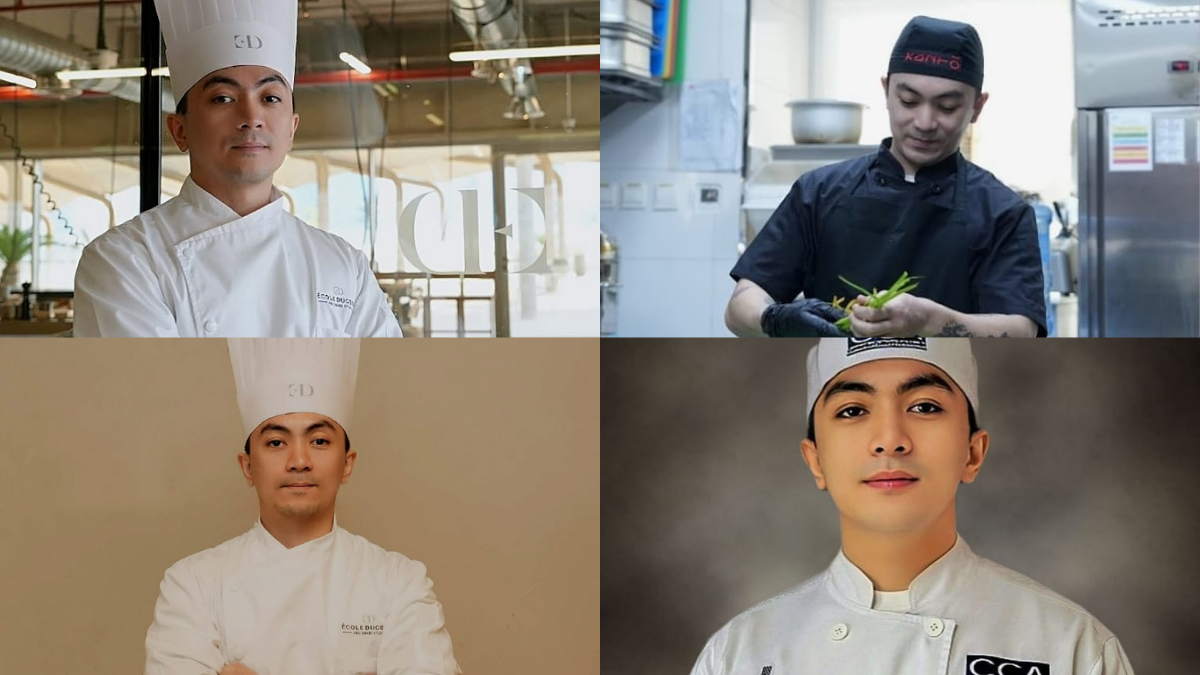

Choosing to start from the heat of a working kitchen rather than the comfort of ownership is a decision that reveals both patience and quiet confidence. Fender Radge H. Polido made that choice deliberately, even though he comes from a wealthy and prominent business-oriented family, believing that real mastery is earned not through shortcuts, but by starting as a regular employee and learning the craft from the ground up.

At 30, Polido is an International Chef at Kanto Wagyo Restaurant, a role he has held since moving abroad a year ago. Coming from a family capable of funding his own restaurant early on, he consciously chose not to rely on privilege. Instead, he wanted to experience the realities of professional kitchens firsthand before stepping into ownership. His journey into the culinary world was not linear. He first earned a degree in Electronics and Communications Engineering at La Salle University–Araneta, before pursuing his second degree in Culinary Arts in Management and Technology at CCA-GBC. Today, he continues to refine his skills through a master class at École Ducasse Française Culinary School UAE, underscoring his belief that learning is continuous.
Choosing experience over entitlement
Working abroad was not initially driven by ambition alone. “My family are all in UAE. Well my parents persuade me,” he shared. Growing up in a family of established means, Polido was offered an option many aspiring chefs would immediately take. His parents were willing to help him put up his own restaurant, removing the usual financial barriers faced by young culinary professionals.
Yet Polido intentionally declined. Rather than becoming a business owner without lived kitchen experience, he chose to apply for work like any other chef—reporting to seniors, following systems, and earning his place through performance. For him, understanding the pressure, discipline, and structure of a real kitchen environment was essential before leading one himself.
His current responsibilities reflect that commitment. They include creative menu design, overseeing kitchen operations, managing staff through hiring, training, and scheduling, controlling inventory and costs, ensuring food quality and presentation, and maintaining strict hygiene and safety standards. He sees this hands-on exposure as necessary groundwork for his long-term goal of building a world-class restaurant, with aspirations of earning a Michelin star.
Learning inside real kitchens

Before relocating to the UAE, Polido worked at Seda Hotel as a chef de parte, where he gained valuable experience in structured operations. Despite his background, he speaks with humility. “I can’t say that I am good, I am still a lot to learn,” he admitted. He recognizes his strengths in developing new recipes, studying culinary techniques, and applying food science to elevate dishes.
Working abroad also presented challenges beyond the usual kitchen pressure. Cultural differences, language barriers, and adaptation to local tastes tested his resilience. “But my focus is to learn,” he said, explaining that adjusting menus to ingredient availability and local preferences became part of his growth.
Cooking with purpose, not shortcuts
For Polido, cooking goes beyond ambition or business. “Being a chef is a passion because it satisfies creative impulse, technical ambition, sensory craving and social purpose simultaneously,” he explained. He values the immediacy of feedback from diners and the role food plays in shaping culture and memory.
His guiding principles reflect this mindset: “Work like it’s our first day on the job, like it’s our last day on Earth,” “Be kind,” and “Taste before you plate.” These philosophies shape both his work ethic and leadership style.
Looking ahead, Polido plans to continue building experience abroad before eventually opening his own restaurant—this time backed not just by resources, but by earned expertise. For fellow Filipinos overseas, his advice remains direct: “Get a high end education that can help their career to grow more.” It’s the same principle guiding his journey: success is stronger when it’s built through experience, not entitlement.
