



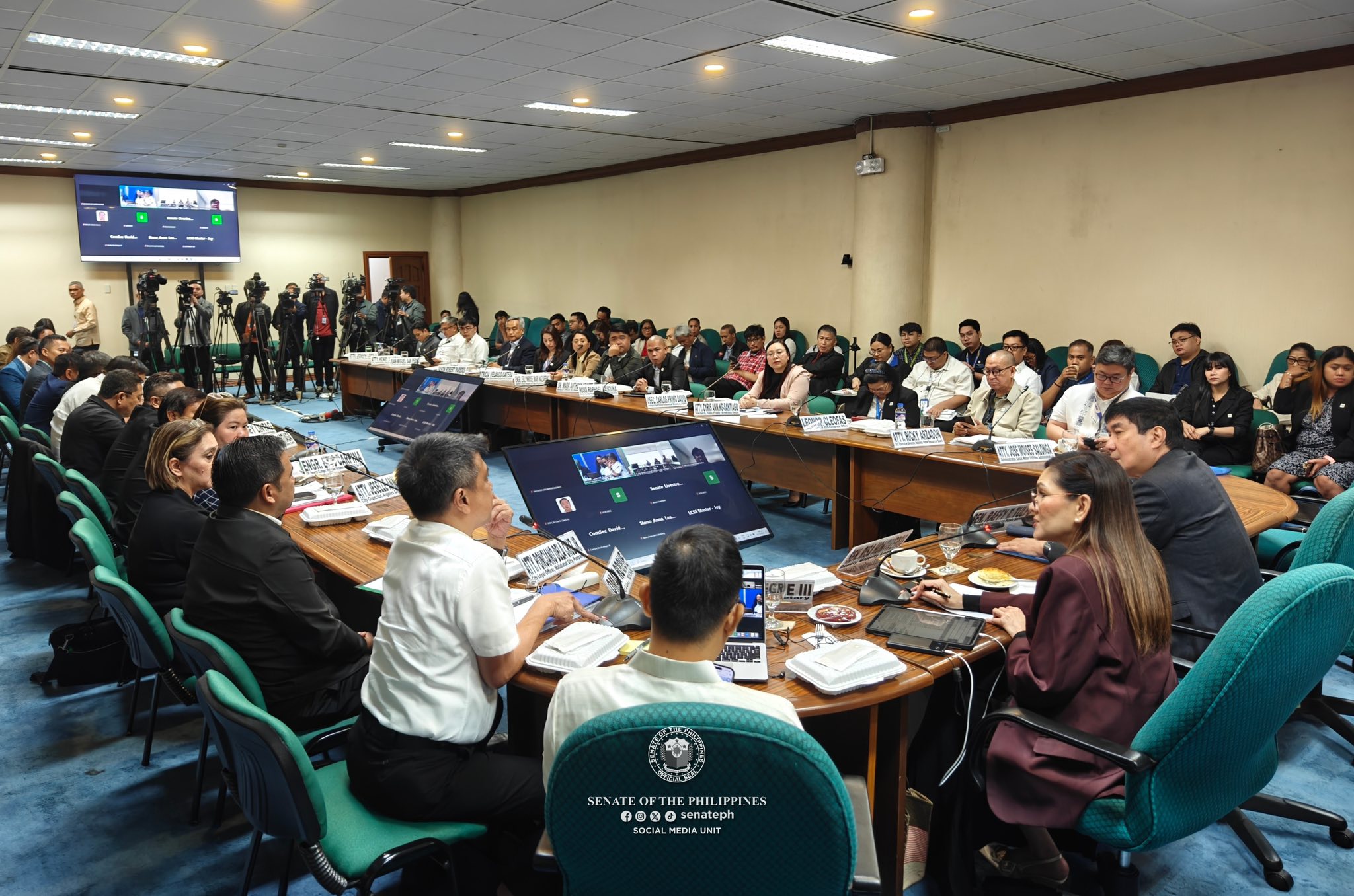

Senators moved a P6.793-trillion national spending plan closer to enactment on Tuesday after approving the proposed 2026 General Appropriations Act on third reading, describing the measure as designed to strengthen accountability while boosting support for key sectors.

The chamber endorsed House Bill No. 4058 with 17 affirmative votes and no objections, a result that came as lawmakers highlighted reforms intended to prevent irregular spending and improve public access to information. “Through our collective work, the 2026 budget is now more transparent, more disciplined, and more accountable than before,” Sen. Sherwin Gatchalian said.
A substantial share of the Senate’s version directs resources to education, with P1.37 trillion set aside for the sector. Portions of that amount include P65.93 billion for the construction of more than 24,000 new classrooms nationwide and P28.66 billion for school feeding initiatives.
Public works spending was trimmed from the level earlier endorsed by the House. The Department of Public Works and Highways would receive P570.48 billion, lower than the P624.48 billion initially proposed. Lawmakers also cut P54.2 billion from the agency in response to questions over previous flood control projects and after President Ferdinand Marcos Jr. instructed officials to revisit costing for construction materials.
Gatchalian explained that infrastructure proposals must now include specific coordinates and station numbers to guard against ghost or anomalous projects. The move, he said, forms part of broader efforts to counter corruption in the budgeting cycle.
Attention now shifts to bicameral conference committee talks set from Dec. 12 to 14, where senators and representatives will reconcile differences between their versions before sending a final draft back for ratification and later transmittal to the President.

Senate President Vicente Sotto III said the chamber would press for live coverage of those negotiations. “I will disagree if it will not be livestreamed. House Speaker Bojie Dy was with us earlier and he did not say anything. The President already said it will be livestreamed,” he stated. Sotto added: “Livestreaming has nothing to do with the contents of the budget. We want the public to see who inserted the funding and how much was allocated to the three most important departments—DepEd, DOH, and agriculture.”
President Marcos has directed both chambers to open the proceedings to the public, a position confirmed by Speaker Faustino “Bojie” Dy III. House appropriations chair Mikaela Suansing said discussions with Gatchalian were underway to meet this commitment. “The House has always been very firm on our commitment to opening the bicameral conference committee proceedings, more specifically livestreaming the bicam,” she said. “As early as August, even before the budget deliberations, the House leadership has already made pronouncements with regard to opening and livestreaming the bicam.”
According to Sen. Erwin Tulfo, some representatives have objected to streaming the talks. He said certain lawmakers questioned reductions in funds and asked, “Why was this suddenly slashed, slashed, slashed?”
In a separate interview, Deputy Speaker Ronaldo Puno claimed the Senate’s version reduced allocations for social aid programs such as the Assistance to Individuals in Crisis Situations, the Tulong Panghanapbuhay sa Ating Disadvantaged/Displaced Workers, and the Medical Assistance to Indigent and Financially Incapacitated Patients.
Civil society groups accredited in the budget process acknowledged improvements over the previous year’s law but flagged recurring concerns, including continued appropriations for so-called pet programs under social welfare, labor, and health agencies. They also pointed out that both the House and Senate boosted their institutional budgets by P10 billion and P1.4 billion, respectively, without public justification.
One network urged legislators to release complete budget documents before the bicameral meetings begin. “Secrecy in the budget process breeds corruption, patronage, and abuse of power. A democratic budget requires public scrutiny, citizen participation, and open access to information—not closed-door negotiations that conceal billions in questionable allocations,” they said.
