



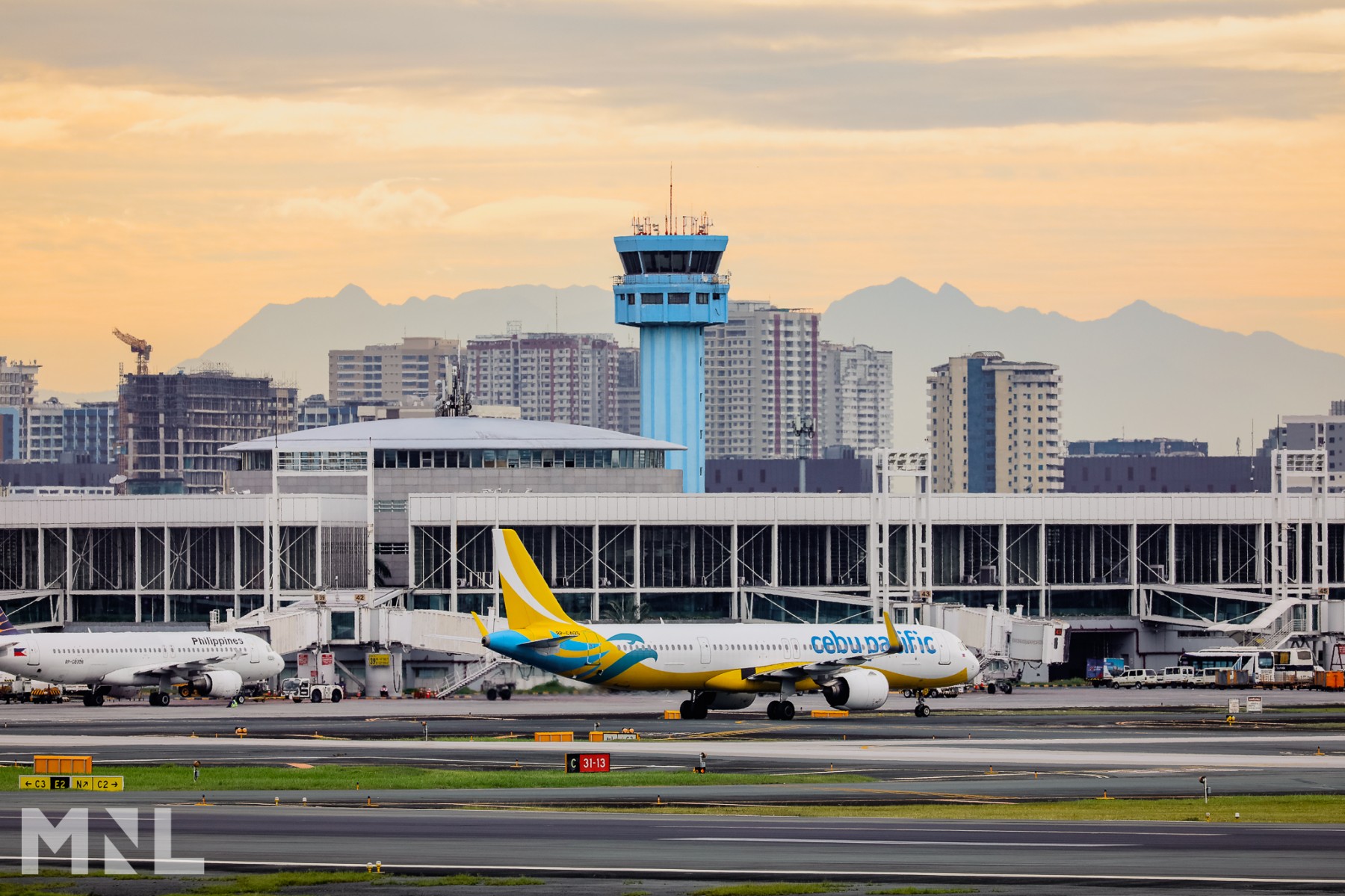

Philippine airlines were forced to halt more flights on Friday as the global recall of Airbus A320 and A321 aircraft rippled across domestic and international routes, prompting two of the country’s largest carriers to issue expanded advisories and brace passengers for continued disruption.

Philippine Airlines (PAL) and Cebu Pacific (CEB) both released updated cancellation lists following Airbus’ mandatory directive requiring operators to revert to an earlier software version on thousands of A320-family jets. The action, issued after a flight-control incident involving a JetBlue A320 in the United States, has become one of the most far-reaching technical interventions in Airbus’ history.
PAL’s advisory listed multiple affected flights as of November 29, 2025, 4:00 AM, including services between Manila and Puerto Princesa, Cebu, Davao, Tacloban, Caticlan, Iloilo, Tagbilaran, Bacolod, and other key domestic destinations. The flag carrier urged passengers with upcoming trips to monitor their email and mobile notifications and to check real-time updates through its website and official channels.
Cebu Pacific issued an even broader list as part of Advisory #2, confirming extensive cancellations tied to the software update. The low-cost carrier said it acted after Airbus circulated a notice requiring A320/A321 operators worldwide to perform the fix immediately.
“Our operations and engineering teams are working diligently to complete the updates as quickly and efficiently as possible. We have also deployed additional airport staff to assist passengers and hope to normalize operations soon,” Cebu Pacific said.

The carrier cancelled more than 30 flights for November 29 alone, covering routes through Manila, Cebu, Davao, Iloilo, Bohol, Puerto Princesa, General Santos, Zamboanga, Cagayan de Oro, Butuan, Dipolog, Roxas, Tacloban, Tuguegarao, Legazpi, Pagadian and Clark, among others. Some routes—including Manila–Davao, Manila–General Santos, and Cebu–Davao—appeared multiple times on the list, highlighting the scale of the operational strain.
CEB also activated flexible options for passengers, offering free rebooking, conversion to travel fund, or full refund through its Manage Booking portal. It further extended voluntary change options for all domestic and international passengers scheduled to fly from November 29 to December 1, 2025, allowing them to move their flights or store funds without penalties.
The recall stems from an issue with the ELAC (Elevator and Aileron Computer) system, which Airbus traced to potential data corruption triggered by solar activity. The problem was brought to light after the October 30 JetBlue incident in which an A320 suffered a sudden uncommanded altitude drop, injuring passengers and prompting investigations by the U.S. Federal Aviation Administration.
Industry analysts noted that the situation has placed pressure on global maintenance capacity, with airlines competing for limited hangar slots. “The timing is definitely not ideal for an issue like this to arise on one of the most ubiquitous aircraft around the (US) holidays,” aviation specialist Mike Stengel said.
Both PAL and CEB advised passengers to verify flight status before proceeding to the airport, noting that further cancellations remain possible as the mandatory software rollout continues.
