



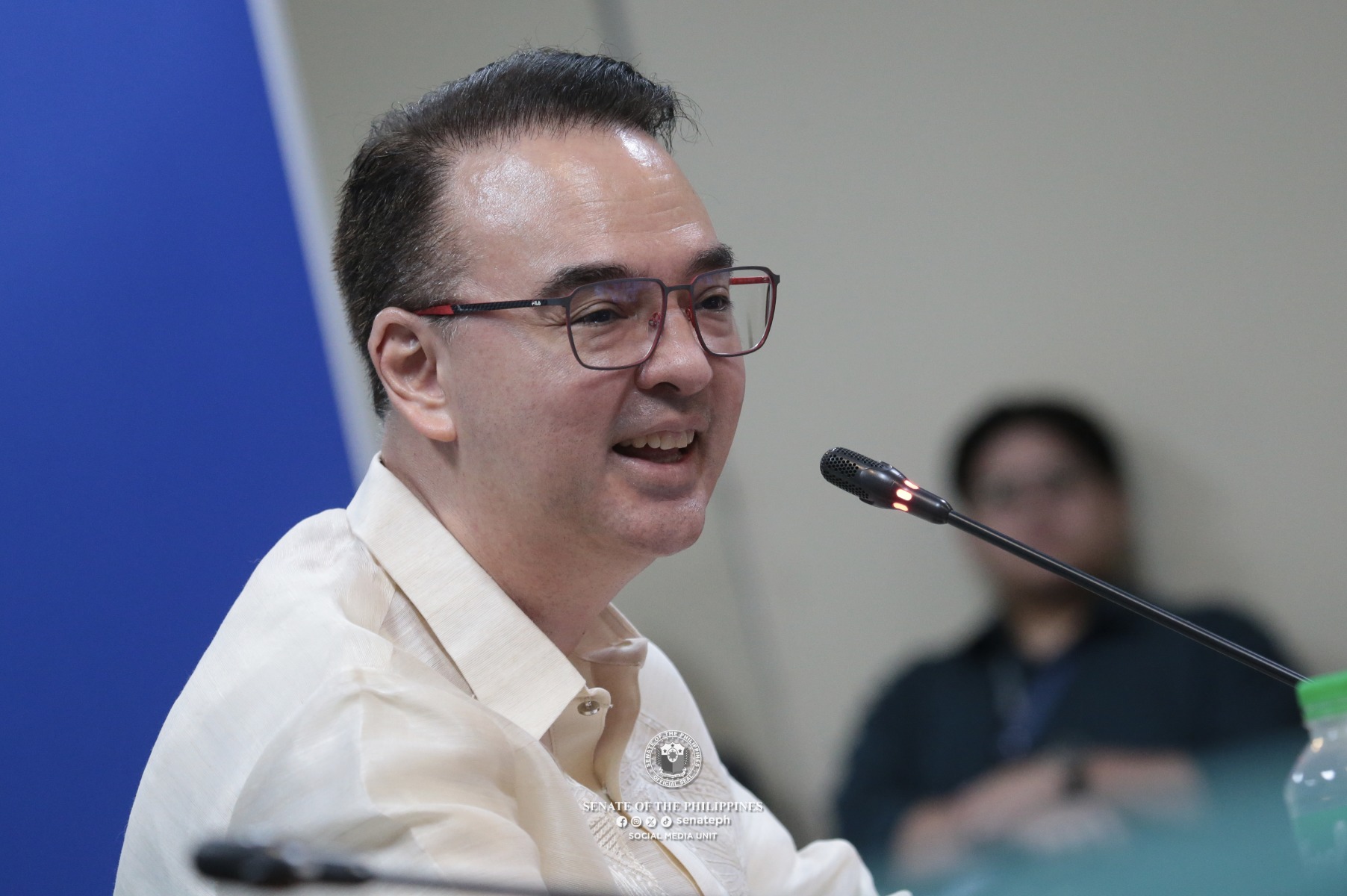

A tense exchange in the Senate placed the spotlight on the financial priorities of the government, as lawmakers pressed for a clearer justification behind the Department of Migrant Workers’ limited resources despite overseeing the welfare of millions of overseas Filipinos.

Senate Minority Leader Alan Peter Cayetano raised the issue after noting that OFWs, whose remittances reached P2 trillion in 2024, remain a cornerstone of the economy. “
Almost 10 percent of our GDP (Gross Domestic Product) comes from the OFWs,” he said. He added, “Until now, they still are a big part of our GDP. But when we return their money, we’re stingy.”
His comments came during deliberations on the DMW’s proposed P11-billion budget for next year. Cayetano said the disparity between OFW contributions and the department’s funding has become increasingly difficult to justify, especially as the agency continues to expand its responsibilities—from opening new job markets to negotiating bilateral labor agreements and managing daily protection and upskilling concerns.
Cayetano pointed out that even as the DMW takes on more tasks, its annual allocation remains small relative to what he described as the agency’s crucial mandate. According to him, funds previously removed from the Department of Public Works and Highways (DPWH) could instead support programs intended for overseas workers.
“OFWs give so much to the country. Why does the DMW have a small budget compared to the amount of their contribution?” he said. “The fight here is how you can hit the nail on the head, the programs that our OFWs need.”

Another senator, JV Ejercito, pushed the discussion toward the conditions faced by migrant workers abroad, especially those who rely on government-run shelters. He reminded the chamber that many distressed OFWs turn to these facilities and urged the DMW to prioritize their improvement.
Ejercito sought clarification on whether the P870-million allocation for renovating and constructing temporary shelters would be enough to address the needs of Filipino workers in crisis situations. “Let’s add funding for temporary shelters because we want to ensure that they are in good condition, especially in areas where there are many distressed OFWs,” he said in a statement.
He emphasized that improving physical safety must go hand in hand with mental health care. “Mental health is health. We must continue to care for both the body and the mind. I will fight for a bigger budget to make sure every Filipino can get the help they need, when they need it,” he said.
Ejercito shared that he had personally seen overseas shelters that were well-kept, citing Singapore and Korea as examples. He encouraged the DMW to elevate the standards in other host countries. “If there is a need to help other areas improve temporary shelters…just say it and we will help. I saw it personally, with my own eyes, there were temporary shelters that are well-maintained and beautiful like in Singapore and Korea. But let’s level up the others,” he said.
He also expressed support for the DMW’s ongoing efforts to provide psychosocial services to OFWs housed in these facilities, noting that the agency already has psychiatrists, social workers, and specially trained staff in place. However, he appealed to the department to extend mental health interventions to OFWs outside government shelters, many of whom face isolation and emotional strain on their own.
