



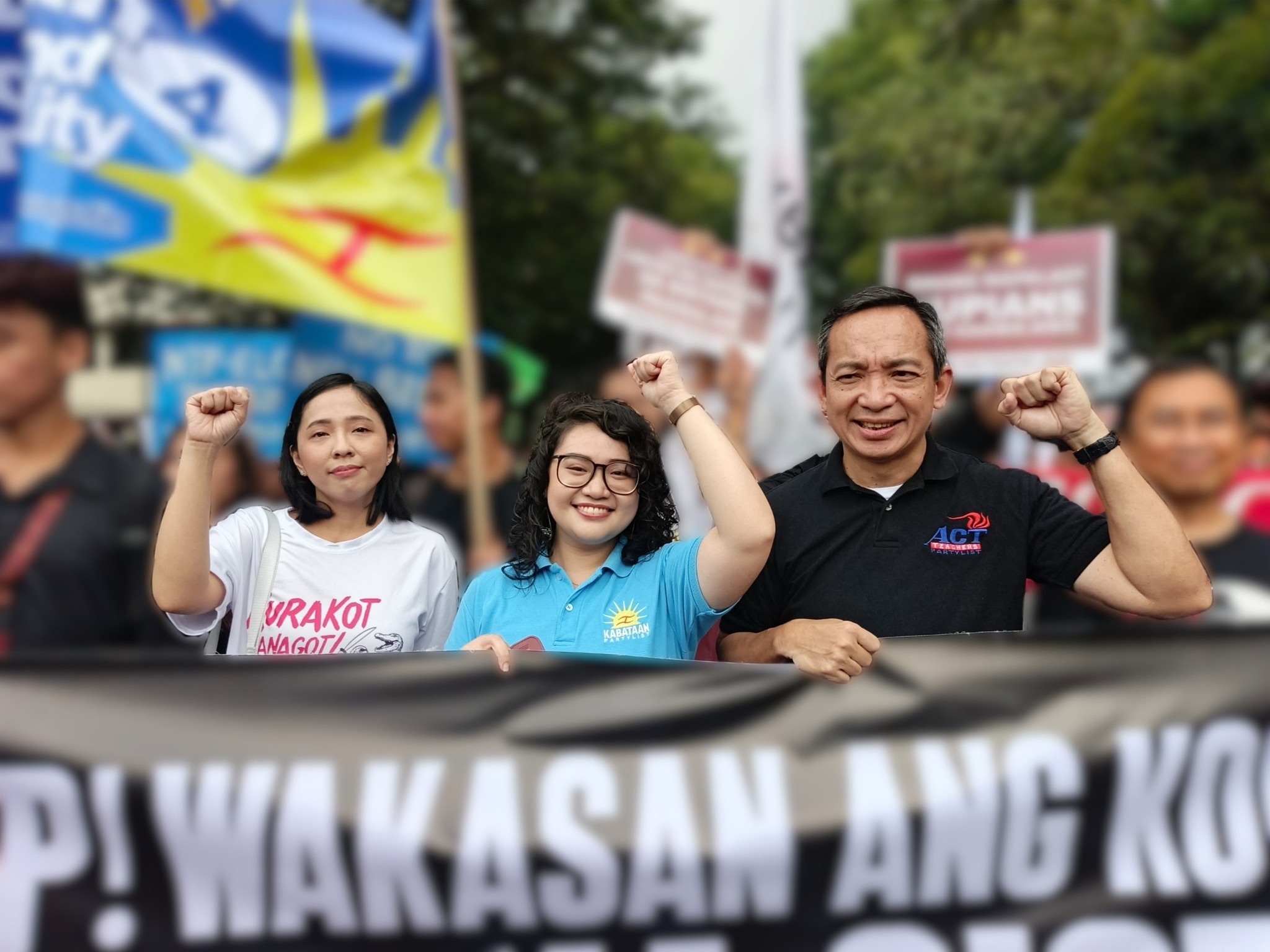

Legislators from the Makabayan bloc have revived calls to overhaul the country’s party-list system, filing a measure that introduces strict disqualifications for nominees connected to government deals or related to public officials within four degrees of kinship.

House Bill No. 6193, submitted on Wednesday by ACT Teachers Rep. Antonio Tinio, Gabriela Rep. Sarah Elago, and Kabataan Rep. Renee Co, aims to tighten the rules under Republic Act No. 7941 and redirect the system toward its intended beneficiaries. The lawmakers argued in their explanatory note that “there is an urgent need to restore the party list system to its original purpose, which is to give the marginalized sectors representation and voice in Congress.”
The proposal was filed as the Marcos administration grapples with the fallout of a sweeping controversy involving alleged misuse of flood control funds, which highlighted the role of contractors and political figures accused of siphoning off billions of pesos through anomalous infrastructure projects. Among those implicated is resigned Ako Bicol Rep. Elizaldy Co, founder of Sunwest Inc., a major government contractor that secured large-scale public works. Co and several Sunwest and Department of Public Works and Highways officials were charged before the Sandiganbayan on Tuesday over “serious irregularities” tied to a P289-million road dike project in Oriental Mindoro.
Under the new bill, individuals who “is or had been a contractor in any government project” — whether acting personally or through corporate roles such as incorporator, director, or officer — would be prohibited from seeking a party-list seat. The measure similarly bars nominees who are relatives of sitting government officials by blood or marriage up to the fourth degree.

The Makabayan representatives said the system has long drifted away from its original design, noting in their explanatory note: “The party list system has been bastardized throughout the years, and there is therefore an even more urgent need now to strengthen and further improve it so as not to make useless and illusory the representation of marginalized and underrepresented sectors of our country.”
Beyond disqualification rules, HB 6193 outlines new procedures requiring groups and nominees to establish, through an evidentiary public hearing, that they genuinely belong to the sectors they intend to represent. It also mandates that nominations for party-list representatives be issued by the organization’s highest policy-making body.
The party-list mechanism was created under the 1987 Constitution to widen political access for laborers, farmers, indigenous peoples, women, youth, and similar sectors. By law, these groups should hold 20 percent of the House’s total seats. However, a 2013 Supreme Court ruling declared that party-list organizations, whether national or regional, no longer need to come from marginalized communities. For the bill’s authors, this interpretation “practically opened the floodgates for the rich, the powerful elites, and the political dynasties to freely participate in the party list elections.”
Before the current Congress convened, election watchdog Kontra Daya flagged that a majority of winning party-list groups—32 out of 54—did not represent the poor. The Makabayan bloc stressed that allowing dominant sectors to occupy seats reserved for disadvantaged communities has resulted in the marginalized being pushed out of the space meant for them.
