



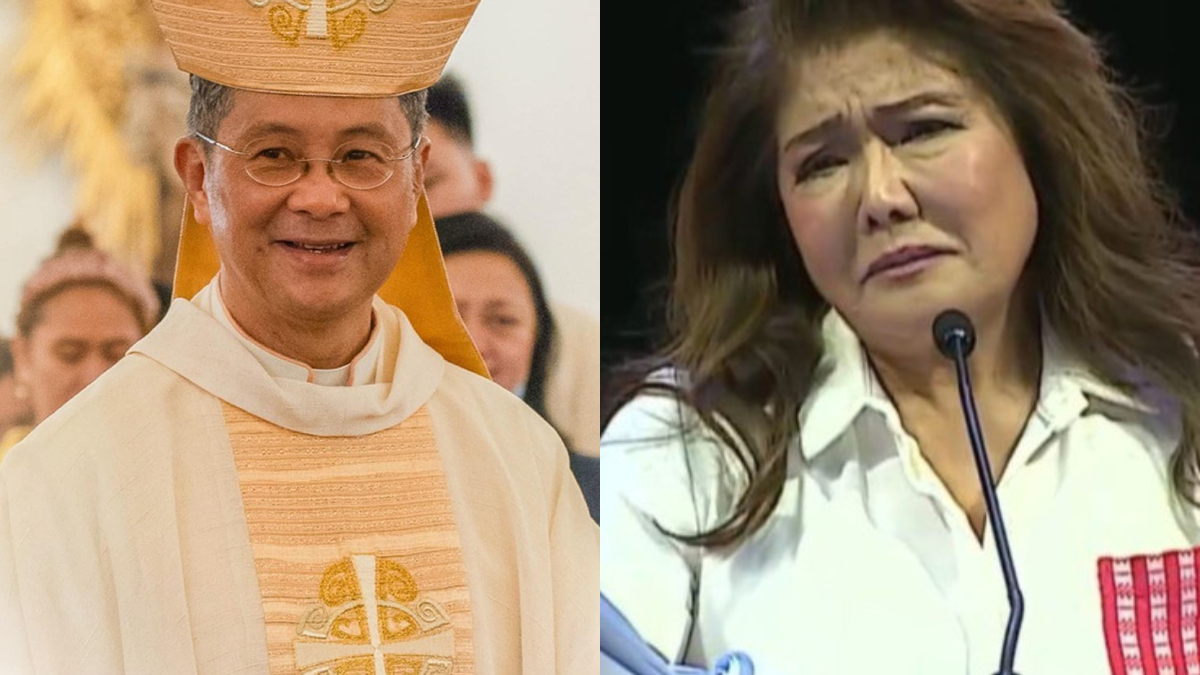

A senior church leader has voiced concern over Senator Imee Marcos’ public claim that President Ferdinand “Bongbong” Marcos Jr. has long been using illegal drugs, saying the allegation—delivered without evidence—placed both family and national dignity at risk.

Antipolo Bishop Ruperto Santos said the public indeed has the right to know the health and capability of the country’s top officials, especially the President. However, he questioned the manner in which the senator made her statement before millions of viewers.
“Yes, the public has a legitimate right to be informed about the health and capacity of its leaders, especially the President. But publicly accusing a family member—without due process, without clear evidence, and outside the proper forum—undermines not only these values but also the dignity of all involved,” he said.
Santos stressed that public officials must evaluate whether a political stage is the appropriate setting to reveal sensitive information or unresolved disputes. He said the call for transparency should never override fairness, compassion, and due process.

He also challenged whether the senator’s remarks reflected genuine concern, noting that difficult truths should first be addressed privately within families. “If this were truly an act of love and concern for a sibling and for the Filipino people, why only now—and why in such a manner?” he asked, citing the passage, “Now if your brother sins, correct him first in private… (Matthew 18:15).”
The bishop added that anyone planning to speak out should pause and examine their motives. He pointed to the need for self-reflection by asking, “What is my intention? What truth must I face? What healing must I seek? Conscience is the quiet voice of God within us. It must guide our words, our actions, and our silence.”
Santos said that if the accusation has basis, then it should inspire accountability and renewal. “If there is truth in the accusation, then let this be the beginning of conversion. Seek help. Seek healing. Seek holiness,” he said.
Calling the controversy more than a political exchange, he urged leaders to be mindful of their moral influence. “This is not just a political moment—it is a moral one. The Filipino people are watching. The youth are listening. What kind of example are we setting?”
