



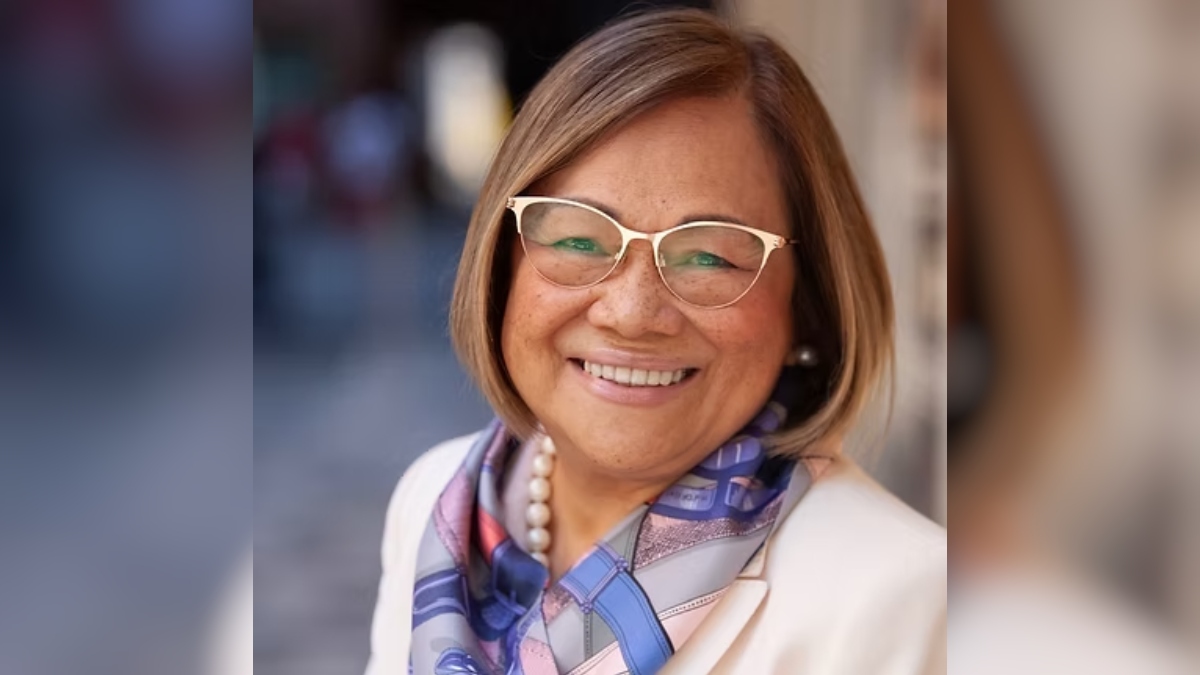

When Dr. Wilfrida (“Freida”) S. Chavez first arrived in Canada as a nurse educated in the Philippines, her Bachelor of Science in Nursing from St. Paul University Manila was not recognized. Like many internationally educated nurses, she began again—returning to bedside care with humility and hope. What could have been a discouraging setback became the spark for a life devoted to academic leadership, equity, and global health.

Today, Dr. Chavez stands among the most respected Filipino nurse scholars in the world: Professor Emerita at the Lawrence S. Bloomberg Faculty of Nursing, Dalla Lana School of Public Health, and Temerty Faculty of Medicine at the University of Toronto. She also holds appointments with Case Western Reserve University, Johns Hopkins University, and the Universitat de Lleida in Spain, and serves as a Fellow of the World Health Organization (WHO) Collaborating Centres (CCs) for Health Promotion in Hospitals and Health Care and WHO CC on Family Medicine and Primary Care.
Her induction as a Fellow of the American Academy of Nursing (FAAN) affirms a career defined by influence on policy, education, and the global nursing workforce. Yet her story remains deeply grounded in humility—a reflection of both her Filipino roots and her conviction that education is the most powerful lever for transformation and change.
Dr. Chavez often recalls that her Canadian beginnings opened her eyes to inequities within healthcare systems. Filipino nurses, she observed, were often overrepresented in frontline work yet underrepresented in leadership. Determined to address that imbalance, she pursued another undergraduate degree, followed by graduate studies in health systems leadership at the University of Toronto, and later a Doctor of Nursing Practice in Educational Leadership at Case Western Reserve University.
As she transitioned from clinical practice and leadership to academia, her lens widened from individual patient care to health systems and policy reform. “Education,” she notes, “is not just personal advancement—it is transformation, both for oneself and for the system we serve.” That belief led her to design curricula and programs that challenged nursing students to think critically about inequity, privilege, and the structures that shape health outcomes.
Her signature course, Critical Perspectives in Global Health, is emblematic of her approach. Across six intensive sessions, students explore postcolonial feminism and decolonization of global health frameworks before immersing themselves in month-long field placements in resource-constrained communities. Through structured debriefings and reflection, learners confront the complexities of health inequities and return transformed—many describing the experience as the most meaningful of their careers.
Dr. Chavez’s Filipino heritage remains central to her identity and leadership. She credits pakikipagkapwa (shared humanity), pagpupursige (persistent efforts and determination), and katatagan (resilience) as guiding principles that shape her mentoring and teaching. These values have enabled her to cultivate learning environments defined by inclusion, empathy, and respect. She challenges students not only to serve but also to listen—to see patients, communities, and colleagues as co-creators of health and knowledge.
Her leadership extends well beyond the classroom. As Inaugural Director of the Global Affairs Office at the University of Toronto, she built institutional partnerships linking Canadian universities with counterparts in Brazil, India, Ethiopia, Spain, Thailand, and throughout the Filipino diaspora. These alliances strengthened global health curricula, created immersive learning exchanges, and advanced research on Primary Health Care (PHC) and Interprofessional Collaborative Practice (IPC).
One of her most impactful projects was in Brazil, where she worked with government, university partners, and service providers to expand PHC services in underserved communities. The initiative combined nurse-led innovation with cross-disciplinary collaboration, demonstrating how government and academic partnerships can directly improve health access and outcomes.

Her influence in global nursing governance continues through service on the World Health Organization Collaborating Centre, the Global Nursing and Health Expert Panel of the American Academy of Nursing, and continues to co-teach Interprofessional Collaborative Practice in Global Health. Through these roles, she contributes to shaping workforce standards, evidence-based global health education, and equitable credential recognition for internationally educated nurses.
Yet perhaps her most personal legacy is the Alliance of Filipino Nursing Professionals in Canada (AFNPC), which she founded after her ‘preferment’ (not retirement). The AFNPC embodies her lifelong mission to empower Filipino nurses through mentorship, leadership development, and advocacy. It is both a professional network and a movement—one that amplifies Filipino voices in Canadian health discourse and builds pathways to leadership for the next generation.
Dr. Chavez’s work continues to examine workforce equity, leadership pathways, and interprofessional collaboration, particularly in low- and middle-income countries. She studies how systemic barriers affect both nurse mobility and the health outcomes of marginalized populations. Her work calls attention to the global underutilization of internationally educated nurses, advocating for policy frameworks that recognize skill, experience, and cultural intelligence as assets—not obstacles.
She also reminds Filipino nurses everywhere that global impact begins with visibility and connection. Filipino nurses, she asserts, bring distinct ethical and community-centered perspectives to healthcare leadership, but their stories must be shared more boldly. She encourages nurse scholars to collaborate across borders, join interprofessional research teams, and participate in policy dialogues that influence health and education reform.
Throughout her career, Dr. Chavez has shown that leadership is not about hierarchy but about purpose. Her message to the next generation of Filipino nurses is clear: systemic barriers are real, but so is the power of collective resilience. Education and advocacy can dismantle structures of inequity; community and mentorship can open doors once thought closed.
The arc of her professional journey—from a bedside nurse navigating credentialing barriers to a globally recognized scholar and policy influencer—illustrates what is possible when compassion meets conviction. She remains deeply engaged in mentorship, guiding emerging nurse leaders who see their profession as both science and service, local and global, personal and political.
Colleagues describe her as a bridge-builder—someone who connects worlds that rarely intersect: the clinical and the academic, the local and the global, the Filipino diaspora and Canadian nursing leadership. Through decades of teaching, policy work, and advocacy, she has helped redefine what leadership looks like for nurses from historically underrepresented communities.
Even after achieving the highest distinctions in academia, Dr. Chavez continues to mentor with the same humility she carried as a young nurse starting anew in Canada. Her story reminds us that excellence in nursing is not only about achievement, but also about the courage to challenge inequity, uplift others, and build systems that reflect the values of justice and compassion.
For Filipino nurses around the world, her journey is both a roadmap and an inspiration—a testament to how lived experience can become a force for transformation. As she often tells her mentees, leadership begins with presence: being at the table, claiming your voice, and using it to advance health for all.
