



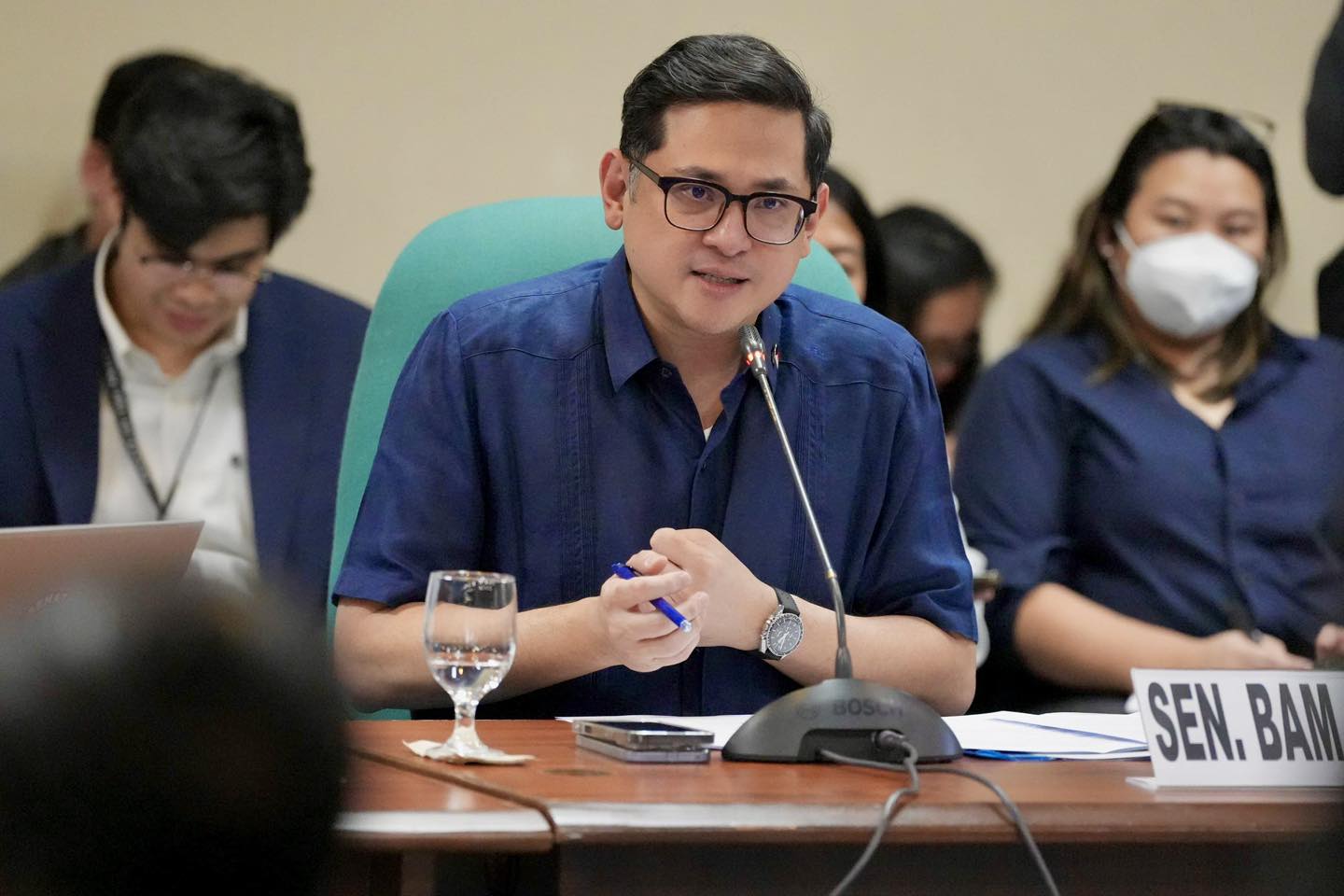

The Second Congressional Commission on Education (Edcom 2) urged the national government to work more closely with local government units (LGUs) and private partners in building classrooms, citing faster completion times and lower costs compared to projects handled by the Department of Public Works and Highways (DPWH).

During a Senate hearing led by Sen. Bam Aquino, co-chair of Edcom 2 and chair of the Senate Committee on Basic Education, lawmakers raised concerns that classroom projects under the DPWH were not only slower but also more expensive. “The cost is almost double,” said Sen. Loren Legarda, noting that DPWH’s construction expenses ranged from ₱29,838 to ₱36,067 per square meter—significantly higher than the ₱20,000 per square meter typical of private sector work.
Aquino cited the findings of Edcom 2’s second-year report, which revealed wide discrepancies in classroom pricing across agencies and localities. The Department of Education (DepEd) estimated the cost of building a classroom at ₱2.5 million, while DPWH’s version costs around ₱3.5 million. In Dumaguete City, however, locally funded classrooms averaged ₱2.1 million, and those built through public-private partnerships (PPP) only ₱1.5 million.
The disparity was also evident in project timelines. Aquino noted that classrooms built by LGUs and private partners were completed in less than a year, compared to the multiple years it often takes for national government-funded projects.

Two nonprofit organizations—the Federation of Filipino Chinese Chamber of Commerce and Industry and the Angat Buhay Foundation—told the Senate panel that their respective programs could construct classrooms for just ₱8,000 to ₱10,000 per square meter and ₱862,500 per classroom.
To address the worsening backlog—estimated at 165,000 classrooms nationwide—Aquino proposed Senate Bill No. 121 or the “Classroom-Building Acceleration Program Act.” The measure seeks to authorize LGUs and private entities to take on construction responsibilities, with funding and oversight coming from the national government. “If we fail to act now, this shortage could last for decades—through five more presidents,” Aquino warned.
Edcom 2 Executive Director Karol Mark Yee said overcrowded and deteriorating classrooms continue to hinder learning outcomes. “This is a critical reform that needs to be pushed fast; we have no time to waste,” Yee emphasized.
Sen. Sherwin Gatchalian, a former mayor of Valenzuela City, shared that classroom construction in his city was accelerated through joint efforts among the local government, private groups, and the national government, allowing completion within a year through a “counterparting” model.
