



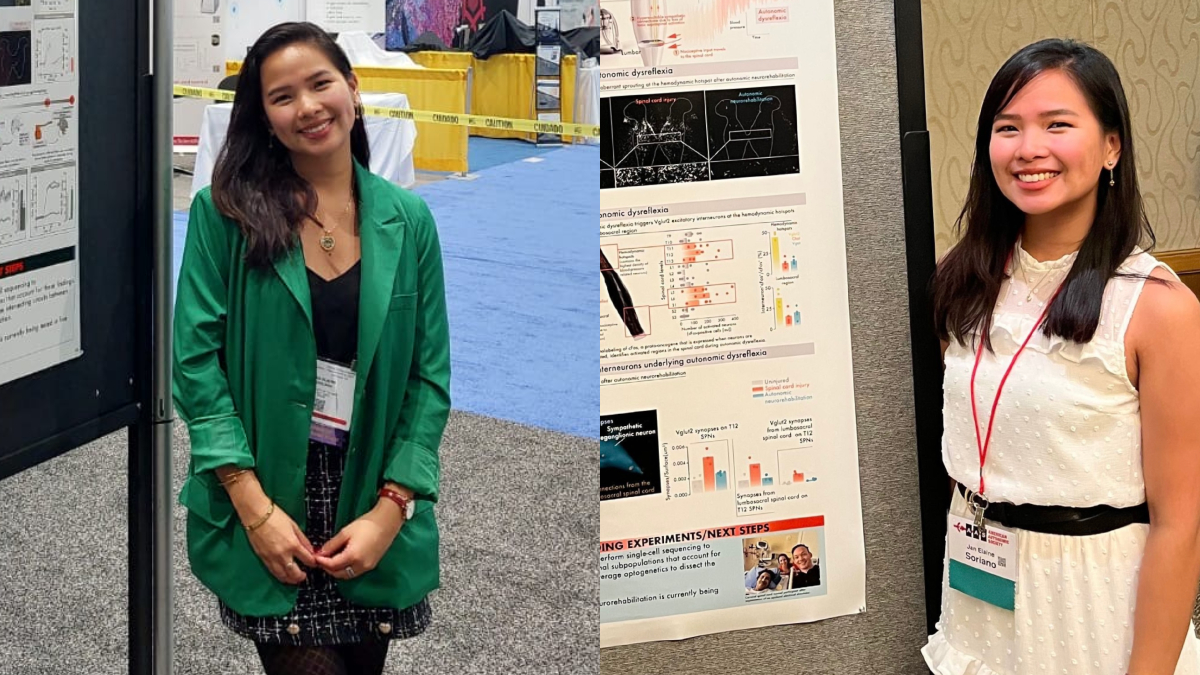

The pursuit of science is rarely linear. For many, it begins as a spark of curiosity, grows into an academic endeavor, and eventually becomes a career that demands both resilience and passion. For Jan Elaine Soriano, that path was far from straightforward. Today, she works as a postdoctoral research fellow at .NeuroRestore, part of the Swiss Federal Technology Institute of Lausanne (EPFL) in Switzerland, but her 13-year journey abroad reflects a life shaped by discovery, perseverance, and the desire to make an impact.

A journey sparked by curiosity and shaped by persistence
Growing up in the Philippines, Jan Elaine already carried a fascination with science and mathematics. But she admits that pursuing research was not an obvious choice at the time. “Ever since I was young, I’ve been fascinated by science and mathematics. Still, deciding to pursue research was not an obvious or straightforward choice for me,” she recalled.


Her turning point came during her bachelor’s degree at Mount Royal University in Canada, where she was introduced to research-focused courses. It was there that she first experienced what it meant to go beyond textbooks and theories. “That journey truly began during my bachelor’s degree at Mount Royal University, where I enrolled in research-focused courses. I also had the opportunity to work as a research assistant and even participate in a research expedition to Everest Base Camp in Nepal,” she said.
That experience cemented her love for scientific inquiry. For Jan Elaine, research is more than just gathering data—it is about the process. “What I enjoy most about research is the process itself, starting with formulating meaningful questions and recognizing their importance for the field, then designing and carrying out rigorous, high-quality experiments, and finally sharing the results with the broader community,” she explained. Each stage, she emphasized, comes with its own challenges and rewards, but together they fuel her drive to continue.
Even then, her path in academia was not linear. She started her bachelor’s degree in 2008, changed programs, moved between countries, and only completed her PhD in 2024. “It has been a long road filled with challenges and detours,” she admitted. What kept her going was not simply a desire to graduate, but the deeper fulfillment she found in discovery. “There were certainly difficult moments, and I often faced questions like, ‘When are you finishing school?’ or ‘When are you actually going to work?’ For me, those questions became background noise. I’ve learned to brush them aside because I genuinely love learning and deeply enjoy the work I do.”
This mindset, anchored in curiosity and persistence, carried her through the years. “In the end, this long journey wasn’t just about earning a degree, it was about becoming the kind of person who is committed to growth, resilience, and making a difference,” she said.
Breakthrough in spinal cord research
Today, Jan Elaine is part of a research team that has made global headlines after publishing their findings in the prestigious journal Nature. Their study zeroed in on a critical but often overlooked aspect of spinal cord injury: autonomic dysreflexia, a condition marked by sudden and severe spikes in blood pressure.
“Spinal cord injuries often lead to complications that are not immediately visible to the general public,” Jan Elaine explained. These complications affect autonomic functions, including bladder, bowel, and blood pressure regulation. Among them, autonomic dysreflexia stands out as a potentially life-threatening condition. “These episodes can be triggered by a range of stimuli, such as a full bladder, bowel impaction, or even something as minor as tightly tied shoelaces,” she said.
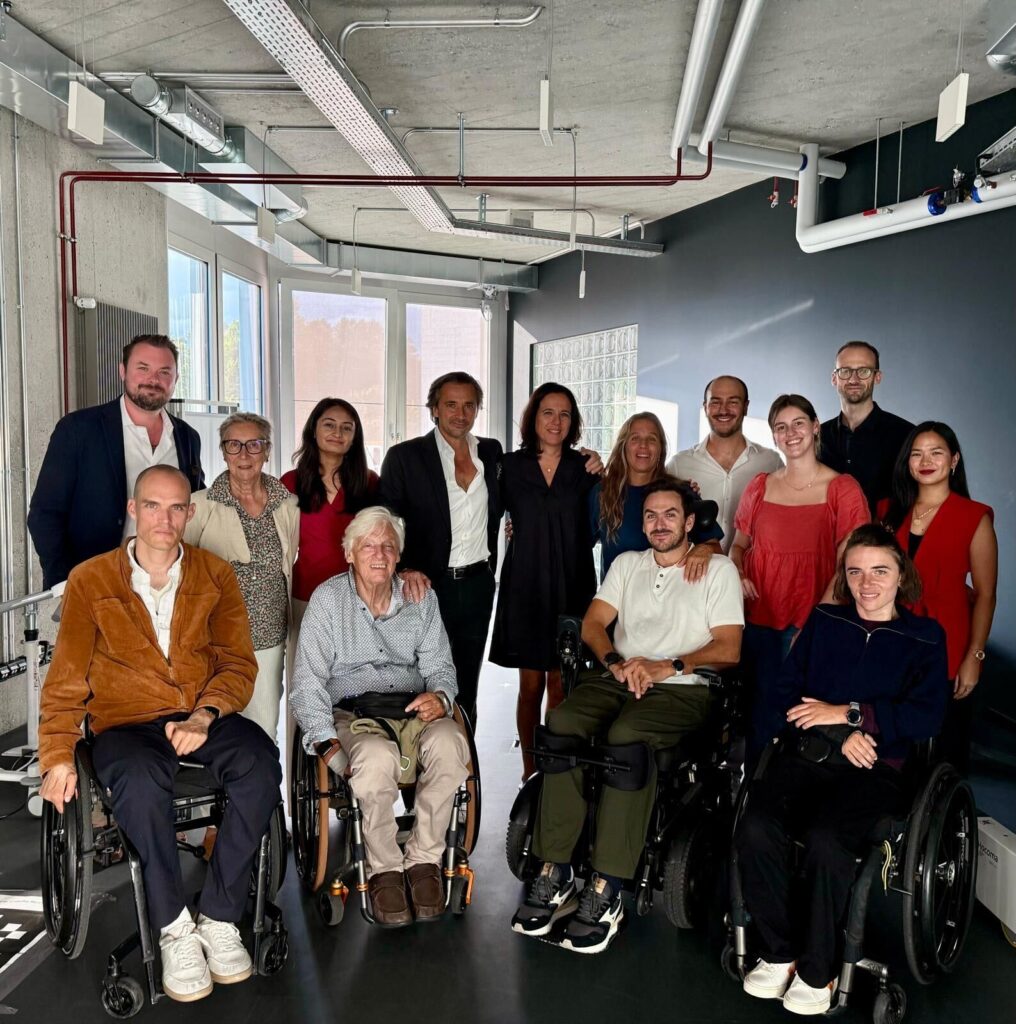
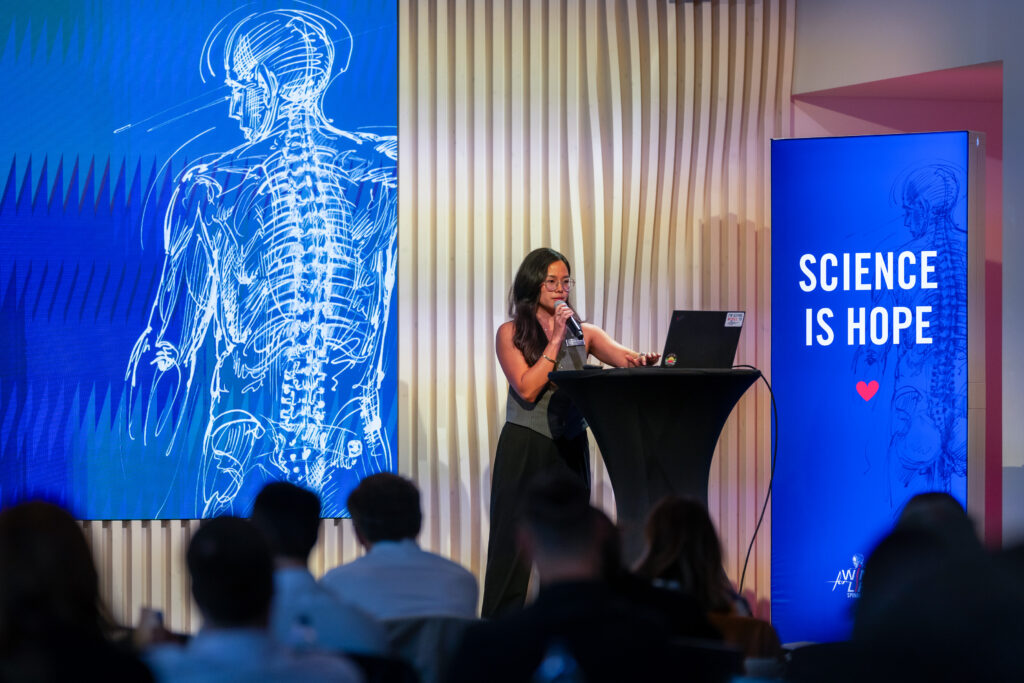
The danger lies in how abrupt these spikes can be. “Such abrupt increases in blood pressure occur frequently and, in severe cases, can be life-threatening, with the potential to cause strokes,” she added.
Their team’s breakthrough was identifying the spinal circuits responsible for these dangerous surges and finding a way to counteract them. “Using targeted spinal cord stimulation, we trained the nervous system to strengthen protective pathways and weaken harmful ones. With repeated sessions, which we call autonomic neurorehabilitation, we were able to stop these spikes in animal models, and early results show this method could also help people with spinal cord injury,” Jan Elaine explained.

The journey to this discovery was not without hurdles. Like many research projects, the technical challenges were significant. “Some difficulties arise at the technical level, especially when we are just learning or refining new experimental methods,” she said. But she and her team approached these obstacles with patience. “Experiments may not work as expected, not because the ideas are flawed, but because the techniques require practice and consistency. We recognize that progress often comes from iteration, so when something doesn’t work at first, we view it as an opportunity to adapt, improve, and ultimately strengthen our approach.”
Now, their next step is to bring the work closer to those who need it most. “The next crucial step is to launch a pivotal clinical trial designed to rigorously test both the safety and the efficacy of this treatment,” she said. For Jan Elaine, the excitement lies not only in the discovery itself but in its potential to improve lives. “I am truly excited about the potential impact of this treatment and the possibility of seeing more patients benefit from it.”
Carrying Filipino values onto the global stage
For Jan Elaine, this achievement carries personal meaning that goes beyond scientific success. As a Filipina on the global research stage, she acknowledges both the pride and the challenges of the role. “I’ve often struggled with understanding my purpose and figuring out what I truly wanted to become in life, which makes this achievement all the more meaningful to me. It is something I never imagined reaching, and my journey has been anything but straightforward or easy. That is why I feel a deep sense of pride in being able to represent Filipinos in this space,” she said.
She describes herself as different from many Filipinos in terms of background and experiences, but she never left behind the values that shaped her. “Resilience, community spirit, and the drive to uplift others are deeply ingrained in who I am. I try to live these values by showing people that challenges can be faced with determination, and by supporting others in a way that both encourages and challenges them, pulling them up while also pushing them forward.”
Her multicultural journey—living in the Philippines, Canada, and Switzerland—also shaped her growth. “Moving from one country to another has made me realize just how vast the world really is. When I was living in the Philippines, my options felt limited, as though there were only a few paths available to me. Moving to Canada broadened those possibilities, giving me more opportunities to pursue my passion. Finally, coming to Switzerland opened things up even further, and I was able to work alongside world-class scientists who not only excel in their craft but also care deeply about the impact of their work,” she said.
Finally, coming to Switzerland opened things up even further, and she was able to work alongside world-class scientists who not only excel in their craft but also care deeply about the impact of their work. Along the way, she recognizes how fortunate she has been to have unwavering support from her family, her partner, and her friends. Just as importantly, she found incredible mentors who became some of her closest friends—connections she might never have made without her multicultural journey in science.
Her experiences as a woman in STEM also gave her perspective on the subtle yet persistent barriers that still exist. “There are moments when you feel your voice isn’t loud enough to be heard, or worse, when you feel the need to literally lower your voice to be taken seriously. For years, my strategy was to keep my head down, focus, and prove myself by consistently doing excellent work. I often made myself smaller and less visible so that I could dedicate my energy to what mattered most, which is becoming truly good at what I do,” she shared.
Despite these challenges, she finds encouragement in the idea of continuous growth. “I also recognize that there is still so much more for me to learn, and instead of feeling discouraged by that, I find it exciting. To me, it means there will always be space to grow, to improve, and to keep pushing myself forward in this journey.”
Looking back, she knows her achievement is also a message to young Filipinas who aspire to join the world of science and research. “To young Filipinas in STEM, I want to say this: your path does not have to look like anyone else’s. Even if it feels tedious or uncertain, it is still yours, and it is still valid. Keep going, because your voice, your perspective, and your presence in science are needed. Don’t be afraid to take up space and to show the world what Filipinas can achieve,” she said.
Her words echo the same persistence that carried her through a 16-year academic journey, across three countries, and into one of the most promising breakthroughs in medical science today. For Jan Elaine, the discovery is only the beginning. The greater reward lies in bringing science closer to those who need it most, while carrying with her the pride of representing Filipinos at the global forefront of research.
