



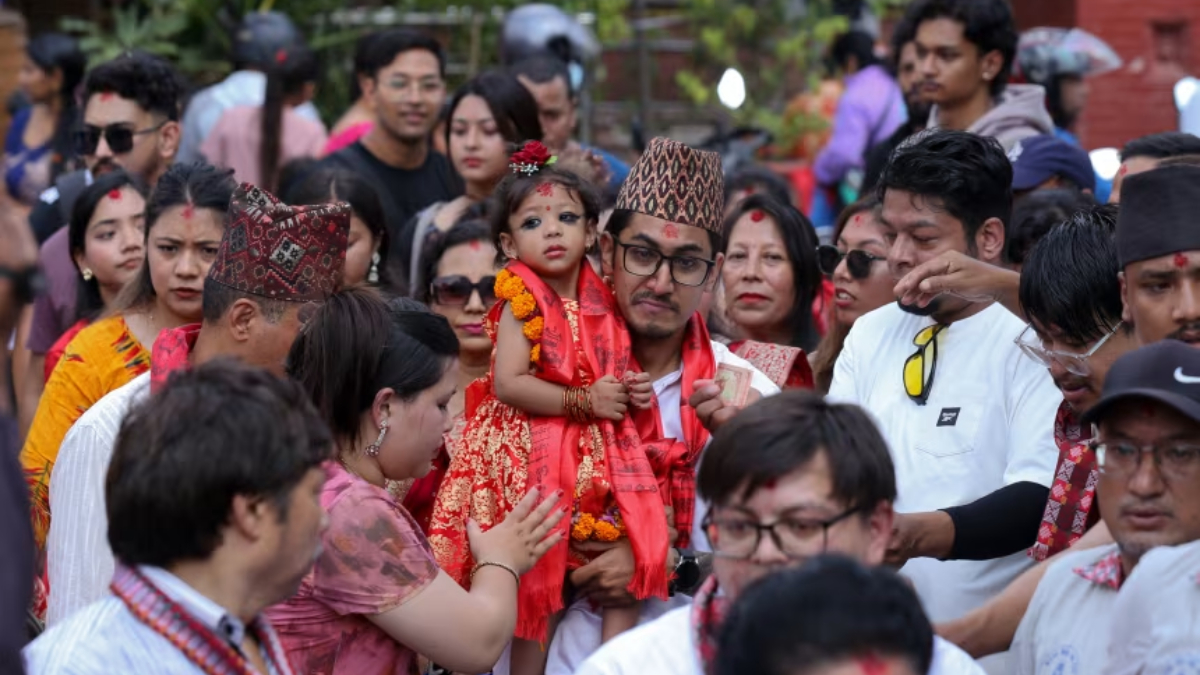

A two-year-old girl has been declared Nepal’s new living goddess, revered as the Kumari, in a traditional ceremony held during the country’s biggest Hindu festival.

Aryatara Shakya, aged 2 years and 8 months, was carried by relatives from her family’s home to the Kumari Ghar, the temple palace in Kathmandu, where she will live for several years. She succeeds 11-year-old Trishna Shakya, who had served as Kumari since 2017 and stepped down after reaching puberty.
The Kumari, meaning “virgin goddess,” is chosen from the Shakya clan of the Newar community and is worshipped by both Hindus and Buddhists. Candidates must meet strict criteria, including flawless skin, eyes, and teeth, and must show no fear of the dark.
On Tuesday, coinciding with the eighth day of Dashain — a 15-day festival celebrating the triumph of good over evil — family, devotees, and community members paraded the young goddess through Kathmandu’s streets. Crowds lined up to offer her flowers and money, bowing to touch their foreheads to her feet, the highest gesture of respect in Nepalese tradition.

“She was just my daughter yesterday, but today she is a goddess,” said her father, Ananta Shakya. He added that there had been signs of her destiny even before birth. “My wife during pregnancy dreamed that she was a goddess and we knew she was going to be someone very special,” he shared.
The newly enthroned Kumari will give blessings to devotees, including Nepal’s president, in the coming days.
Traditionally, Kumaris live a secluded life, stepping outside only during festivals. Although former Kumaris often struggle with reintegration into ordinary life, recent changes allow them to receive education from private tutors inside the palace and access to modern comforts such as television. The government also grants retired Kumaris a monthly pension slightly above the minimum wage.
