



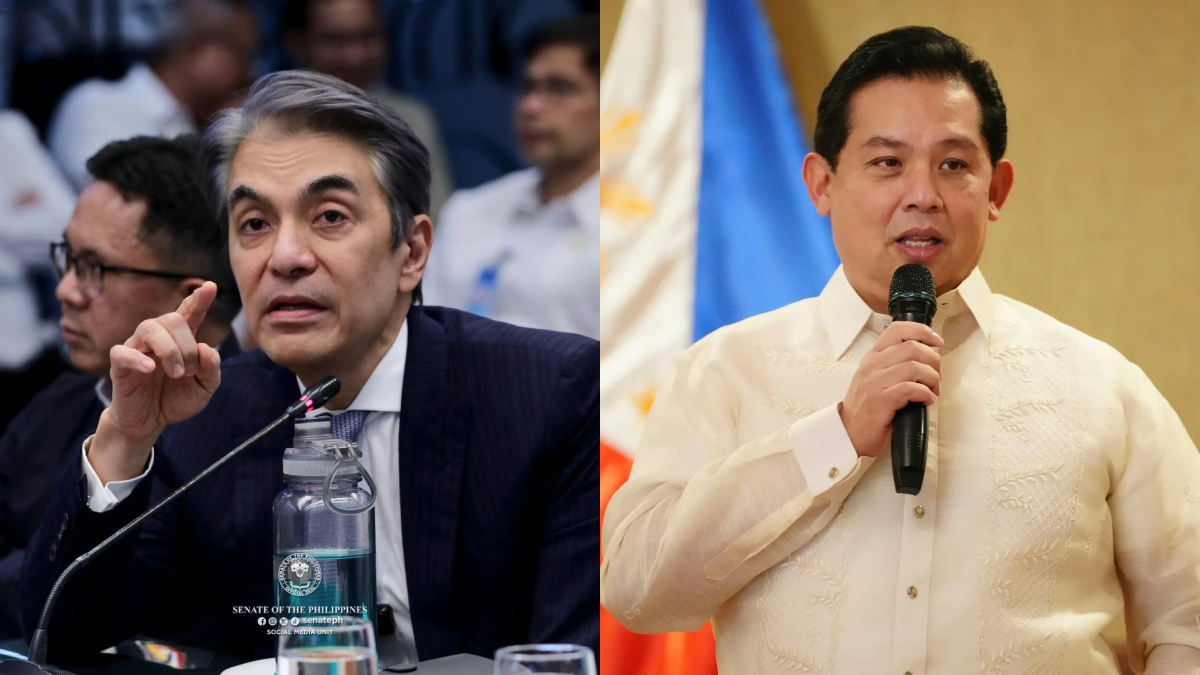

Navotas Rep. Toby Tiangco said the controversy over flood control projects and questionable insertions in the 2025 budget were key reasons behind the removal of former House Speaker Martin Romualdez.

In an interview with The STAR’s “Truth on the Line” on Thursday, Tiangco recalled that tensions inside the chamber were already building before President Marcos’ State of the Nation Address in July, but the leadership crisis intensified once the budget anomalies surfaced.
“People saw the need for a change in leadership,” Tiangco said, adding that both public outrage and pressure from lawmakers themselves eventually forced the chamber to act.
He pointed to alleged irregular allocations uncovered during the bicameral conference on the 2025 budget, where funds were slashed from health, education, and infrastructure, then shifted into unprogrammed appropriations. Among these were P13.8 billion in projects tied to then-appropriations chair Rep. Zaldy Co. According to Tiangco, even some congressmen were shocked to see projects in their districts that they had never requested.
The President later confirmed the questionable allocations through inspection, further eroding trust in the leadership, Tiangco noted.

The lawmaker also explained that he turned down suggestions to be considered as speaker. “I didn’t want people to think I exposed this just to get the position,” he said.
Instead, Tiangco voiced support for the reforms initiated by Speaker Bojie Dy, saying the budget system must ensure that projects are legitimate and beneficial. “It’s not wrong for congressmen to seek projects for their districts,” he said. “What’s important is there should be no irregularities in those projects.”
Former congressman Robert Ace Barbers, meanwhile, commended Romualdez for stepping aside, saying it was a move to preserve the House’s integrity and allow an independent probe to proceed. “This is only a proof that he is no kapit-tuko in his position and he is ready to sacrifice to save the House of Representatives from losing respect,” Barbers said.
Looking ahead, Tiangco admitted he is torn about his political future. He revealed that he completed an executive program at Harvard Business School to prepare for a possible shift to private enterprise, but has yet to decide if he will seek higher office in 2028 or retire from politics altogether.
“In 2028, I’ll be 60 years old. If at 60 I continue being a politician, it might be too late for me to try something new. So, it’s a very, very difficult decision for me now,” he said.
