



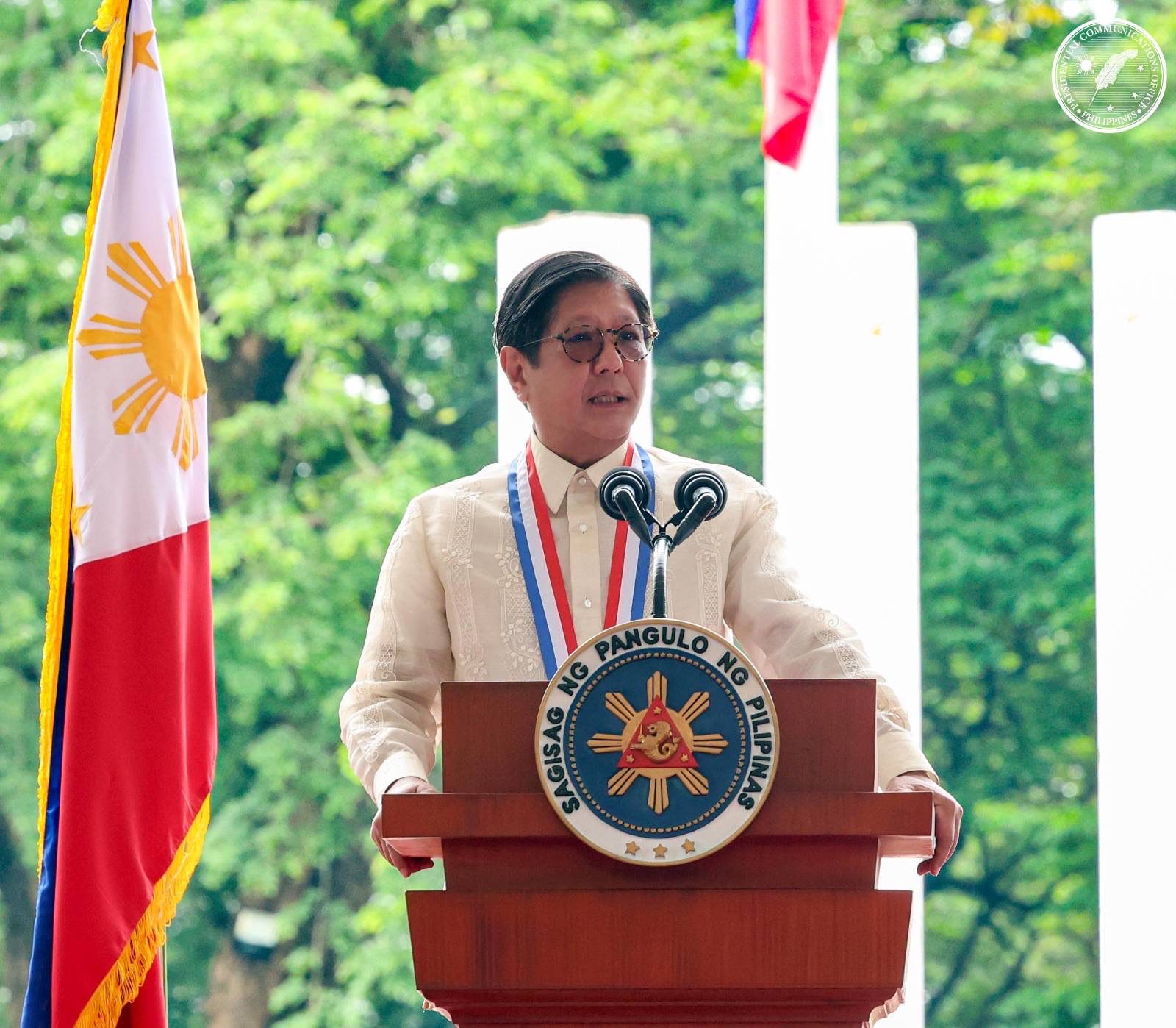

Malacañang on Friday clarified that President Ferdinand Marcos Jr. is willing to make his assets and net worth public, but only if such disclosure is considered essential in connection with the government’s lifestyle checks.

Palace press officer Claire Castro stressed in a briefing that the administration’s focus should remain on holding accountable those behind irregularities in multibillion-peso flood control projects, rather than allowing the issue to turn political.
Her statement came after Senate Deputy Minority Leader Risa Hontiveros urged the President to release his own Statement of Assets, Liabilities and Net Worth (SALN), saying it would strengthen his directive for lifestyle checks across government. Hontiveros said she was ready to disclose her own SALN, adding it would reveal her middle-class status.
Initially, Castro avoided directly addressing the senator’s call but later said, “That is part of the lifestyle check. If there is a lifestyle check, whether the President will be the first or the last, that’s included.” When pressed further, she added: “If it is necessary, as we have stated. We repeat: All the members of the executive (branch) are ready for a lifestyle check.”

Calls for transparency also came from the Makabayan bloc, which warned that a refusal by Marcos to undergo scrutiny could be seen as undermining the probe.
Marcos has previously expressed hesitation over public disclosures of SALNs. In a 2022 interview, he argued that such documents can be weaponized for political attacks, citing the case of the late Chief Justice Renato Corona, who was ousted in 2012 for failing to fully declare his assets. At the time, then-Senator Marcos voted to acquit Corona.
Meanwhile, Senate Majority Leader Juan Miguel Zubiri said lifestyle checks should apply to all government officials, elected and appointed alike. He pointed out instances where politicians live lavishly despite modest official incomes, stressing that declared assets must align with tax records.
Zubiri added that employees of agencies like the Bureau of Internal Revenue and Bureau of Customs should not be exempt and called for a third-party body, including civil society groups, to monitor the process. “Civil society participation is needed to watch over the watchdogs,” he said.
