



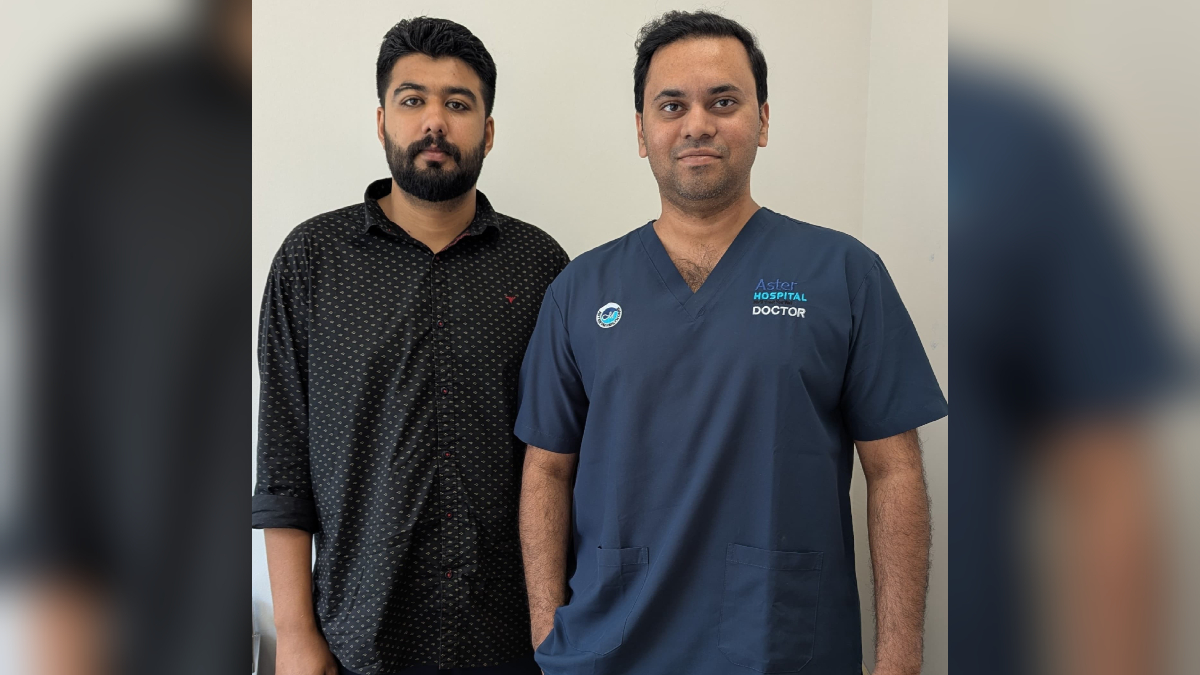

A 27-year-old Pakistani expat in Dubai has made a remarkable recovery after being diagnosed and treated for Superior Vena Cava Syndrome (SVCS)—a rare and potentially life-threatening condition that restricts blood flow from the upper body to the heart.

Muhammad Bilal had been struggling with mysterious symptoms for nearly four years. What began as minor swelling on the right side of his face and neck eventually worsened, spreading across his face and leading to shortness of breath, painful swelling, headaches, and visible bulging veins on his neck, chest, and abdomen. Despite visiting multiple hospitals in the UAE and Pakistan, his condition remained undiagnosed until he sought help at Aster Cedar Hospital, where he was referred to vascular specialist Dr. Roshan Rodney S at Aster Hospital Mankhool.
Doctors discovered a complete blockage in Bilal’s superior vena cava—the large vein responsible for transporting blood from the upper body to the heart. In response, his body had started forming alternative blood channels to compensate for the obstruction.
Dr. Roshan and his team performed a minimally invasive procedure involving balloon angioplasty and the placement of a self-expanding stent, successfully restoring proper blood flow. “The vein was completely blocked, and the body had formed alternate routes to keep blood flowing,” Dr. Roshan explained. “With the support of our anesthesia, cardiology, and ICU teams, we were able to restore blood flow seamlessly. The patient began to show significant symptom relief within hours of the procedure.”

The transformation was swift. By the next day, the swelling had dramatically subsided and the distended veins had disappeared. Bilal is now recovering well, with follow-up scans confirming that the stent is functioning properly.
“I had been suffering for years, trying different hospitals and doctors, but no one could identify the problem,” Bilal said. “At Aster Hospital, I finally found answers. Dr. Roshan immediately diagnosed my condition and provided the treatment I had been waiting for. The swelling is gone, the pain has stopped, and I feel like I can live normally again.”
SVCS is often linked to cancer or long-term use of medical devices, but in Bilal’s case, the cause was unknown—making it even more exceptional. The successful outcome highlights the importance of advanced diagnostics, specialized expertise, and coordinated care in tackling rare medical conditions.
