



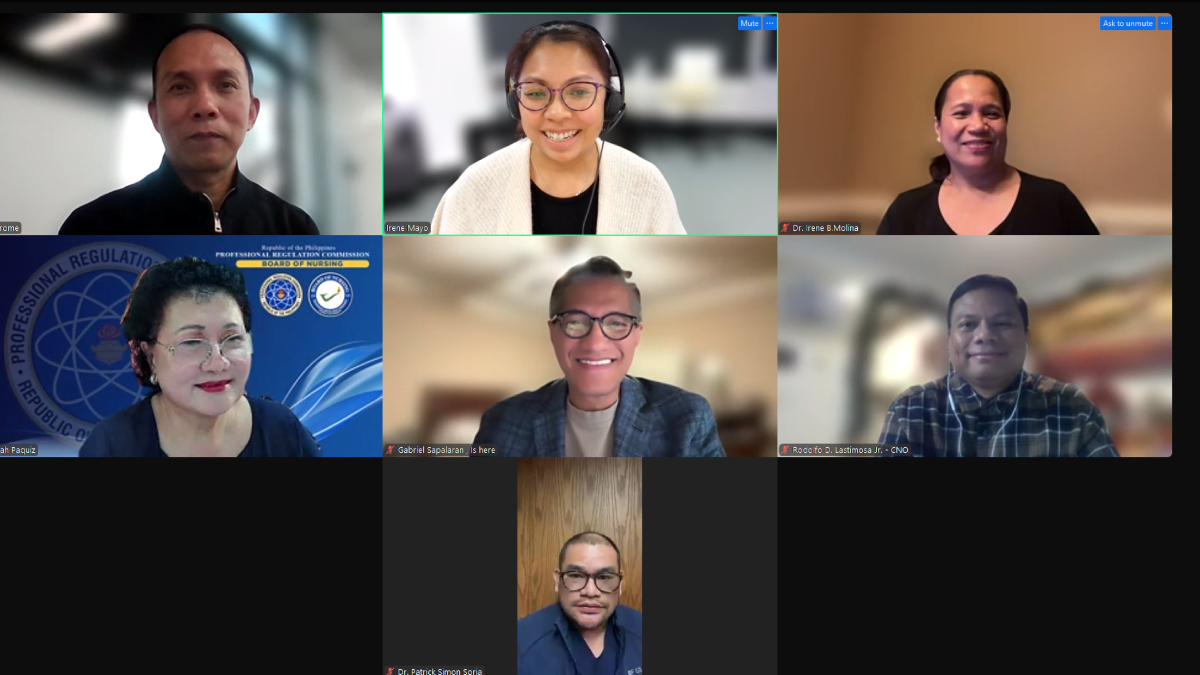

The inaugural virtual roundtable meeting of Filipino nursing regulatory leaders gathered a diverse group of experts from across the globe, each bringing unique insights and experiences on the future of nursing regulation. The meeting, hosted by Dr. Jerome Babate, Executive Director of the Filipino Nursing Diaspora (FiND) Network, was attended by Filipino nursing regulatory leaders from the United States, Canada, and the Philippines, all eager to collaborate on enhancing the workforce sustainability and quality of care provided by Filipino nurses worldwide.

Opening the session, Irene Mayo, FiND Network’s Director for Engagement, extended a warm welcome to all participants, acknowledging the time differences between the regions and the value of such a discussion. “This session provides a valuable opportunity for open dialogue, collaboration, and the sharing of insights from across our countries,” she said. “As our healthcare systems evolve, strong, adaptive regulation plays a critical role in supporting the nursing profession and ensuring that nurses meet community needs.”
Dr. Irene Molina from Maryland, USA, highlighted the challenges of nurse registration and the progress her state has made in streamlining the process. “In Maryland, we have two pathways for nurses to register—by examination or by endorsement. Recent legislative changes have made it easier for international nurses to apply, but we still face challenges in staffing and outdated IT infrastructure,” she explained.
In Ontario, Rodolfo Lastimosa Jr. spoke of his experience with the College of Nurses Ontario, mentioning that the registration process for internationally educated nurses has evolved over time. “We now use multiple credentialing agencies to speed up the process. It used to take a year to get results, but now it’s faster—typically about three months,” he shared. He also emphasized the need for continuous education for internationally educated nurses to ensure their standards match those required by Canadian health institutions.
Dr. Leah Paquiz, Chairperson of the Philippine Board of Nursing, brought a unique perspective to the table, discussing the ongoing bilateral talks with Canada and the Philippines. “We are working on making sure that Filipino nurses are recognized as registered nurses in Canada and beyond. It’s about making sure our nurses are not just qualified but respected for their expertise,” she noted passionately, addressing the issue of volunteerism and the lack of fair compensation for Filipino nurses in certain countries.

Mr. Gabriel Sapalaran from Alabama, USA, shed light on the criminal background checks and transparency in nursing regulation, stressing that these checks are essential to ensure patient safety. “In Alabama, we also conduct criminal background checks during registration and renewal processes to ensure the integrity of the nursing profession,” he said.
As the meeting progressed, discussions around Continuing Professional Development (CPD) and license renewal highlighted differing practices across jurisdictions. Dr. Patrick Soria from Minnesota spoke about the importance of CPD in Minnesota, where nurses are required to complete 24 units every two years. “We’re ensuring nurses stay current with best practices and that they contribute to the safety and quality of care in our healthcare systems,” he said.
At the close of the meeting, Dr. Paquizs emphasized the need for a collective effort to improve the nursing workforce, not only in the Philippines but globally. “I’m proud to see the progress we are making, but there’s still much work to be done. These kinds of collaborations are essential for our nurses to thrive,” she concluded.
The session ended with a commitment to continue the collaboration, with future meetings expected to include more global nursing regulators. A formal group under the FiND Network will also be established to keep the momentum going.
Disclaimer: The views expressed by the US-based board of nursing members are their own and should not be interpreted as official positions of their respective boards. Thank you.
