



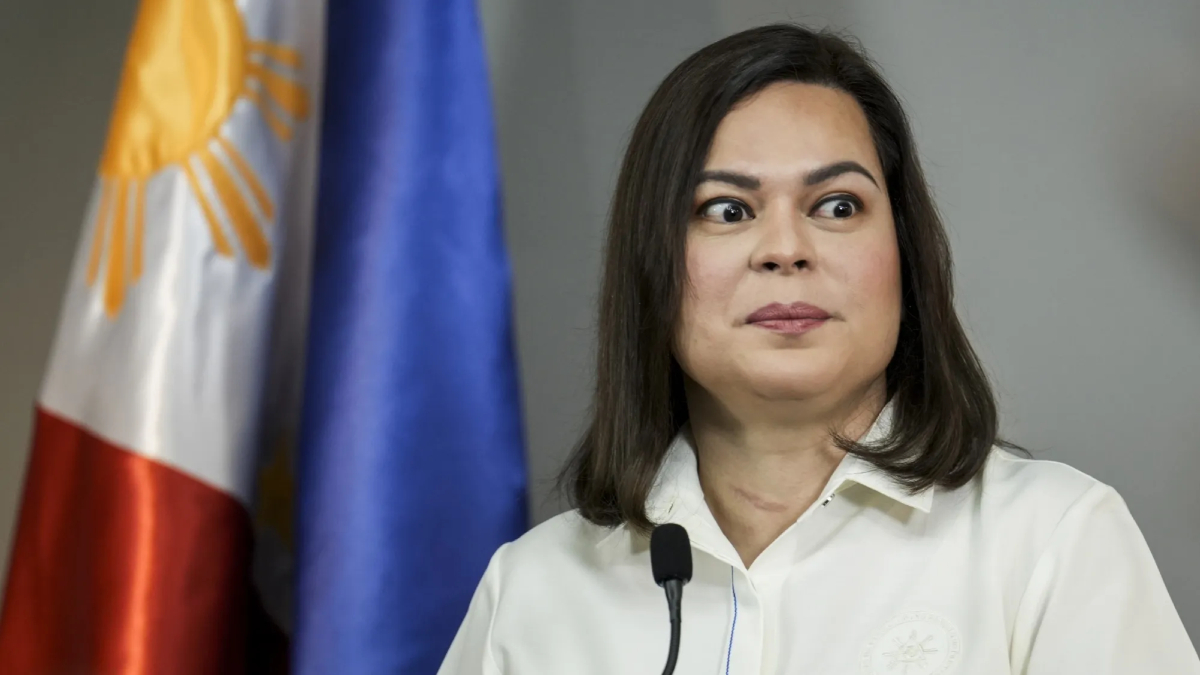

The Supreme Court of the Philippines has declared the impeachment proceedings against Vice President Sara Duterte unconstitutional, effectively stopping a political crisis that threatened her position.

The impeachment complaint, initiated in the lower house earlier this year, accused Duterte of fund misuse and inciting violence against President Ferdinand “Bongbong” Marcos Jr. But in a press briefing on Friday, the High Court emphasized that the process breached a constitutional rule that bars multiple impeachment proceedings against the same official within a single year.
While the ruling blocks her removal for now, the court clarified that it does not clear Duterte of the serious allegations. Instead, it resets the political clock, postponing any renewed impeachment attempts until February 2026 — and giving Duterte breathing room to regroup politically.
The ruling has significant implications for the 2028 elections. Had she been convicted, Duterte would have been barred from seeking the presidency — a path her allies believe she is strongly considering.
Tensions between the Duterte and Marcos camps have been escalating since their once-formidable alliance under the “Uniteam” banner in 2022 fractured. What began as a powerful coalition quickly disintegrated into a high-profile feud. The rivalry intensified last November after Duterte made a cryptic social media post implying she had arranged retaliation if she were assassinated — a remark that partly triggered the impeachment move.

The situation became even more volatile after former President Rodrigo Duterte, her father, was extradited to The Hague to face charges related to his bloody anti-drug campaign.
Despite the drama, political observers had long speculated that the impeachment would struggle in the Senate, where Duterte gained influence following surprising wins in the last election.
The Supreme Court’s 15-member bench — mostly appointed during Rodrigo Duterte’s administration — now becomes a central player in what many see as an increasingly unpredictable political battlefield.
The last successful impeachment in the Philippines remains that of former Chief Justice Renato Corona in 2012. Since the restoration of democracy in 1986, the nation has seen very few impeachment efforts reach a verdict — a reflection of its turbulent and faction-driven political environment.
