



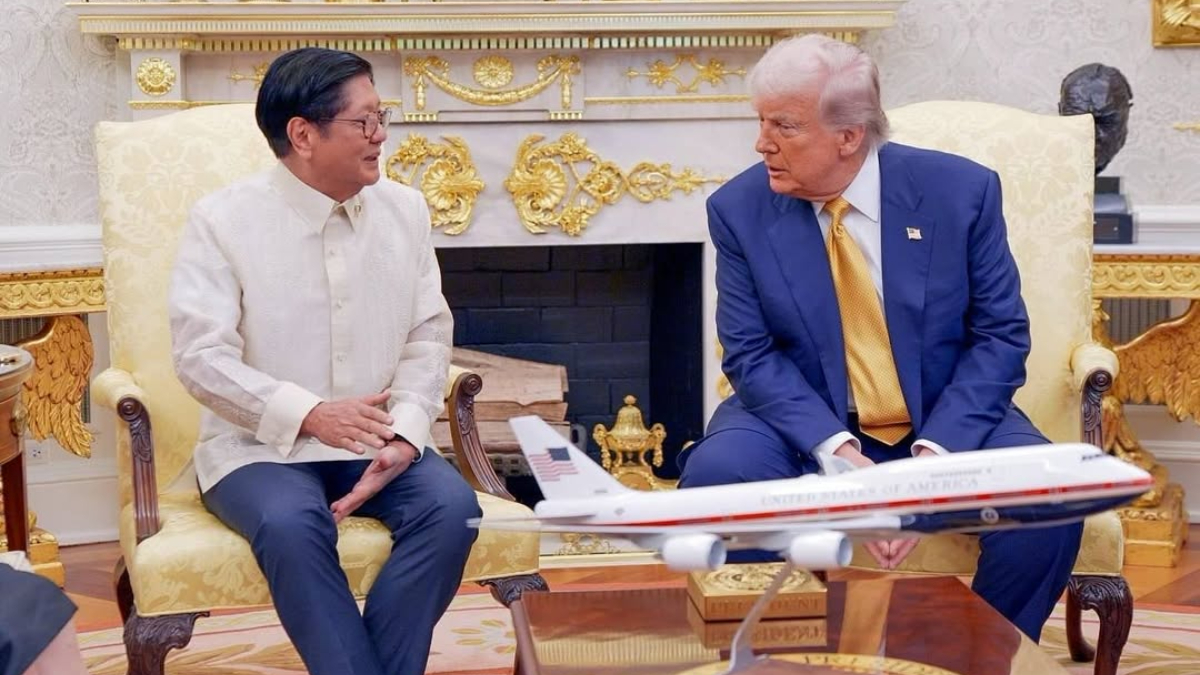

U.S. President Donald Trump has set a new 19% tariff rate on goods from the Philippines, following a White House meeting with Philippine President Ferdinand Marcos Jr., whom he described as a “very good and tough negotiator.” The announcement came after what Trump called a “beautiful visit,” where both leaders concluded a new trade deal.

The tariff is slightly below the earlier threatened 20% rate but still higher than the 17% announced in April. According to Reuters, the agreement also allows U.S. goods to enter the Philippine market with zero tariffs, signaling a major shift in bilateral trade terms.
“It was a beautiful visit, and we concluded our Trade Deal, whereby The Philippines is going OPEN MARKET with the United States, and ZERO Tariffs. The Philippines will pay a 19% Tariff,” Trump wrote on Truth Social after the Oval Office meeting.
While Marcos did not issue a comment following Trump’s announcement, Philippine Ambassador to the U.S. Jose Manuel Romualdez described the deal as “an evolving good deal for both countries that could be further improved over time.”

The Philippines is now aligned with Indonesia, which was also given a 19% rate, and slightly ahead of Vietnam’s 20%. Trump’s trade policy has been marked by sweeping tariffs on most U.S. trading partners, with nearly all countries now facing a baseline 10% tariff, and more increases expected from August 1.
The new agreement comes as both countries prepare to celebrate 80 years of diplomatic ties next year. Marcos, the first Southeast Asian leader to visit Trump in his second term, reaffirmed the U.S. as the Philippines’ “strongest, closest, most reliable ally” during their meeting.
Trade analysts remain cautious. Gregory Poling of the Center for Strategic and International Studies noted that the absence of concrete details makes it difficult to assess the agreement’s full impact. Still, he emphasized that maintaining competitive parity with regional neighbors may be more important to the Philippines than the exact tariff figure.
Meanwhile, as Marcos arrived at the White House, demonstrators gathered nearby, calling on him to address longstanding concerns from Filipino Americans and migrant workers affected by U.S. immigration policies.
