



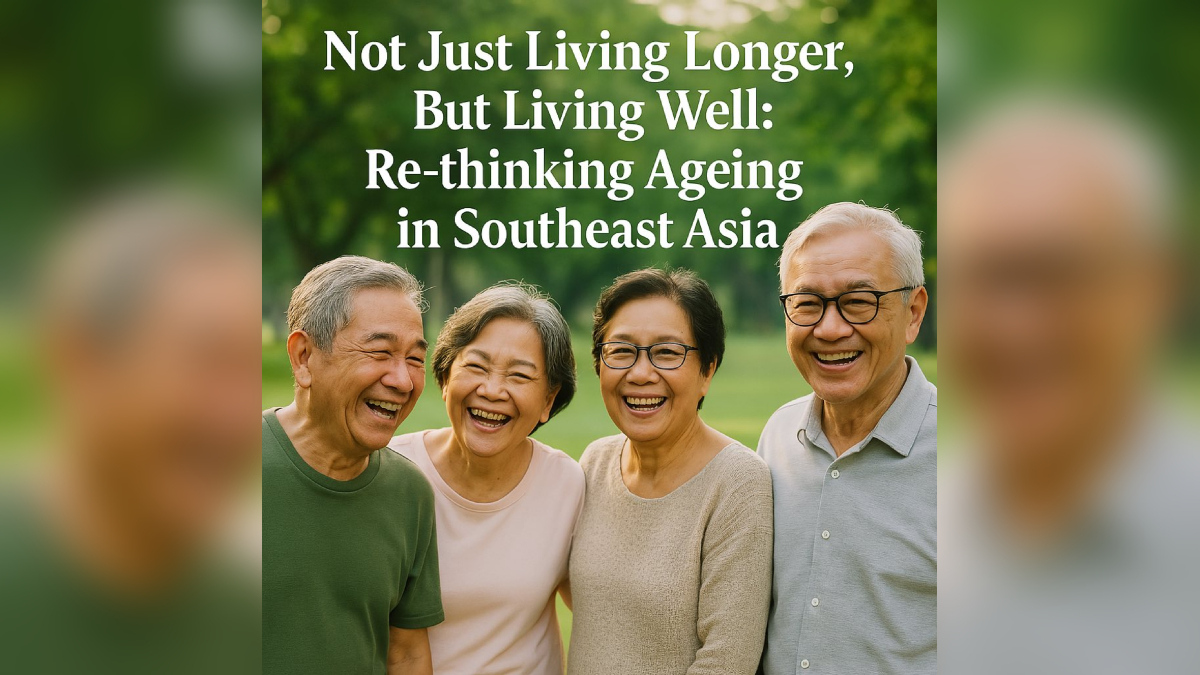

Across Southeast Asia, the demographic clock is ticking faster than many realize. Countries like the Philippines, Indonesia, Thailand, and Vietnam are ageing rapidly—well before they become economically prepared. What makes this shift particularly concerning is that most of these countries still have large informal economies, limited social protection coverage, and fragmented healthcare systems. As a result, older people are at greater risk of poverty, insecurity, and social exclusion.

But it doesn’t have to be this way. The concept of active ageing offers a compelling alternative. Instead of viewing older people as dependents or burdens, active ageing envisions them as contributors—engaged, healthy, and secure members of society. And this can only happen if governments, including the Philippines, implement bold, practical reforms that address both economic and social aspects of ageing.
First, there must be a strong focus on tackling labour market informality. In the Philippines, a significant portion of the population works in informal jobs that provide no retirement benefits or health insurance. This means that many older people, especially those who worked informally, continue to work out of necessity well into their senior years. Strengthening access to contributory pension schemes, encouraging formalization of work, and introducing portable social insurance for informal workers are necessary steps to protect older workers from falling into poverty.
Second, we must reduce gender inequalities in old age. Women tend to live longer, earn less, and take on unpaid caregiving roles throughout their lives. This results in lower savings, smaller pensions, and more vulnerability in old age. Gender-responsive policies—such as crediting caregiving years in pension calculations, providing support for older women carers, and expanding targeted cash transfers—can help close this gap.
Third, we must improve care provision for older persons. With changing family structures and more working-age members migrating, older people are increasingly left alone or reliant on overstretched relatives. Investing in community-based care services, training caregivers, and supporting the development of a formal care economy can ensure that older people receive the physical and emotional support they need without overburdening families.

Fourth, inclusive access to healthcare is non-negotiable. Older people face growing needs for chronic disease management, mental health support, and preventive services. Health insurance schemes must be expanded to ensure comprehensive, affordable care tailored to ageing-related conditions. Mobile health clinics and telemedicine can also bridge care gaps in rural areas.
Fifth, social participation must be actively encouraged. Whether through volunteering, joining senior citizen organizations, or participating in local governance, older people should be given meaningful roles in society. Governments and civil society must invest in recruitment, training, and recognition programs that keep older citizens engaged and valued. Not only does this combat isolation—it boosts mental health and community cohesion.
Lastly, ageing policies cannot be siloed. The National Commission on Senior Citizens (NCSC), along with the Department of Social Welfare and Development (DSWD), health and labor departments, and local governments, must work together to promote a whole-of-government approach. Public awareness campaigns—starting in homes, schools, communities, and workplaces—must challenge ageist stereotypes and foster intergenerational solidarity.
Southeast Asia is at a crossroads. With ageing accelerating and informality still dominant, the region cannot afford to be complacent. The Philippines has an opportunity to lead by example, showing that ageing with dignity and purpose is possible. But this requires urgent investment in systems that allow older people not just to live longer—but to live well.
