



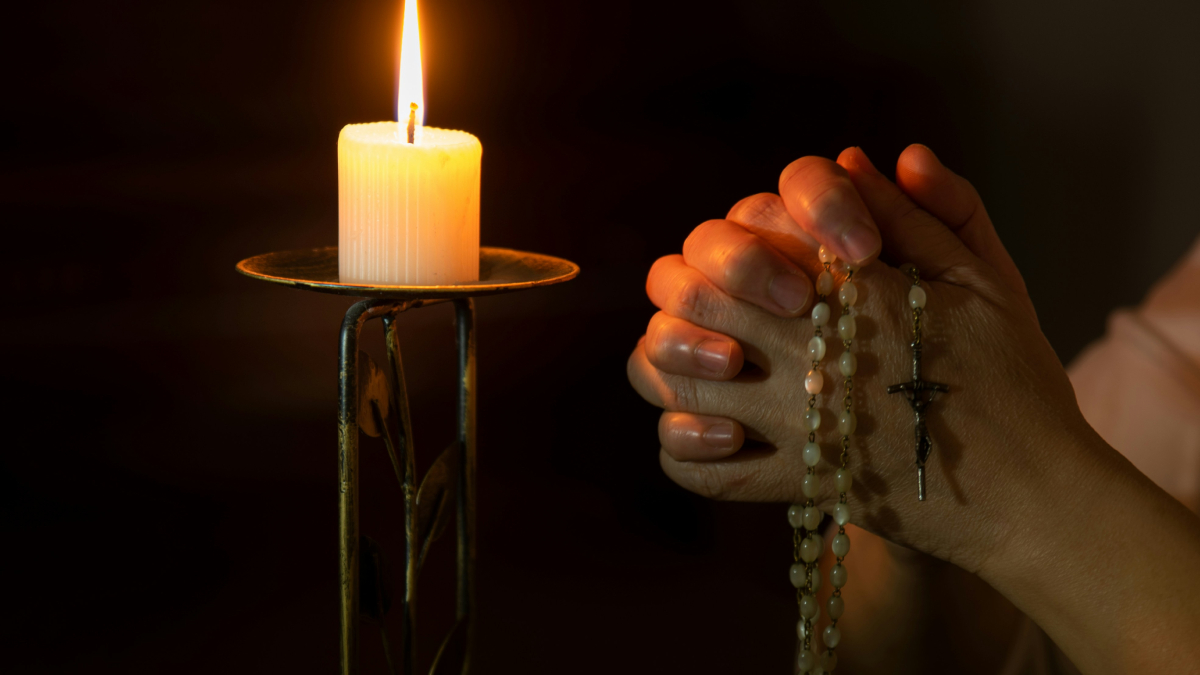

In a surprising twist to the wellness conversation dominated by mindfulness apps and yoga retreats, a newly published international study has found that praying the Catholic Rosary delivers significant mental health benefits — rivaling those offered by popular Eastern meditation techniques.

The study, featured in the Journal of Religion and Health, surveyed 361 practicing Catholics from Italy, Poland, and Spain. Participants who regularly prayed the Rosary reported greater emotional well-being, increased empathy, and reduced spiritual anxiety — outcomes commonly linked to practices like mindfulness and mantra meditation.
Lead researcher Fr. Lluis Oviedo of the Pontifical University Antonianum in Rome said the project emerged from a sense of imbalance in academic literature. “A lot of research had been devoted to mindfulness, but practically nothing about the Rosary,” he told CNA. “I was convinced we would find positive results.”
The data didn’t disappoint. In Poland, where Catholic traditions remain culturally strong, participants recorded the highest frequency of Rosary prayer. Meanwhile, Italian respondents — despite less frequent practice — showed the highest levels of empathy. In Spain, researchers noted strong mental health benefits among those who prayed regularly, even if overall engagement was lower.
Notably, the research defied common stereotypes: over 62% of respondents held graduate or master’s degrees, challenging the perception that traditional Catholic devotions are mostly practiced by the uneducated.

A particularly moving testimony from one participant underscored the Rosary’s emotional depth: “Praying the Rosary saved my life. After my husband’s death, I couldn’t cope with the pain and emptiness… it gave me the strength to survive.”
The Rosary’s benefits stem in part from its repetitive rhythm, which mirrors the calming patterns of mantra meditation. Researchers found that it cultivates spiritual peace, helps individuals cope with life’s problems, and even reduces symptoms of depression. Contrary to assumptions, it also appeared to strengthen social empathy rather than promote isolation.
However, the study also highlighted academic biases. While there are over 30,000 published entries on “mindfulness” in PubMed, “rosary prayer” has just 13 — a reflection, Oviedo believes, of a cultural tendency to overlook Western contemplative traditions.
He stressed the need for theologians to engage more deeply with lived religious practices. “The worst aspect is the theological indifference or even hostility towards such devotional practices,” he said. “We need a ‘theology from below’ that listens to how believers actually live and express their faith.”
