



With New Year’s Eve drawing large crowds to multiple celebration zones, Dubai authorities are shifting the focus early to mobility, safety, and crowd control as the city prepares for one of its busiest nights of the year.
To manage traffic around major celebration areas, a series of road closures will be introduced in stages starting at 4pm on December 31. The initial phase will affect Al Asayel Street, Sheikh Mohammed bin Rashid Boulevard, Burj Khalifa Street, Lower Financial Centre Street, and Al Mustaqbal Street between the Financial Centre intersection and Commercial Centre Street. Officials said closures will be applied progressively to redirect vehicles away from high-density zones.
Additional restrictions will follow later in the evening. Al Sukook Street is set to close at 8pm, Upper Financial Centre Street at 9pm, and a major section of Sheikh Zayed Road—between the Al Maidaan intersection and the Commercial Centre roundabout—at 11pm.
Public transport capacity has been significantly expanded to absorb the expected surge in passengers. The Roads and Transport Authority announced that the Dubai Metro will operate continuously for 43 hours, starting at 5am on December 31 and running until midnight on January 1. Dubai Tram services will also be extended, operating from 6am on December 31 through to 1am on January 2. More than 1,300 buses and over 14,000 taxis will be deployed, supported by thousands of transport personnel across key locations.
Security and emergency preparedness form a central part of the citywide plan. Nearly 10,000 Dubai Police officers will be on duty, backed by patrol units on land and sea, mounted teams, and bicycle patrols. Civil Defence teams, municipal staff, DEWA personnel, and private security providers are also integrated into the operation. Medical readiness includes dozens of hospitals and field clinics, thousands of medical staff, and hundreds of ambulances positioned across celebration areas.
Authorities estimate that operations will span 40 designated celebration sites, with 48 separate fireworks displays scheduled across the city. Crowd movement will be supported by more than 100 Metro trains and thousands of transport and logistics staff assigned to Downtown Dubai and other high-traffic districts.
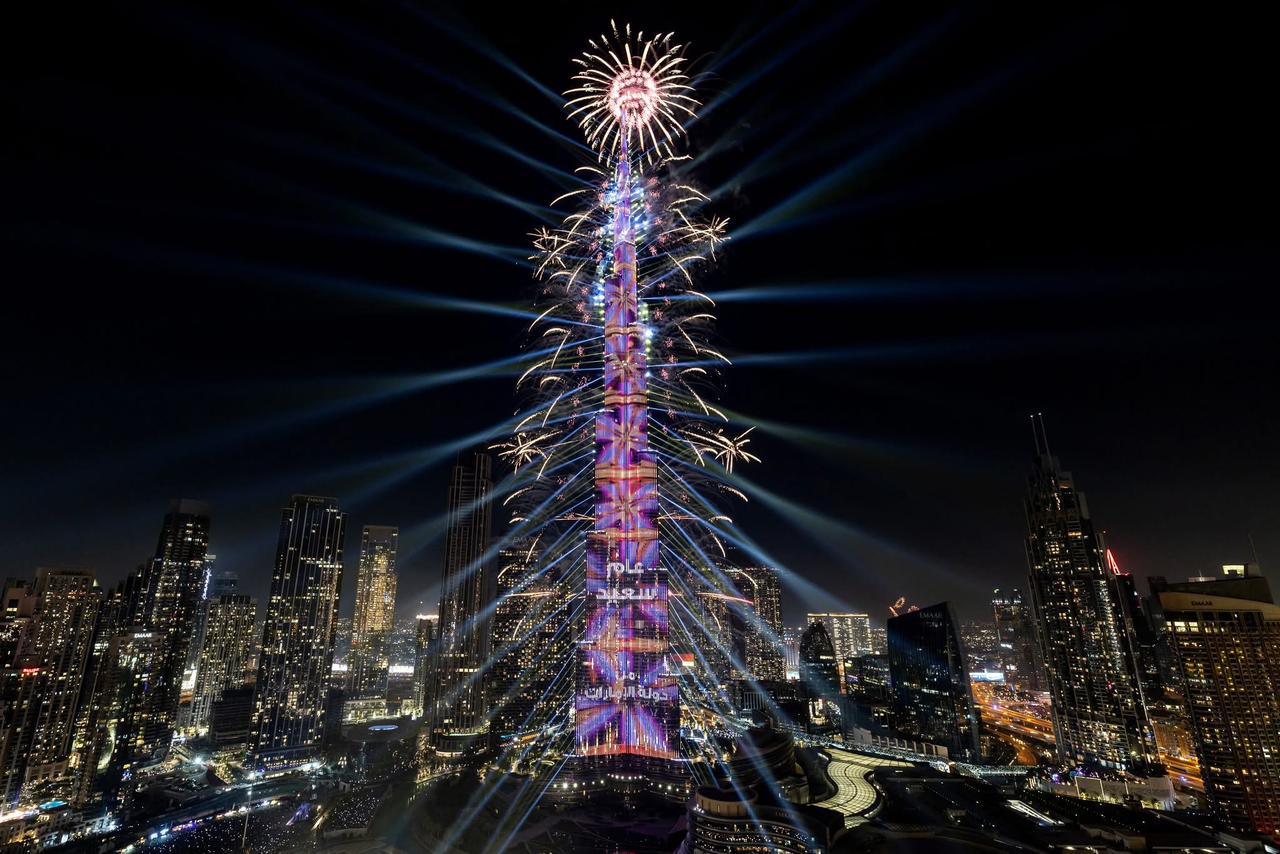
Downtown Dubai remains one of the main focal points, anchored by fireworks at Burj Khalifa and displays visible from surrounding areas. Fireworks are also planned at Palm Jumeirah, among other locations. While the main fireworks are confined to New Year’s Eve, accompanying attractions such as laser shows, drone displays, and fountain performances are scheduled to continue until January 7.
Burj Park will reopen as a ticketed viewing area, offering designated sightlines and programmed activities including live performances, food stalls, children’s workshops, and a parade featuring floats and performers. The entertainment lineup includes a Bollywood-themed segment produced by Shah Rukh Khan’s Red Chillies Entertainment. Ticket prices start at Dhs997.50 for adults and Dhs577.50 for children, with free entry for children under five. Free public viewing areas with LED screens will also be available across Downtown Dubai, alongside restaurant viewing packages around Dubai Mall and Souk Al Bahar.
