



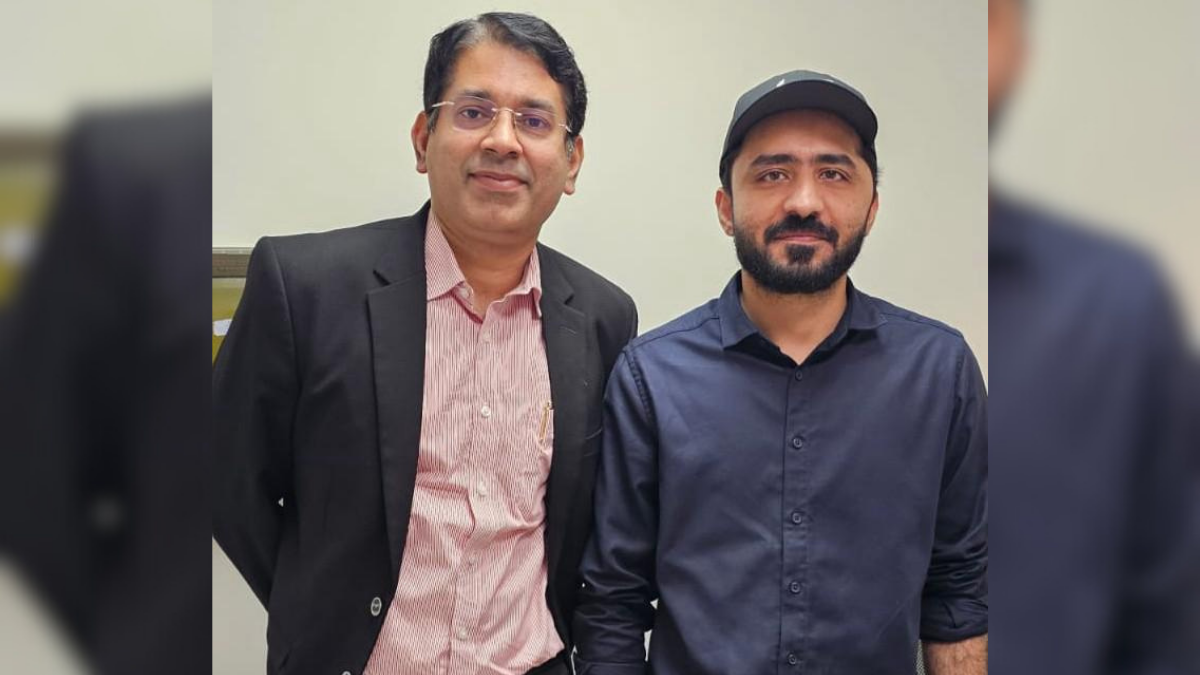

What began as eye pain and headaches after a routine flu quickly escalated into a medical emergency when a 30-year-old man lost vision in both eyes within days, prompting urgent intervention by doctors in Dubai.

The patient, Mr. Emad Arif Khan, a Pakistani real estate consultant living in Sharjah, sought specialist care after his eyesight deteriorated to the point that reading, writing, and basic household tasks became difficult. Until then, he had been fully independent and in good health, including driving and working without limitation.
At Aster Hospital Mankhool, an ophthalmic assessment revealed papilledema, or swelling of the optic nerves, a red flag for dangerously raised pressure inside the skull. Imaging conducted immediately afterward identified a large arachnoid cyst exerting pressure on the visual pathways of the brain, along with a second, smaller cyst near the cerebellum.
While arachnoid cysts are found in roughly 1.4 percent of patients undergoing brain MRI scans, most cause no symptoms and are often discovered incidentally. The majority are diagnosed in childhood, are more common in males, and typically do not require surgery. Adult cases presenting with acute vision loss are considered exceptionally uncommon.
Given the risk of irreversible blindness, the neurosurgical team proceeded with emergency intervention. Surgery was performed on the left side of the skull to open and drain the cyst, relieving intracranial pressure. Laboratory analysis later confirmed the cyst was benign.
Postoperatively, the patient experienced temporary speech difficulty, a known transient effect following shifts in brain pressure, but no limb weakness, facial paralysis, or seizures. His recovery included physiotherapy, clot prevention measures, nutritional support, and monitoring of a temporary fluid collection beneath the scalp. Follow-up CT and MRI scans showed marked reduction of the cyst and full re-expansion of brain tissue, without complications.

By the time of discharge on 25 June 2025, his headaches had resolved and vision had returned to normal levels. Subsequent examinations confirmed 6/6 visual acuity, normal eye pressure, absence of papilledema, and no neurological deficits. A follow-up MRI was advised after two months. He later traveled to his home country and reported resuming a normal, healthy life.
Reflecting on his experience, Mr. Emad said “When my vision loss occurred suddenly, it was a frightening experience that deeply worried me and my family. Even simple daily tasks became difficult. By the grace of Allah Almighty, I have completely recovered, and my vision has been fully restored.
I am sincerely thankful to Dr. Prakash, Dr. Parth, the dedicated nursing team, and all the staff at Aster Hospital, Mankhool. From housekeeping to security, everyone not only cared for me but also extended immense support and reassurance to my family during this challenging time. Their professionalism, compassion, and constant care gave us confidence and peace of mind throughout my treatment, and I am truly grateful for their role in helping me regain my quality of life.”
Commenting on the case, Dr. Prakash Nair said “Arachnoid cysts are usually asymptomatic and rarely affect vision. Only a small percentage (~3–4%) of patients require surgery, making this case exceptionally rare. Swift diagnosis and immediate surgical intervention were critical to saving Mr. Emad’s vision.”
Dr. Parth Joshi noted “Early recognition of papilledema and urgent ophthalmic evaluation were key in identifying the underlying cause of Mr. Emad’s sudden vision loss. This case highlights the importance of a multidisciplinary approach, where ophthalmology and neurosurgery work closely together to ensure the best possible outcome for the patient.”
Medical literature indicates that more than 90 percent of arachnoid cysts remain asymptomatic throughout life, underscoring the unusual nature of cases where rapid neurological deterioration occurs in adulthood.
