



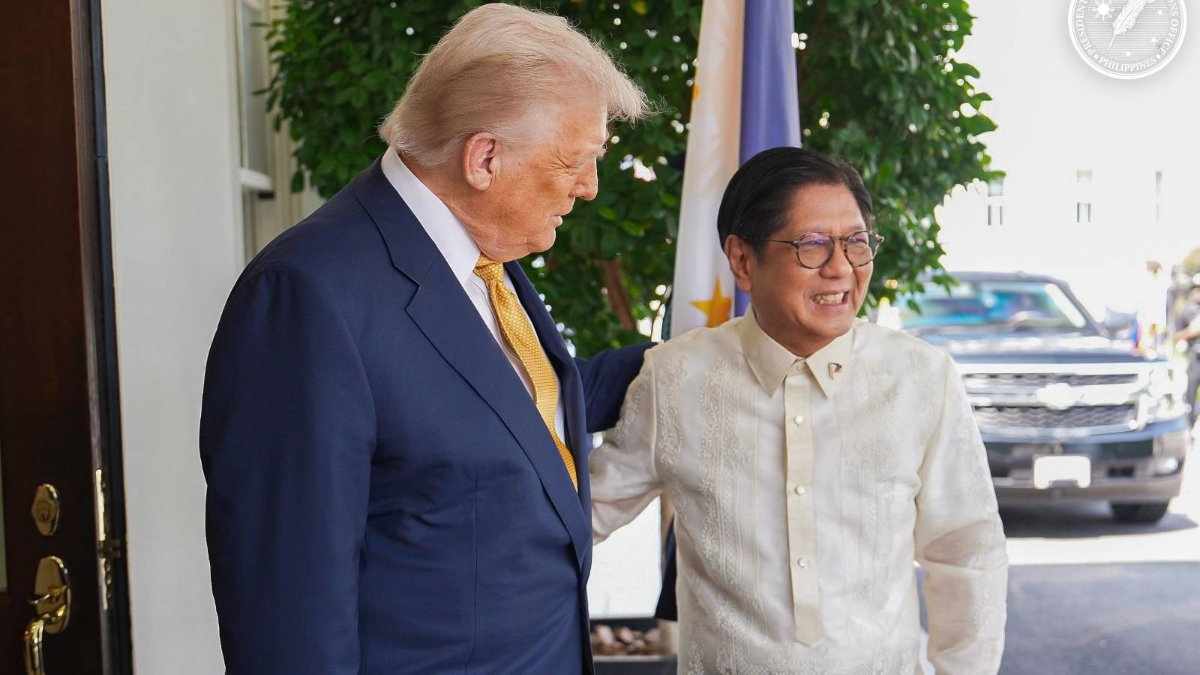

The United States has announced a fresh foreign aid package worth P3 billion ($60 million) for the Philippines, following President Ferdinand Marcos Jr.’s recent high-level discussions with U.S. Secretary of State Marco Rubio in Washington, D.C.

According to a statement from the U.S. Embassy in Manila, the funding aims to strengthen key sectors in the country—specifically energy, maritime, and economic development. “This is the U.S. government’s first announcement of new foreign assistance for any country since the Trump administration began its review and realignment of foreign assistance in January,” the embassy emphasized.
The announcement comes in the wake of former President Donald Trump’s January 20 directive to freeze all foreign development assistance as part of a broader reassessment of U.S. aid policies.
In addition to the initial support, Rubio committed to coordinating with Congress for a potential P825 million ($15 million) investment aimed at enhancing private sector activity along the Luzon Economic Corridor (LEC)—a trilateral infrastructure partnership among the Philippines, U.S., and Japan that connects Metro Manila to key economic zones like Clark, Subic, and Batangas.

“If approved, this funding will support investments in the areas of transport, logistics, energy, and semiconductors that will help create jobs and drive economic growth in the country,” the embassy stated.
However, the visit also produced a controversial trade deal that has drawn criticism from progressive groups. Under the agreement, Philippine exports will face a 19 percent tariff—slightly down from the initially threatened 20 percent—while U.S. goods will enter the Philippine market tariff-free.
President Marcos acknowledged that some may view the 1-point tariff cut as minor but called it a “significant achievement.” Critics, however, denounced the deal as lopsided, accusing the Philippine government of submitting to an unequal trade relationship with Washington.
The 19 percent tariff on Philippine exports ranks as the second lowest in Southeast Asia, next only to Singapore’s 10 percent.
