



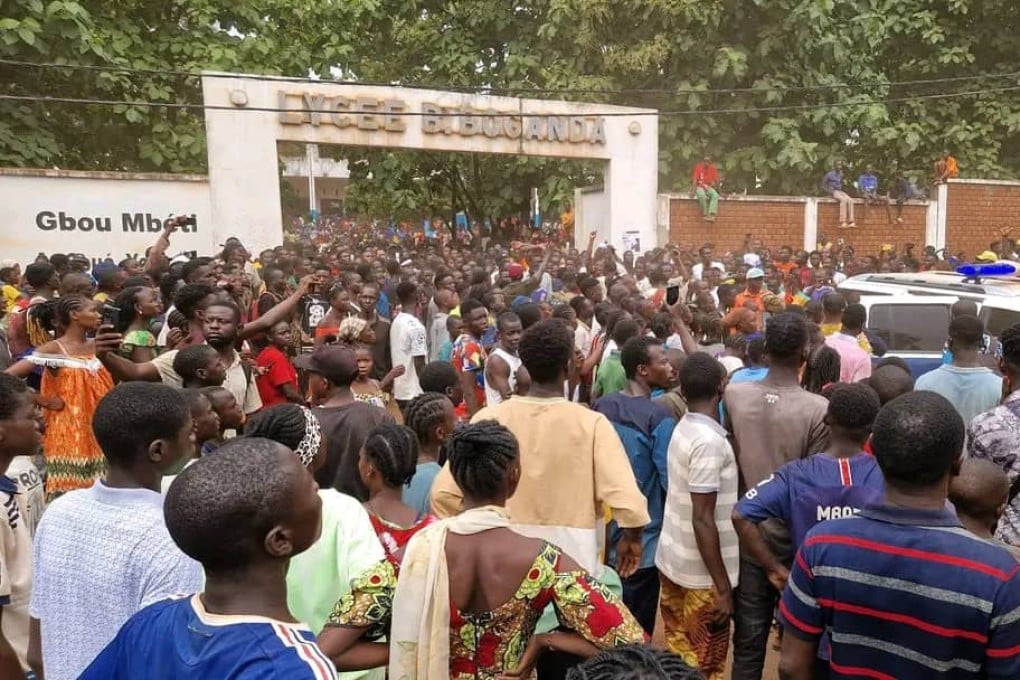

A high school exam in Bangui, the capital of the Central African Republic (CAR), turned into tragedy after an explosion triggered a deadly stampede, killing at least 29 students, authorities confirmed to AFP on Thursday.

The explosion, caused by a power transformer, sent over 5,000 students scrambling for safety during the second day of baccalaureate exams on Wednesday. In the chaos that followed, panicked students and supervisors fled the school building—some even leaping from the first floor to escape.
Hospitals across the city recorded 29 fatalities, according to a document authenticated by the Ministry of Health. “The hospital was overwhelmed by people to the point of obstructing caregivers and ambulances,” a health ministry source told AFP.
Disturbing scenes unfolded as injured students were transported not only by ambulance but also on the backs of motorcycles and pickup trucks, AFP journalists observed.
President Faustin Archange Touadera, currently in Brussels for a global vaccine summit, expressed his deep condolences in a video message. “I would like to express my solidarity and compassion to the parents of the deceased candidates, to the educational staff, to the students,” he said. Touadera also declared three days of national mourning.

Security forces, including UN peacekeepers and police, were deployed to the Barthelemy Boganda high school and nearby medical facilities.
Education Minister Aurelien-Simplice Kongbelet-Zingas pledged an immediate investigation. “Measures will be taken quickly to shed light on the circumstances of this incident,” he said, adding that a follow-up announcement will address when the affected students can resume their exams.
Meanwhile, the opposition bloc BRDC condemned the incident, blaming government negligence. They criticized the authorities for “failing in their duty to ensure the safety of students and school infrastructure.”
The Central African Republic, one of the world’s poorest nations, has endured decades of instability, marked by coups and conflict. Though violence has subsided in urban areas, sporadic clashes between armed groups and government forces—backed by Wagner mercenaries and Rwandan troops—continue in outlying regions.
This tragedy unfolds as CAR gears up for key municipal and national elections later this year, with UN experts warning that institutional reforms are urgently needed to ensure transparency and avoid further unrest.
