



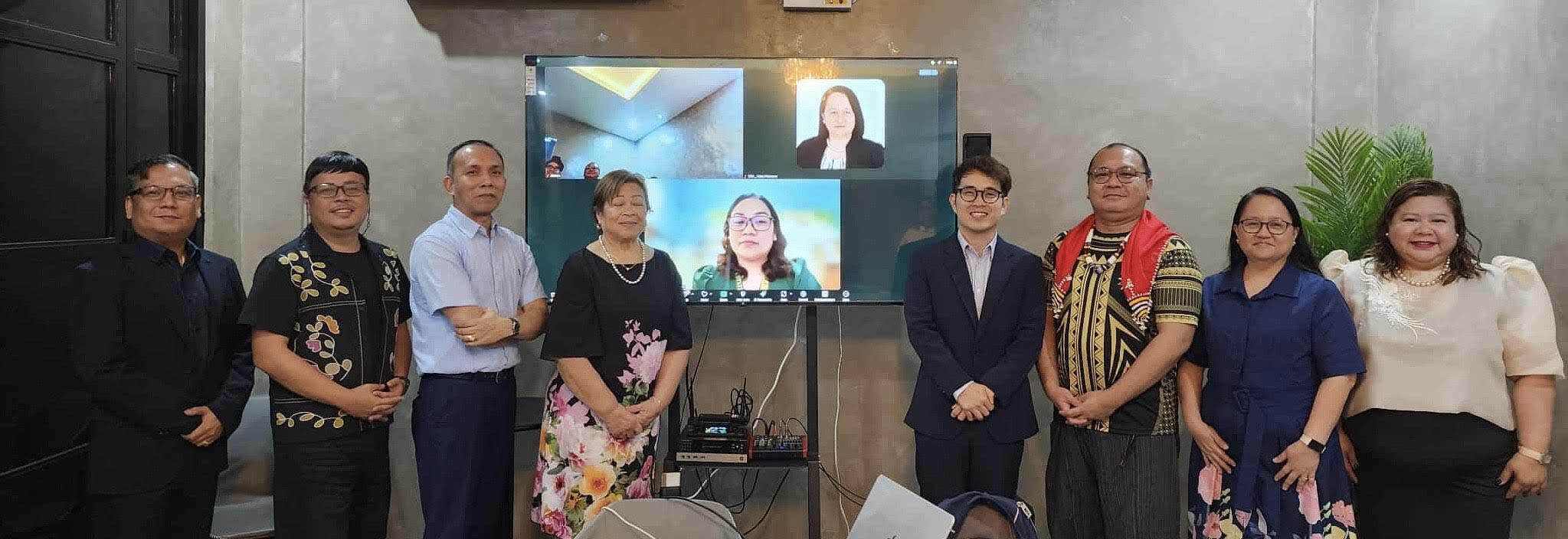

In a milestone gathering that underscored the power of unity, vision, and shared purpose, the Philippines’ leading nurse researchers came together on June 25, 2025, to chart the future of nursing scholarship.

Held at Barok Cafe in Davao City as part of the Philippine Nursing World Congress (PNWC) Satellite Meeting, this historic assembly convened the most prolific Filipino nurse researchers to address urgent questions: How can Filipino nursing research become more cohesive, better funded, and more visible across the world?
The meeting, officially titled the PNWC Experts’ Meeting of Nurse Researchers, brought together an impressive roster of participants, including Dr. Violeta Lopez (Convenor), Dr. Jed Montayre, Dr. Daisy Palompon, Dr. Pearl Ed Cuevas, Dr. James Montegrico, Dr. Ryan Oducado, Dr. Rudolf Martinez, and virtual participants Dr. Michael Joseph Dino and Dr. Janet de los Santos. Dr. Jerome Babate, Executive Director of the Philippine Nursing Diaspora Network (FiND), served as co-convenor and facilitator.
A Momentous Opening
Dr. Lopez set the tone with warm words of welcome, recognizing the significance of gathering such an accomplished group. “You are prominent researchers nowadays, and the future of nursing will continue to thrive through international collaboration,” she said, her voice carrying the conviction of decades of experience.
Dr. Jerome Babate followed with an overview of the objectives: to identify strategies for enhancing research capacity, explore pathways for international funding, and outline a roadmap to uplift Filipino nursing scholarship to the global stage.
Sharing Insights Across Borders
One of the meeting’s highlights was the sharing of international research trends. Dr. Jed Montayre, who has held faculty positions across New Zealand, Australia, and Hong Kong, candidly described the complexities of cross-country research.
“It’s not easy,” he admitted. “Health systems are very different. What works in Australia may not work in Cambodia or the Philippines. But if we want to be taken seriously as a research community, we must contextualize our approaches and build a strong foundation.”
Dr. Montayre also lamented the lack of a robust library database in the Philippines—an essential tool for evidence-based scholarship—and called for tapping diaspora expertise to enrich local capacity.
Dr. James Montegrico shared updates on Project SHIP, his innovative school-based HIV intervention in the Philippines. Having transformed his PhD dissertation into a large-scale, community-driven initiative, he underscored how dedicated research can serve as a bridge between academic knowledge and real-world impact.
The Challenges: Funding, Fragmentation, and Culture
As the group turned to the first of three key questions—What are the current challenges in nursing research in the Philippines?—the responses were candid and thought-provoking.
Dr. Pearl Ed Cuevas noted the problem of fragmented data. “We need to bring all the information together,” she said, stressing that without a unified repository, policymakers and researchers alike are left to navigate blind spots.
Dr. Ryan Oducado highlighted another issue: the lack of a cohesive nursing research agenda. While national health research frameworks exist, nursing priorities have often been sidelined.
Funding was an ever-present theme. Dr. Rudolf Martinez explained that many hospitals and universities allocate minimal budgets—barely enough to cover basic operational expenses, let alone ambitious research projects.
Even when funding is available, the group agreed that many nurses struggle with grant writing and publication, skills that are often absent from traditional training programs.

Beyond infrastructure, several participants noted cultural barriers: research is still viewed as secondary to bedside care, and advanced degrees are sometimes pursued more as credentials than commitments to knowledge generation.
Tapping Into International Funding
The second key question focused on how Filipino nurse researchers can access international funding opportunities.
Dr. Montegrico explained that major funders like the U.S. National Institutes of Health (NIH) require institutional registration—an administrative hurdle that can stymie even the most qualified applicants.
Dr. Montayre emphasized the importance of genuine, equitable collaborations. “It’s not just about ticking boxes to say you have a Filipino partner,” he said. “Each country must bring real contributions to the project.”
Other strategies proposed included establishing a registry of researcher expertise, developing training programs in grant writing, and creating a dedicated team to track funding opportunities.
Raising Global Visibility
As the conversation shifted to the third question—How can Filipino nursing research gain more global visibility?—participants shared ambitious ideas.
Dr. Cuevas championed the use of social media and infographics to broaden the reach of published studies. “It’s not enough to be in journals,” she said. “We have to communicate research in ways that resonate with communities and policymakers.”
Dr. Palompon and Dr. Dino emphasized the importance of occupying leadership roles in international organizations, such as the International Council of Nurses and editorial boards of high-impact journals.
Dr. Oducado added that securing seats at global tables isn’t just symbolic—it’s strategic. “If we don’t speak, no one will advance our agenda for us,” he said.
A Path Forward
As the meeting drew to a close, participants agreed to begin drafting a National Nursing Research Agenda, supported by FiND and GSPNR, alongside a 12 to 24-month action plan to train, fund, and showcase Filipino nurse researchers.
Dr. Janet de los Santos, speaking virtually, summed up the group’s sentiment: “We can achieve more when we collaborate. We have the expertise. Now we need to build the systems and culture to support it.”
Dr. Jerome Babate expressed optimism that this gathering was only the beginning. “This is the first time giants of Philippine nursing research have sat together with a shared purpose. Let’s make sure this energy translates into action.”
With clear priorities and a collective will to elevate Filipino nursing scholarship, these nurse leaders left Barok Cafe energized—ready to turn conversations into change and research into impact.
