



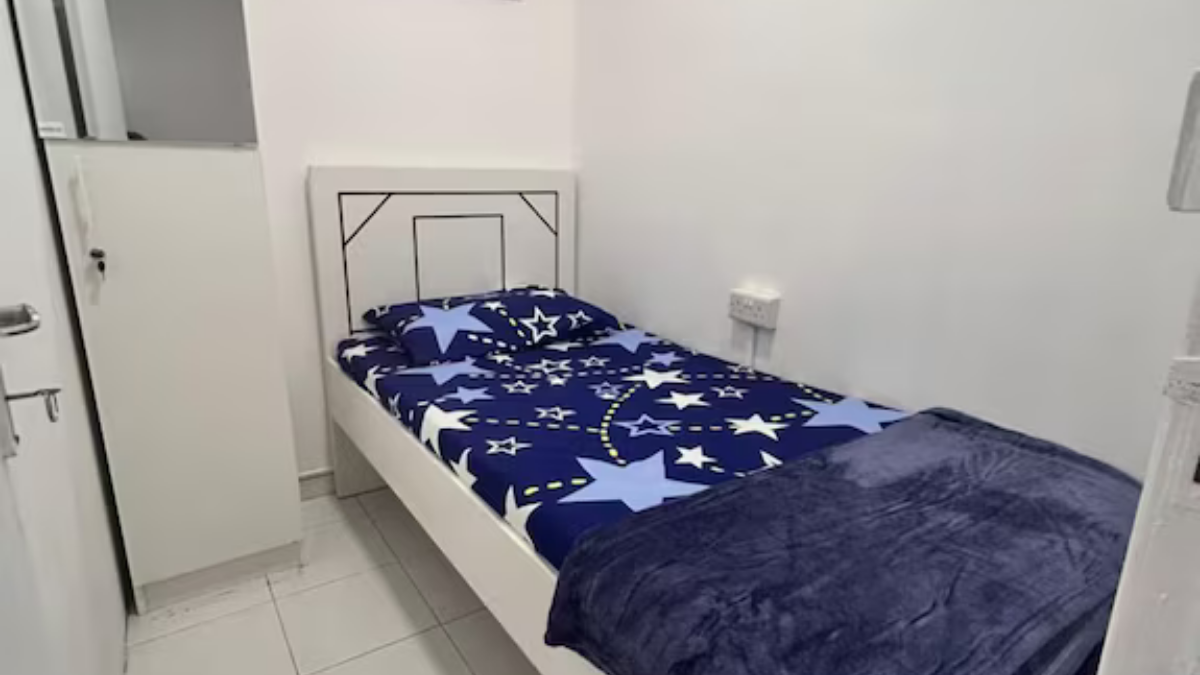

Disputes over shared housing arrangements in Dubai will now fall under the jurisdiction of the Dubai Rental Disputes Centre following the enactment of legislation signed by Sheikh Mohammed bin Rashid Al Maktoum on Wednesday.

The law, issued in his capacity as Ruler of Dubai, establishes a comprehensive regulatory framework for shared residential units across the emirate — covering everything from permit requirements and occupancy limits to advertising rules and contract standards.
At the center of the new framework is a prohibition on apartment partitioning and subleasing without prior authorization. No individual or company may designate a unit for shared housing without first securing a permit from Dubai Municipality, which will administer the system in coordination with Dubai Land Department and other relevant agencies.
Permitted units must meet a range of technical and safety requirements, including compliance with building codes, fire safety rules, health and sanitation standards, electrical systems, and security measures. Authorities will also establish caps on the number of residents per unit and the minimum living space each occupant must be allocated.
Permits will generally be valid for one year, though property owners may apply for two-year permits. Renewal requests must be filed no later than 30 days before expiry.

On leasing arrangements, the law draws a clear line: only a property owner or a licensed establishment acting on the owner’s behalf may lease out a shared unit. Tenants are explicitly barred from subleasing any portion of their unit to others. Leasing can be conducted directly by the owner, through a licensed manager, or through an establishment that leases from the owner and then subleases to individual residents.
Financial penalties for non-compliance range from Dh500 to Dh500,000. A repeated violation within a 12-month period doubles the applicable fine, with a ceiling of Dh1 million. Beyond monetary penalties, authorities may suspend a business for up to six months, cancel shared housing permits, revoke commercial licences, cut off public utilities, or order the eviction of occupants from non-compliant units.
Dubai Land Department will maintain an electronic registry of shared housing units and set the required content for lease and management contracts — including landlord details, resident count, unit specifications, and allocated living space. Standardized contract templates will be made available on the department’s website.
To support permitting and record-keeping, Dubai Municipality will also operate a unified digital platform accessible to relevant authorities.
Property owners and operators currently running shared housing arrangements will have one year from the law’s effective date to reach full compliance. The legislation takes effect 180 days after publication in the Official Gazette. The Director-General of Dubai Municipality holds authority to grant a single compliance extension if circumstances require it.
