



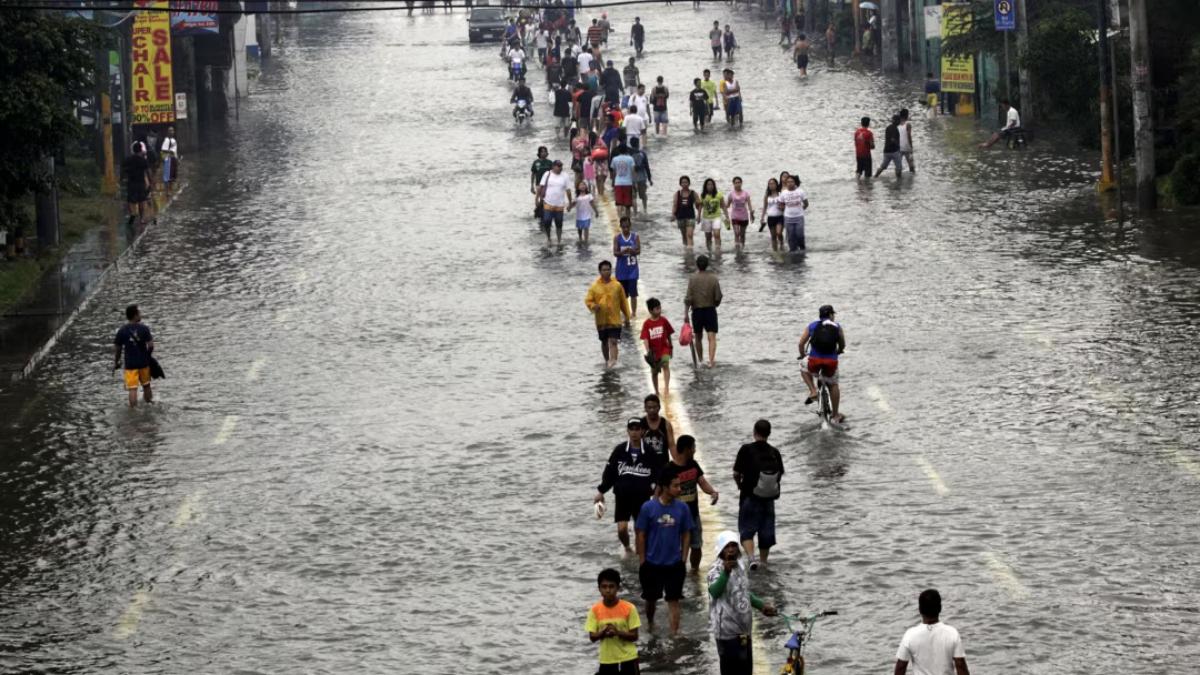

Natural disasters disrupted employment conditions in October, driving a higher number of Filipinos out of work, according to the Department of Labor and Employment.

Labor Secretary Bienvenido Laguesma said the spike in unemployment was closely linked to recent typhoons and earthquakes that affected millions across the country. Data from the Philippine Statistics Authority’s October 2025 Labor Force Survey showed the unemployment rate rose to 5 percent, translating to about 2.54 million unemployed Filipinos. This marked an increase from September’s 3.8 percent, or roughly 1.96 million individuals without jobs.
Despite the month-on-month rise, the DOLE maintained that the figure remains within the government’s target range of 4.8 to 5.1 percent for 2025 under the Philippine Development Plan 2023–2028.
“Said rise in the unemployment rate is attributed to the reported natural calamities by the National Disaster Risk Reduction and Management Council, from the combined effects of the southwest monsoon and tropical cyclones Mirasol, Nando, and Opong in September, exacerbated by subsequent typhoons—affecting 4.572 million individuals,” Laguesma said in a statement.

He noted that seismic events further strained employment, pointing to earthquakes that hit Cebu and Davao Oriental. “This temporary increase can also be linked to the series of strong earthquakes, including the magnitude 6.9 quake in Cebu, followed by a magnitude 7.4 in Davao Oriental,” he added.
Laguesma also recalled a similar pattern earlier in the year, when unemployment reached 5.3 percent in July after successive typhoons damaged communities and livelihoods.
To cushion the impact on workers, the DOLE rolled out emergency employment programs, allocating P494.7 million in assistance for typhoon-affected areas and an additional P39 million for communities hit by earthquakes. He said the support “is expected to facilitate the recovery of families and individuals so they can continue to be economically active and productive members of the labor force, as well as help restore livelihoods and lost incomes.”
