



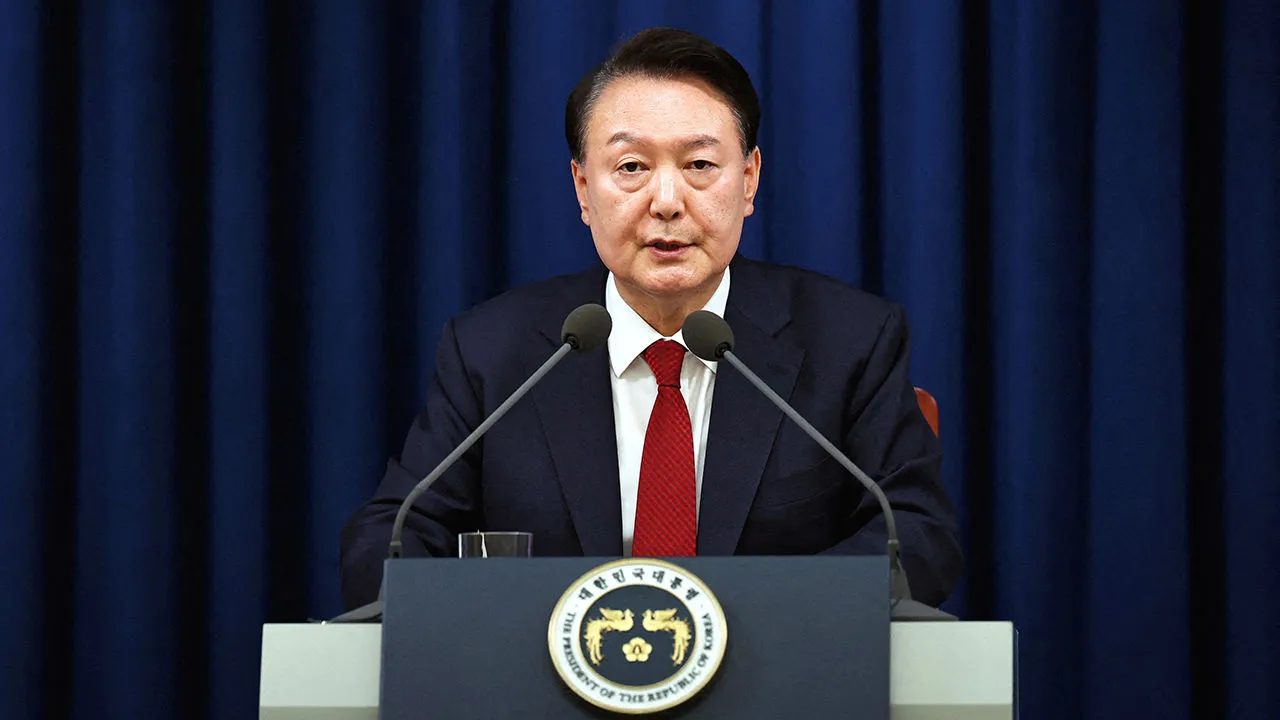

South Korea’s special prosecution team has formally asked the court to impose the death penalty on former president Yoon Suk-yeol, accusing him of orchestrating an insurrection tied to his short-lived declaration of martial law late last year.

During final arguments delivered on January 13 at the Seoul Central District Court, prosecutors asserted that their investigation uncovered a long-running plan allegedly involving Yoon and his former defense minister, Kim Yong-hyun. According to the prosecution, the effort began as early as October 2023 and was intended to secure Yoon’s grip on power.
In court, a prosecutor rejected Yoon’s justification for the December 2024 martial law order, saying it violated constitutional boundaries and crippled key democratic institutions, including the National Assembly and the National Election Commission. The prosecution added that Yoon had shown neither remorse nor a meaningful apology to the public.
As the sentencing request was read out, Yoon was seen shaking his head and briefly laughing. Some supporters inside the courtroom reacted audibly, prompting the presiding judge to intervene and restore order.
The martial law declaration, which lasted roughly six hours before collapsing, reverberated across South Korea’s political landscape. The episode drew intense scrutiny in a country regarded as a major U.S. security partner, the world’s fourth-largest economy in Asia, and a long-standing democratic model in the region.

Yoon, 65, has consistently rejected the charges. Citing his remarks in court reported by Yonhap News Agency, he said the move was meant to counter what he described as forces threatening to “ruin the nation.” He has maintained that the declaration fell within presidential authority and was intended to highlight what he saw as legislative obstruction by opposition parties.
The court is scheduled to issue its verdict on February 19. While prosecutors have called for the harshest penalty available, such requests are not automatically upheld by South Korean courts.
Capital punishment has not been carried out in South Korea since 1997, although death sentences have continued to be issued, most recently in 2016. Historical precedent shows that such penalties can be reduced on appeal, as occurred in the mid-1990s cases involving former presidents Chun Doo-hwan and Roh Tae-woo, both of whom later received presidential pardons.
Following the latest court session, the office of President Lee Jae Myung, who assumed office after Yoon was removed from power last year, said it expects the judiciary to decide the case “in accordance with the law, principles, and public standards.”
