



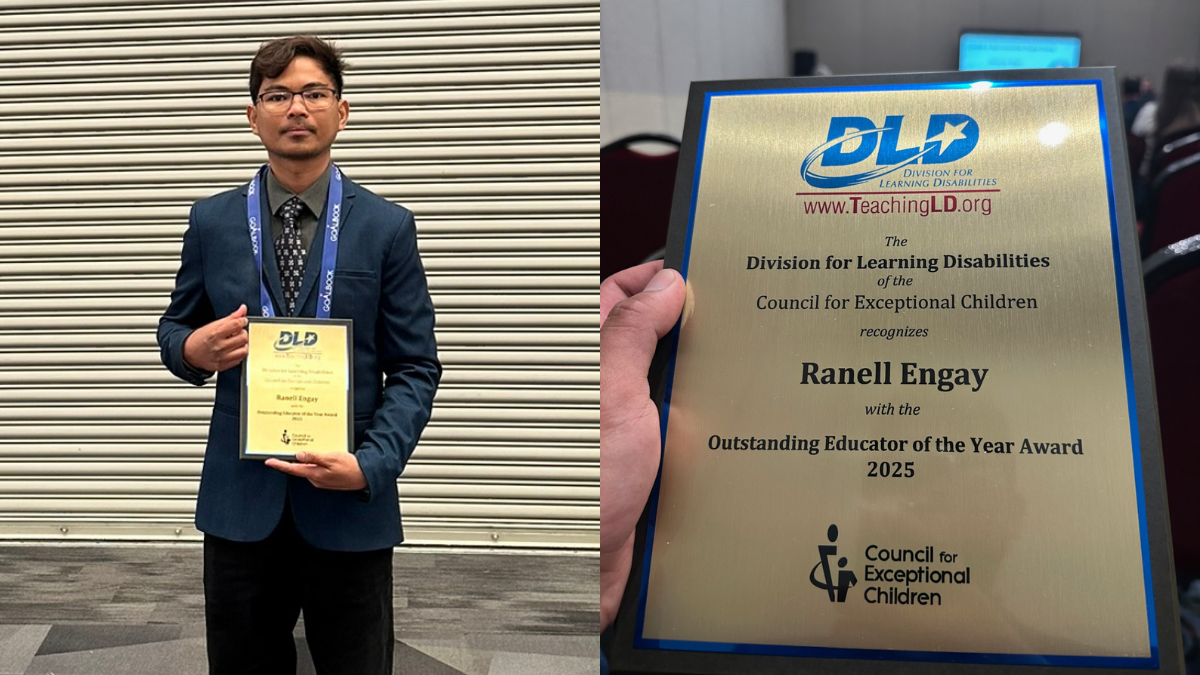

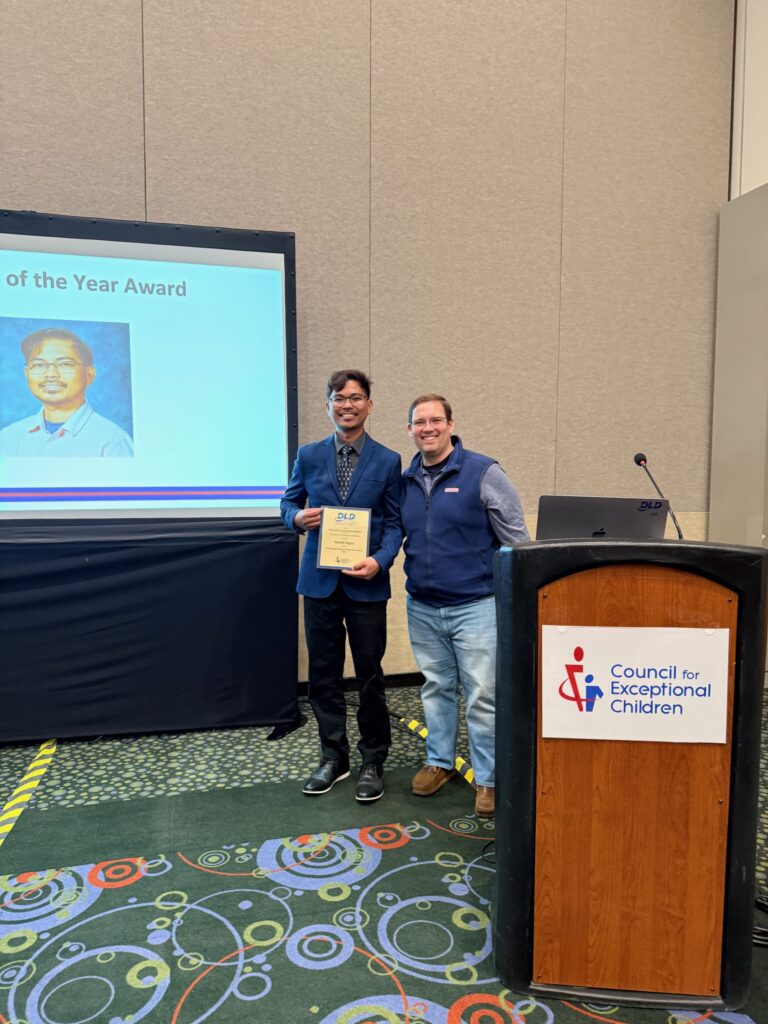
Science has a way of following people who refuse to stay still. Ranell Engay, a 35-year-old teacher from the small coastal village of Bagacay in Sorsogon province, spent nine years shaping young minds in his hometown — and then left everything familiar to start over in a rural school in Montana, thousands of miles from the Philippines. Earlier this year, that gamble earned him one of the most meaningful recognitions of his career: the Outstanding Educator Award from the Division for Learning Disabilities of the Council for Exceptional Children (CEC-DLD), a US-based organization dedicated to advancing education for students with learning disabilities.

The award was presented on May 14 in Salt Lake City, Utah.

Nine years at home, then a leap across the Pacific
Engay graduated from Sorsogon State College in 2011 with a degree in Secondary Education and went back to teach at the same public school where he had studied — first as a junior high science teacher, then promoted to senior high. It was, by his own account, fulfilling work. It was also hard.
“It’s fulfilling to serve your own community,” he shared with TGFM, “but the reality of teaching in a public school in the Philippines means also sacrifice.”
Around 2021, as the pandemic reshaped everything, an opportunity came. He was accepted as a J1 exchange teacher in the United States and posted to the Rosebud School District, a small rural school in Montana. He is now in his fifth year there.
Montana is a long way from Sorsogon by any measure — geographically, culturally, and in terms of what a classroom can look like. But Engay found the distance gave him room to build something.
Science as a way of seeing the world
The phrase “inclusive education” can sound abstract, but in Engay’s classroom it takes very specific shapes: a student crouching by the Yellowstone River collecting water samples, another drilling through agar plates to find out which corner of the school harbors the most bacteria, a team testing a handbuilt bridge model until it buckles.
He runs his classroom around two interlocking principles — project-based learning and inquiry-based learning — and uses them to move students through real problems rather than textbook exercises. In one investigation, students swabbed surfaces around the school to identify bacterial hotspots, cultured the samples in agar plates, and published their findings in the school newsletter. The results, he said, surprised everyone, including the students.
Beyond the school building, Montana’s landscape becomes part of the curriculum. Students do rockhounding for earth science, collect leaves for chromatography experiments, and test soil samples from nearby cattle pasture and agricultural land to analyze nutrient levels. The river behind the school has become a field lab.
“Whether we are building rockets, testing water quality, designing models, or exploring Montana’s natural landscapes,” Engay said, “each lesson is an opportunity for students to ask questions, solve problems, and connect what they learn to real life.”
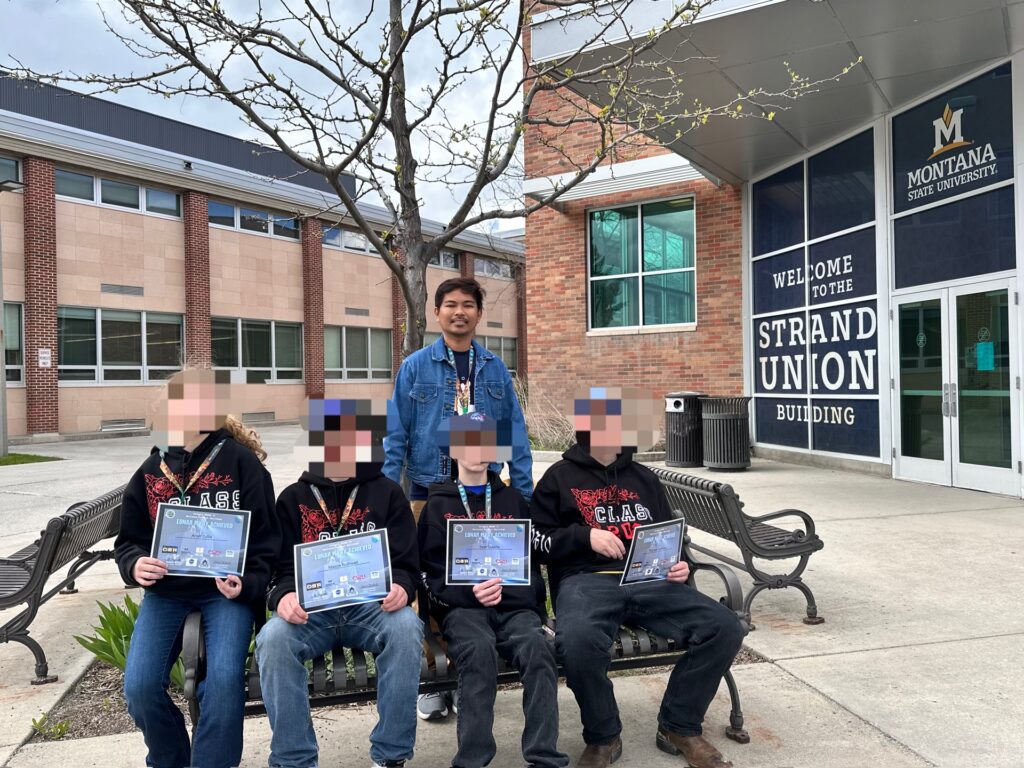
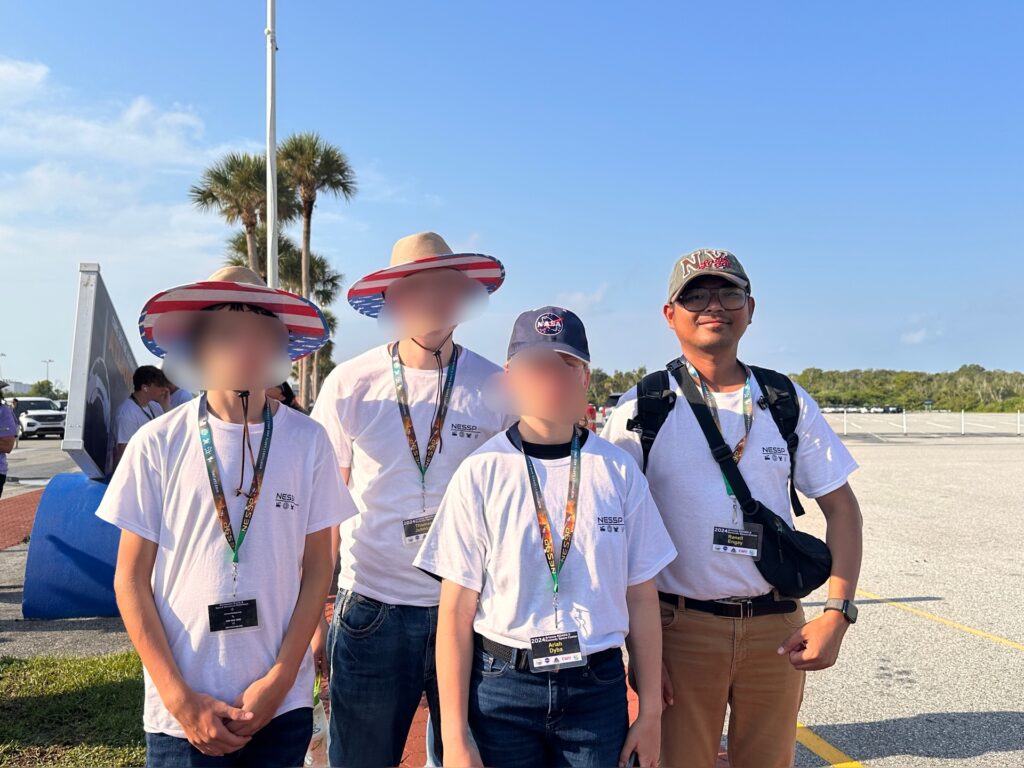
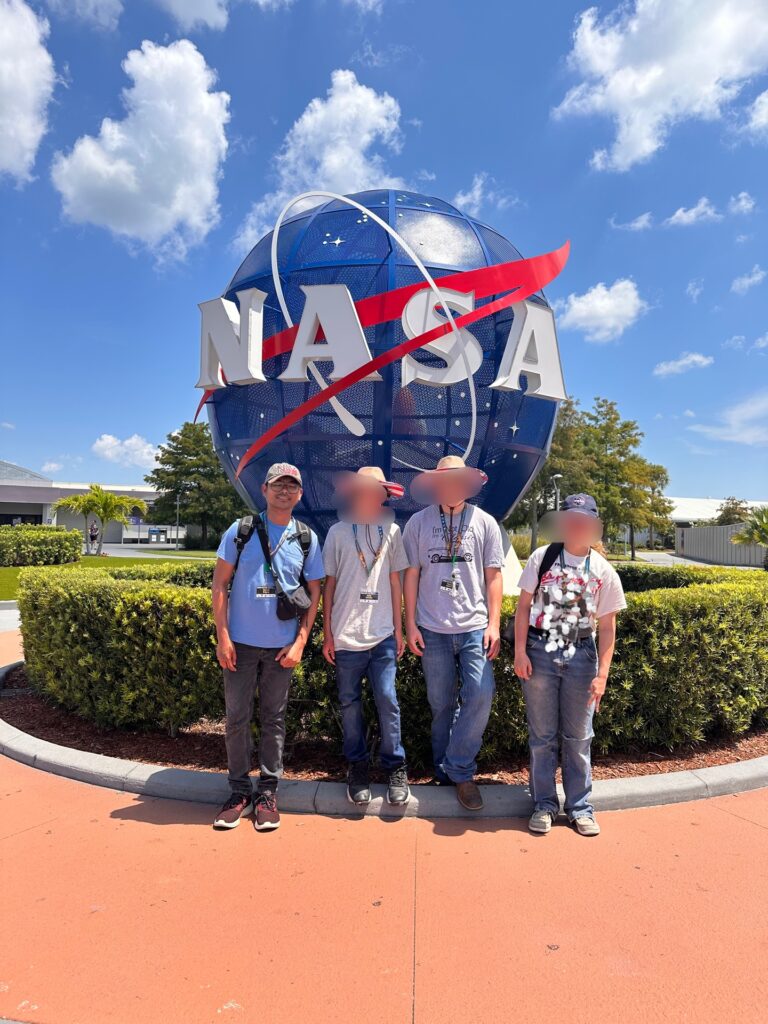
The reach of that work has extended well beyond local streams. For four consecutive years, Engay’s students have competed in the NASA National Student Challenge, a program where teams work through eight missions based on real NASA problems. In 2024, his team was one of two state winners from Montana and traveled to Kennedy Space Center in Florida to meet working NASA scientists and observe ongoing programs like the Artemis mission firsthand. That experience, he said, was transformative for students in a small rural school who might not otherwise have imagined themselves in such a space.

This school year, he received two grants from the American Institute of Aeronautics and Astronautics for a high-altitude balloon STEM project, along with a separate grant for a smart telescope.
‘Disbelief, followed by gratitude’
The CEC-DLD recognition focuses specifically on educators working in inclusive settings with students with learning disabilities. For Engay, inclusive education is not a program or policy — it is a commitment to making sure that no student decides science is beyond them before they have had the chance to try it.
“To give opportunities for this learner that science is not as hard as they think and that they are capable of doing amazing things,” he said, describing what the work means to him at its most basic level.
When the email arrived notifying him of his selection for the Outstanding Educator Award, his first reaction was disbelief. Then something else set in.
“I also see this award as not just for me — it belongs to my students as well, whose hard work and perseverance inspire me every day.”
It is the kind of thing teachers say, but from a man who sends his students to collect bacteria from school bathroom door handles and chase NASA missions in Florida, it reads as something more than ceremony.
Going home, then back again
Engay is not finished building. He is currently in the thesis-writing stage of a master’s degree and is aiming to complete it this year. He has applied for a role as Life Science Representative with the Montana Science Teachers Association and is looking to deepen his involvement with organizations working on science education in rural communities.
This coming summer, he plans to return to the Philippines to see his family — a brief homecoming before the next school year begins.
“Being a Filipino educator abroad means carrying our values of hard work, resilience, compassion, and deep respect for education in everything I do,” he said. “I know that in many ways, I represent not just myself, but our Filipino community as well.”
To other Filipinos working in education overseas, his message is plain: “Take pride in your roots and let your passion guide you. Stay grounded, keep learning, and continue showing up for your students with heart.”
