



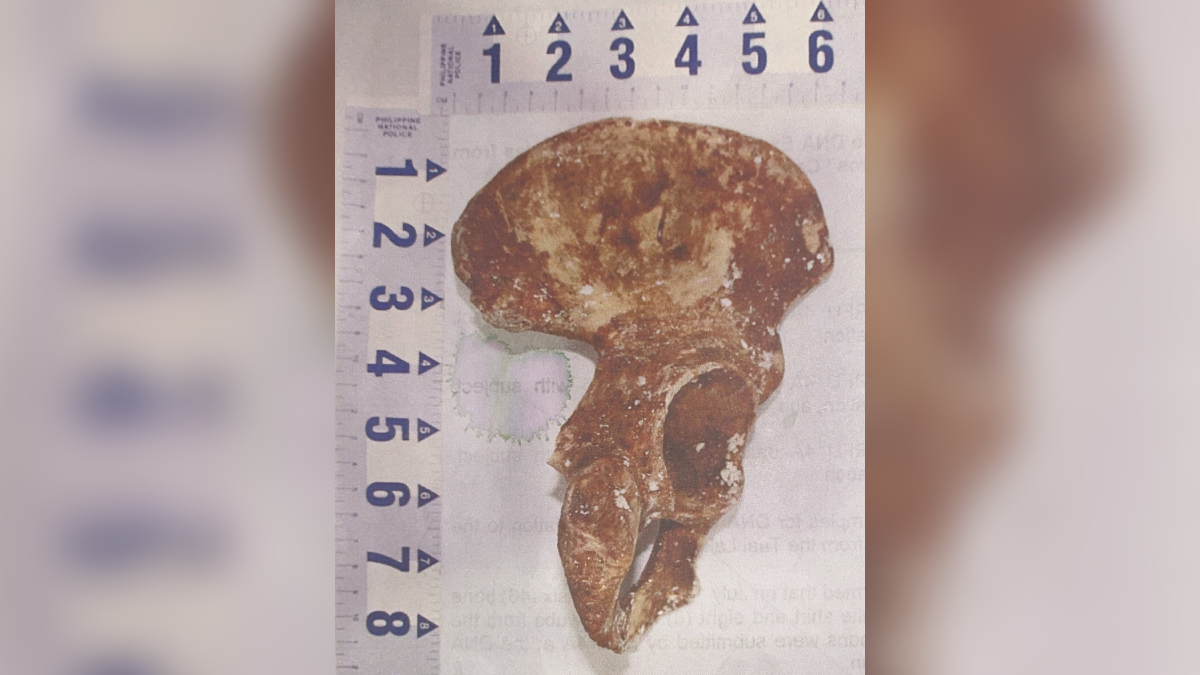

Six bones retrieved from Taal Lake in connection with the ongoing investigation into the missing “sabungeros” may be of human origin, according to the Philippine National Police Forensic Group (PNP-FG).

Lt. Col. Edmar Dela Torre, officer-in-charge of the PNP-FG DNA Laboratory Division, confirmed Tuesday that out of 91 bones recovered from five sacks found in the lake, six showed characteristics consistent with human skeletal remains.
“As of now, we are positive that six of the 91 bones may be of human origin,” Dela Torre said in an Inquirer.net report.
Supporting this, PNP-FG Deputy Director for Administration Col. Francisco Supe Jr. noted, “The structures like the pubic bone, the ischium, the ilium, the foramen, the holes in the bones were present,” explaining that while animals may have similar features, the distinct human morphology stood out during visual examination.
The gruesome search stems from a claim made by whistleblower Julie “Dondon” Patidongan (alias Totoy) in June, who alleged that the missing cockfight enthusiasts were killed, their bodies bound to sandbags, and dumped into the lake.

Following this revelation, authorities recovered sacks containing bones over three consecutive days last week. These were immediately handed over to crime scene investigators for further forensic analysis.
Dela Torre shared that DNA samples from 18 family members of the missing men have been collected for comparison. “We are testing samples from the victims’ parents and children,” he added, stressing the complexity of the work ahead.
“We need to make it clear to the people that it’s actually very challenging considering that they were submerged in water,” Dela Torre said, underlining the difficulty of extracting viable DNA from remains exposed to harsh environmental conditions.
The PNP-FG is currently drying and sorting the bones in preparation for DNA profiling, which will then be cross-matched with the samples from the families.
