



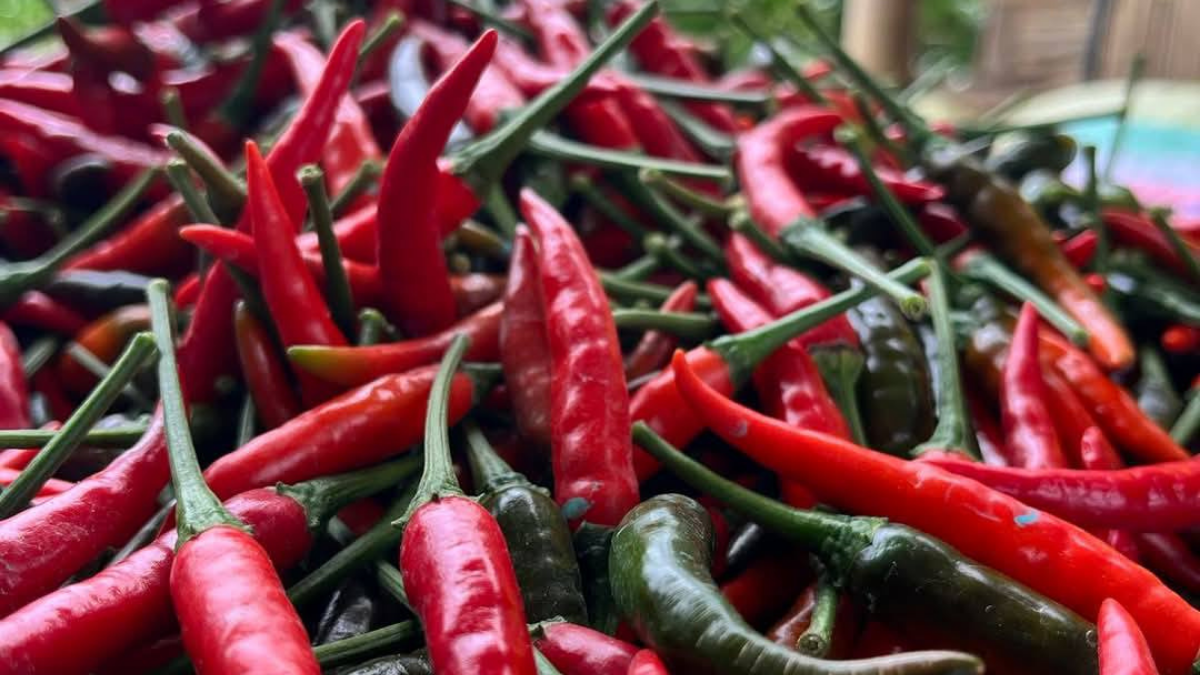

Prices of basic vegetables continue to strain household budgets in parts of Metro Manila, with siling labuyo emerging as one of the most expensive items on market stalls, according to a spot check conducted by ABS-CBN News on Tuesday.

At Muñoz Market in Quezon City, traders were selling siling labuyo for as much as ₱1,000 per kilo, while even the lower end of the price range remained steep at around ₱800. Other commonly purchased vegetables were also trading well above usual levels, with cabbage priced between ₱140 and ₱180 per kilo, carrots from ₱100 to ₱150, Baguio beans at ₱80 to ₱120, potatoes at ₱100 to ₱120, and pechay ranging from ₱120 to ₱160 per kilo.
A similar pattern was observed at Bonifacio Market, where siling labuyo was pegged at ₱720 per kilo. Cabbage and carrots were both priced at ₱120 per kilo, while lettuce reached ₱200. Broccoli was sold for ₱160 per kilo, cauliflower for ₱120, pechay for ₱120, and eggplant for ₱150.
Vendors said the elevated prices have slowed down sales, forcing some to improvise just to avoid losses. One trader shared that unsold vegetables are cooked and repurposed into dishes for resale instead of being discarded. “Napakahirap po kaming kumita gawa nang pabago-bago po ang presyo ng gulay,” said Anita Que-e, a vegetable vendor at the market.
Traders added that any meaningful price relief may not be felt until April, after the Holy Week period, when supply conditions are expected to normalize.

Beyond Metro Manila, weather conditions in key farming areas have added pressure on growers. In Atok, Benguet, some farmers have resorted to forced harvesting after frost, locally known as andap, affected vegetable farms during the cold season. Farmer Edward Haight said the damage has not been severe so far, but crops are being harvested early to prevent spoilage, with conditions possibly worsening in February.
The Department of Agriculture in the Cordillera has begun mitigation efforts to protect crops from frost, including early-morning water spraying to prevent dew from freezing. “Inii-spray-an nila ng tubig very early in the morning para hindi mag-frost ‘yong dew,” said Cameron Odsey of the DA Cordillera.
The agency maintained that frost has not yet disrupted vegetable supply and should not be driving prices higher unless traders take advantage of the situation. “Kung mayroong gagawa niyan eh mga unscrupulous business people,” Odsey added.
Last week, Senator Kiko Pangilinan flagged the surge in chili prices, particularly reports of siling labuyo reaching ₱1,000 per kilo, pointing to recurring seasonal supply gaps during the rainy months. He noted that more than ₱2 billion has been allocated in the 2026 national budget for high-value crops such as chili, underscoring the need to fully utilize the funding to stabilize supply through better farm planning, expanded production areas, and improved infrastructure.
