



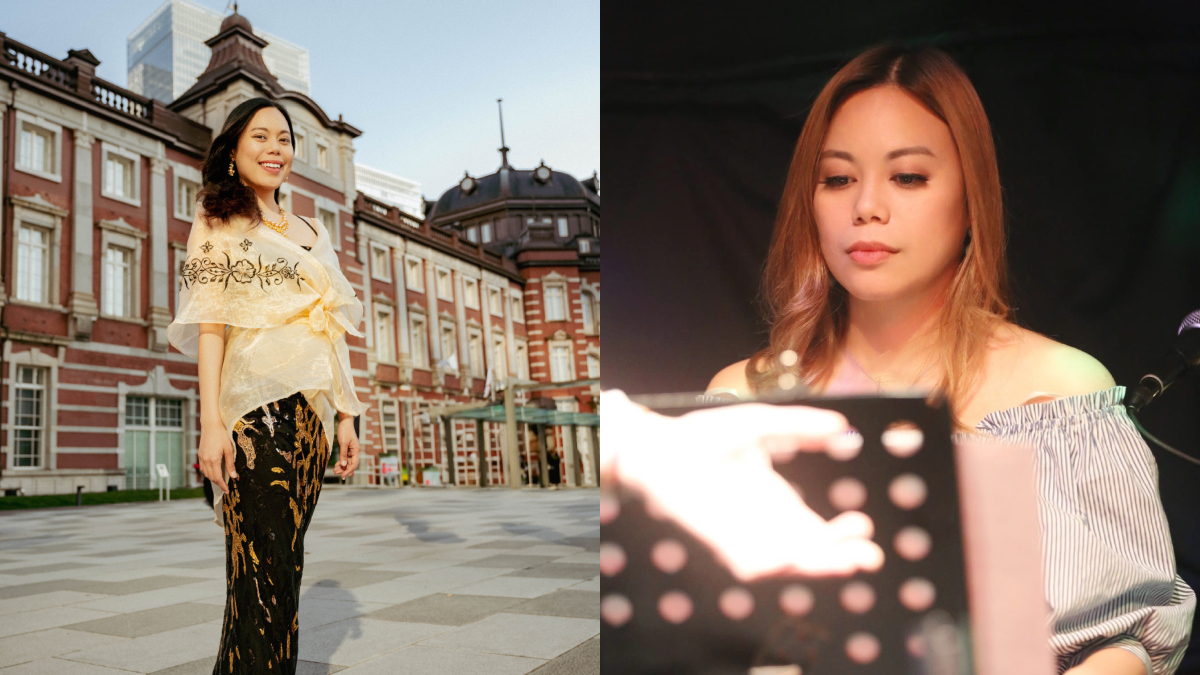

For many artists, finding stability while pursuing their passion can be an uphill climb. For Carell Ethilca Henry, a 33-year-old Filipina musician based in Japan, that challenge became her life’s defining journey. Through resilience, faith, and a lifelong love for music, she turned her childhood fascination with the piano into a flourishing international career.

“I have always known that music was meant to be my career, not just a hobby,” she shared. “My passion for it began at the age of six. My parents never pushed me to study piano, and they could never have imagined that this childhood interest would one day become my profession.”
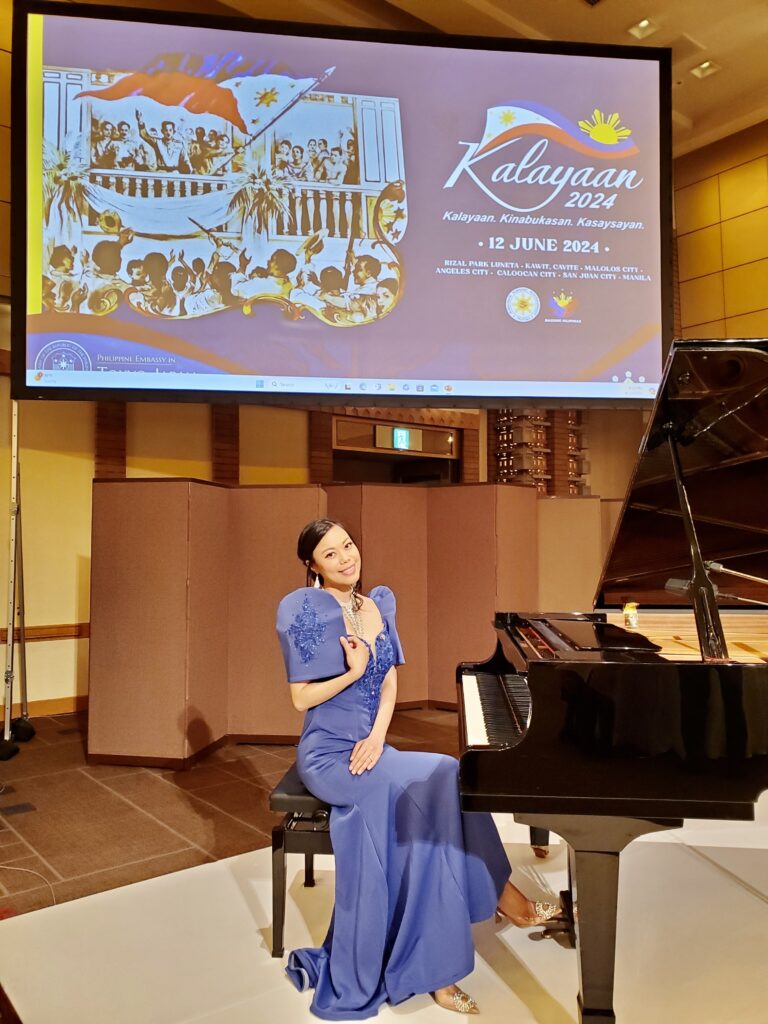

Today, Carell is a full-time freelance artist in Tokyo. She works as a pianist, piano teacher, and founder of her own business, Kate Henry Music, while also serving as a part-time kindergarten music teacher at an IB World School. She is the author of a piano method book series for children and the founder of the Philippines–Tokyo Concert Series, a cultural initiative that showcases Filipino classical music to international audiences.
Her work has made her one of the most recognized Filipino musicians in Japan’s music education and cultural diplomacy circles. “As an active cultural ambassador, I independently organize concerts in Tokyo to promote Filipino classical music to international audiences,” she explained. “I’m also regularly invited by the Philippine Embassy in Japan to perform at diplomatic and cultural events, including special occasions attended by members of the Japanese Imperial Family.”
Her success didn’t happen overnight. It began with a decision to leave her home country in 2017 after earning a full-tuition government scholarship to pursue postgraduate studies in Japan. The scholarship recognized her academic and artistic excellence, opening the doors to what would become a transformative chapter in her life.
Carell completed her Master’s in Music Education at the Elizabeth University of Music in Hiroshima, where she was awarded the Cecilia Award as the top graduate in music research. “My journey in Japan began as a postgraduate student and recipient of a full-tuition government scholarship,” she recalled. “After graduation, I built a career in international schools for three years before deciding to pursue the path of self-employment.”


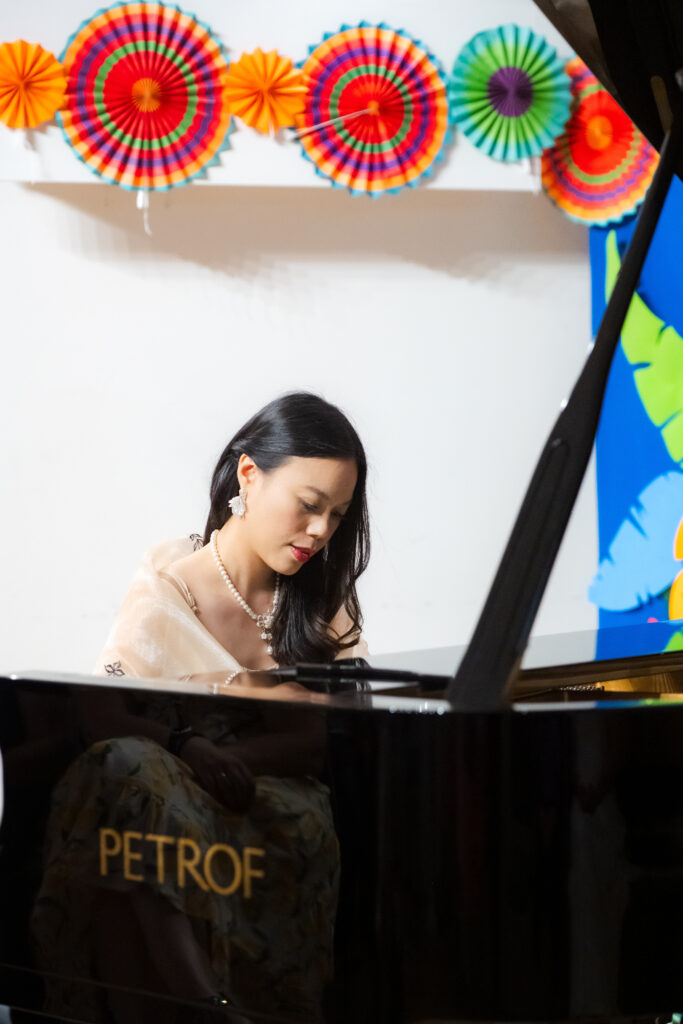
That leap of faith paid off when she secured Japan’s prestigious Artist Visa, a rare recognition granted only to individuals with proven achievements in the arts. “Through this bold shift, I was able to obtain Japan’s Artist Visa, one of the country’s most selective and respected visa categories,” she said proudly.
Her career milestone came full circle in March 2025, when she was invited to speak at a TEDx event titled “The Art of Freelancing: Redefining Career Success.” “I shared my journey of building a sustainable and fulfilling career as a freelance artist,” she said. “It was an honor to show that success doesn’t always have to follow traditional paths.”
That same year, her work was featured in Japan’s Friendship Ties Program Magazine, under the article “Bridging Japan through Arts and Culture.” She was also officially accredited as an Individual Artist by the National Commission for Culture and the Arts (NCCA) of the Philippines, allowing her to continue promoting Filipino culture abroad. “This accreditation allows me to serve as a bridge, sharing and promoting Filipino arts and culture here in Japan,” she said.
From humble beginnings to global stages
Behind the accomplishments lies a story of quiet struggle and perseverance. Carell grew up in a humble household in Cagayan de Oro, where her parents worked hard to provide for their family despite limited means. “We were below the poverty line, and I was familiar with the struggles of having very little from an early age,” she shared. “Yet my parents never let us feel deprived—they taught us that what we had was enough and that there was always much to be grateful for.”
Those lessons shaped her determination. “I worked diligently to earn scholarships and maintain excellent grades so that my parents would never have to pay for my education—from high school and college in Manila to my master’s degree in Japan,” she said.
Before moving abroad, she built strong foundations in music education and leadership. While studying at St. Scholastica’s College Manila, she was active in community programs that used music to empower underprivileged youth. “We were immersed in community outreach programs, using music as a tool for empowerment and nation-building,” she recalled.
Her leadership and passion were soon recognized nationally. In 2013, she represented her batch as the only music student at the National Ayala Young Leaders Congress, and in 2016, she became a finalist for the Ten Outstanding Students of the Philippines in NCR. She carried with her the Benedictine motto “Ora et Labora” (prayer and work), which she described as her guiding principle for both personal and professional growth.
In 2015, she founded her own music school, Musikala Performing Arts Studio, in Makati City, which continues to thrive today. A year later, she passed the Licensure Examination for Teachers (LET) under the Professional Regulation Commission (PRC). Then in 2017, after presenting her thesis proposal and a piano performance, she successfully auditioned for a full scholarship in Japan—a turning point that changed her life forever.
However, life abroad wasn’t easy. During her postgraduate studies, she faced one of the most challenging times of her life when she lost her living allowance scholarship. “I had to work two part-time jobs to make ends meet,” she said. “I taught English to kindergarten students in the mornings, attended classes in the afternoons, practiced my instrument, and worked nights as a waitress and translator at a traditional Japanese restaurant.”
The experience tested her endurance, but she found strength through hardship. “It strengthened me mentally, yet it was also the time I cried the hardest and most often,” she admitted. “Balancing studies, work, and simply putting food on the table was incredibly demanding, but it shaped my resilience and determination.”
Her perseverance bore fruit when she was called onstage during graduation and awarded the top distinction in her class. “When I was awarded the top graduate for music research, I was genuinely shocked,” she said with humility. “My goal had simply been to finish my degree; excelling at the very top had never been my concern.”
The pandemic also altered her life’s direction. “I initially came to Japan not for work, but to pursue advanced studies and research in music education and publishing,” she shared. “I planned to return to the Philippines after graduate school, but the pandemic changed everything. Borders closed just a week after my graduation, leaving me no choice but to stay in Japan and seek employment.”

That unexpected turn led to beautiful new beginnings. “Over time, life unfolded in unexpected but wonderful ways,” she reflected. “I married my American husband, and together we’ve built our dream life and careers in Tokyo, sharing our home with two beloved cats. He’s also a professional musician who performs regularly as a drummer in the city.”


Through love, music, and persistence, she found herself exactly where she was meant to be. “Looking back, I realize that life has guided us to exactly where we are meant to grow, flourish, and live to the fullest,” she said.
Living the dream and giving back through music
What Carell enjoys most about her career today is the freedom and balance that come with being a freelance artist. “What I love most about my work is not only that it aligns with my passion but also the freedom it gives me as a freelance artist,” she said. “I have the flexibility to manage my schedule, plan concerts, and shape my projects around my life, which allows me to pursue work that truly matters to me.”
She currently teaches music at an international school, a role that she finds deeply fulfilling. “I cherish the energy of my classroom, the strong and supportive school community, and the opportunity to collaborate with dedicated professional teachers,” she said. “Most of all, I find joy in building a positive and inspiring learning environment for my students—these are the moments I am most grateful for.”
Outside of her school duties, she mentors 11 private piano students during weekdays. “It’s deeply rewarding to witness their growth as musicians,” she said. “I’m committed to nurturing not only their piano skills but also their personal development. I hope that they continue to flourish and one day surpass even my own achievements.”
On weekends, she performs as a lounge pianist at a five-star hotel in Tokyo during afternoon tea. “What makes this role especially fulfilling is the freedom to choose the music I play, the opportunity to meet people from all over the world, and the joy of dressing up for the occasion,” she said. “One of the most delightful aspects of gigging is being able to express yourself, feel confident in your performance, and simply enjoy playing—without judgment.”
Though her schedule is full, she remains committed to maintaining balance. “I dedicate time to practicing the piano every day, writing my piano method books, creating lesson plans, organizing concert series, and taking care of myself,” she explained. “This balance enables me to pursue my passions while staying grounded and energized.”
For Carell, working abroad has been as much about personal growth as professional success. “Moving abroad on your own teaches you more about yourself than you might ever expect,” she said. “It’s not about chasing a higher salary or the idea that the grass is greener elsewhere—it’s about creating opportunities to grow, no matter where you are.”
Her connection to Japan runs deep. “Japan has always been my top choice for living abroad,” she said. “Not just because of its safety, respectful people, and vibrant culture, but because it holds a truly special place in my heart.”
That bond began long before she moved there. “In 2009, I had the honor of serving as a student ambassador representing the Philippines at the Japan East Asia Network for Students and Youth,” she recalled. “I was only 16 at the time and never imagined I would have the chance to experience Japan for free. From that moment, I promised myself that if I ever lived abroad, I would return to Japan—not just for my own growth, but to give back to the country that inspired me.”
Building bridges through culture and the arts
Now on her eighth year abroad, Carell continues to dream bigger. One of her main goals is to establish a music publishing house in the Philippines, a project inspired by her postgraduate research. “I plan to establish a publishing house dedicated to providing accessible, high-quality, affordable, and sustainable music education materials for the next generation of musicians,” she said. “This has been my lifelong dream, a vision I have been nurturing for nearly a decade.”
While she and her husband plan to remain in Japan, her heart stays connected to her homeland. “The heart of my work will always remain in the Philippines,” she said. “My early advocacy, ‘Music as a Tool for Nation Building,’ has evolved into ‘Bridging the Philippines Through Culture and the Arts,’ and I’m committed to continuing this mission from Japan, connecting communities and promoting Filipino arts and culture internationally.”
Despite her many accolades, Carell remains grounded in purpose. “All these achievements are meaningless without genuine effort and purposeful action,” she reflected. “Success is not the goal—it’s simply the byproduct of what we do. What truly matters are our actions, the people we inspire, and the meaningful collaborations that emerge from our work.”
To her fellow Filipinos abroad, she offers heartfelt advice. “There is always a way forward, even when it seems hidden,” she said. “Pray for guidance, for your community, and for your loved ones back home. Never give up on your dreams—pursue them relentlessly, connect with those who inspire you, and stay vigilant and mindful of your surroundings. With persistence, wisdom, and heart, you can transform challenges into opportunities and create a meaningful impact along the way.”
Through her artistry, Carell continues to share a message that transcends borders—that music is not only a language of emotion but also a bridge that connects cultures, communities, and hearts. “If you find yourself in Tokyo, I warmly invite you to experience our concert series,” she said. “The Philippines–Tokyo Concert Series celebrates the rich cultural and musical heritage of the Philippines by sharing it with Tokyo’s international communities.”
Each performance, she explained, brings together world-class Filipino talent based in Japan and visiting artists. “Through music, we aim to build bridges, spark curiosity, and showcase the beauty and soul of Filipino artistry,” she said.
