



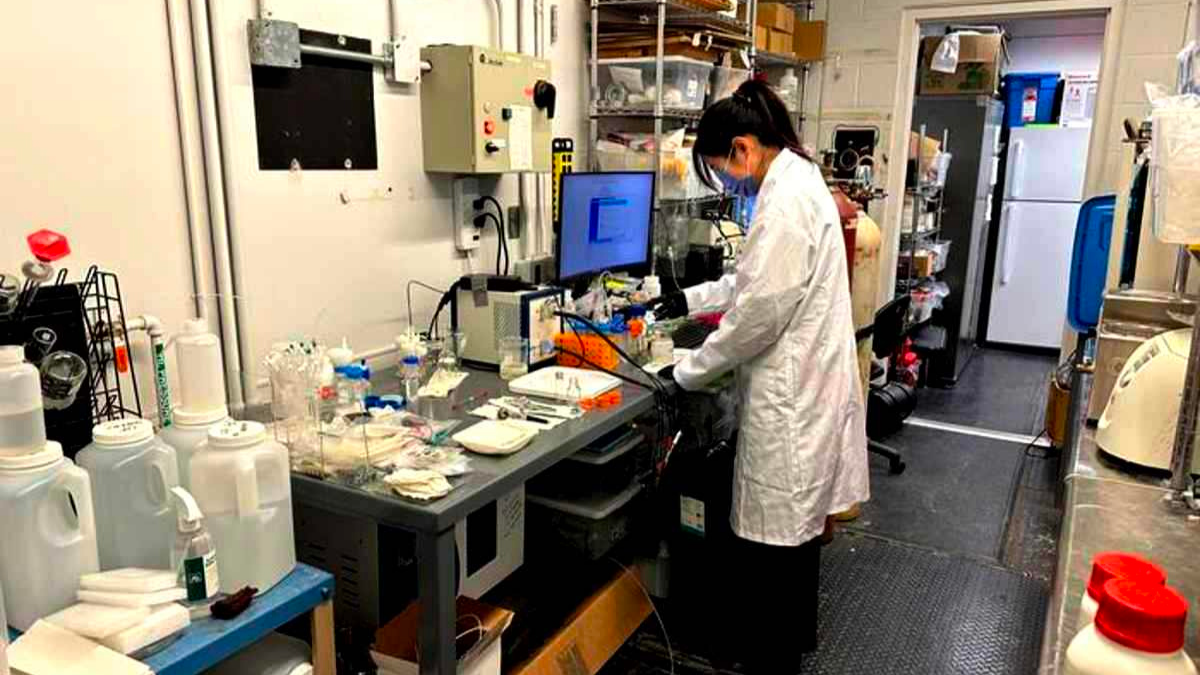

A scientific remarkable breakthrough by researchers at the University of Waterloo in Ontario, Canada may soon transform how the world deals with plastic pollution. Using nothing more than sunlight and an innovative catalytic process, scientists have discovered a way to convert plastic waste—including microplastics—into acetic acid, the primary component of vinegar and an important industrial chemical.

The discovery opens a promising path toward reducing plastic pollution while simultaneously producing a valuable product widely used in food production, manufacturing, and energy applications.
Nature-inspired scientific solution
The pioneering research was led by PhD student Wei Wei under the guidance of Yimin Wu, a professor of mechanical and mechatronics engineering and the Tang Family Chair in New Energy Materials and Sustainability.

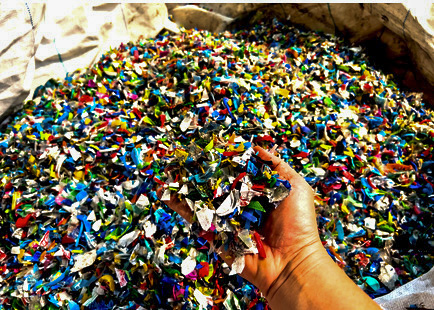
“Our goal was to solve the plastic pollution challenge by converting microplastic waste into high-value products using sunlight,” Wu explained.
The project received early support from the Waterloo Institute for Nanotechnology and the Water Institute through a joint seed funding initiative focused on sustainable environmental solutions.
Harnessing sunlight through photocatalysis
At the heart of the innovation is a process known as photocatalysis, a chemical reaction driven by light energy. In this case, researchers developed a bio-inspired cascade system using iron atoms embedded in carbon nitride.
The design mimics how fungi naturally break down organic matter using enzymes. When sunlight strikes the material, a sequence of reactions begins, gradually converting plastic polymers into acetic acid.
Unlike traditional plastic recycling techniques, this process occurs in water under mild conditions, making it especially promising for addressing plastic pollution in rivers, lakes, and oceans.
The research demonstrated that the method works with several common plastics, including PVC, polypropylene (PP), polyethylene (PE), and polyethylene terephthalate (PET). Even mixed plastic waste streams—which often complicate recycling—can be processed effectively.
Science behind the catalyst
Central to the technology is a single-atom catalyst system, where isolated iron atoms are dispersed within a carbon nitride framework. These atomic sites allow for more precise reaction control and improved efficiency.

Under sunlight exposure, the catalyst selectively produces acetic acid rather than generating unwanted by-products.
Acetic acid has broad commercial uses, from food preservation and vinegar production to chemical manufacturing and emerging energy systems. By converting plastic waste into this valuable compound, the process effectively turns pollution into a useful resource.
Addressing a global environmental challenge
Plastic has become one of humanity’s most durable and widely used materials. Its strength and versatility make it essential for industries ranging from medicine to transportation. However, that same durability has created a mounting environmental crisis.

Hundreds of millions of tons of plastic are produced worldwide every year, with much of it ending up in landfills, incinerators, or natural ecosystems where it can persist for centuries.
Existing disposal methods often carry environmental risks. Landfills can allow chemicals and microplastics to seep into soil and water, while incineration releases harmful emissions. Mechanical recycling frequently downgrades plastics into lower-value products, and chemical recycling typically requires large amounts of energy and extreme processing conditions.
The new solar-driven method offers a cleaner alternative. According to Wu, the process harnesses “abundant and free solar energy” to break down plastics without generating additional carbon dioxide emissions.
Toward a circular future for plastics
Although the technology remains at the laboratory stage, researchers believe it could eventually be scaled up for large-scale recycling and environmental cleanup operations.
A techno-economic study led by Water Institute executive director Roy Brouwer suggests that the approach could also provide strong economic potential.
“Both from a business and societal perspective, the financial and economic benefits associated with this innovation seem promising,” Brouwer noted.
If successfully developed for industrial use, the technology could help transform the global plastics problem into a sustainable circular system—where waste becomes a resource and sunlight powers the solution.
