



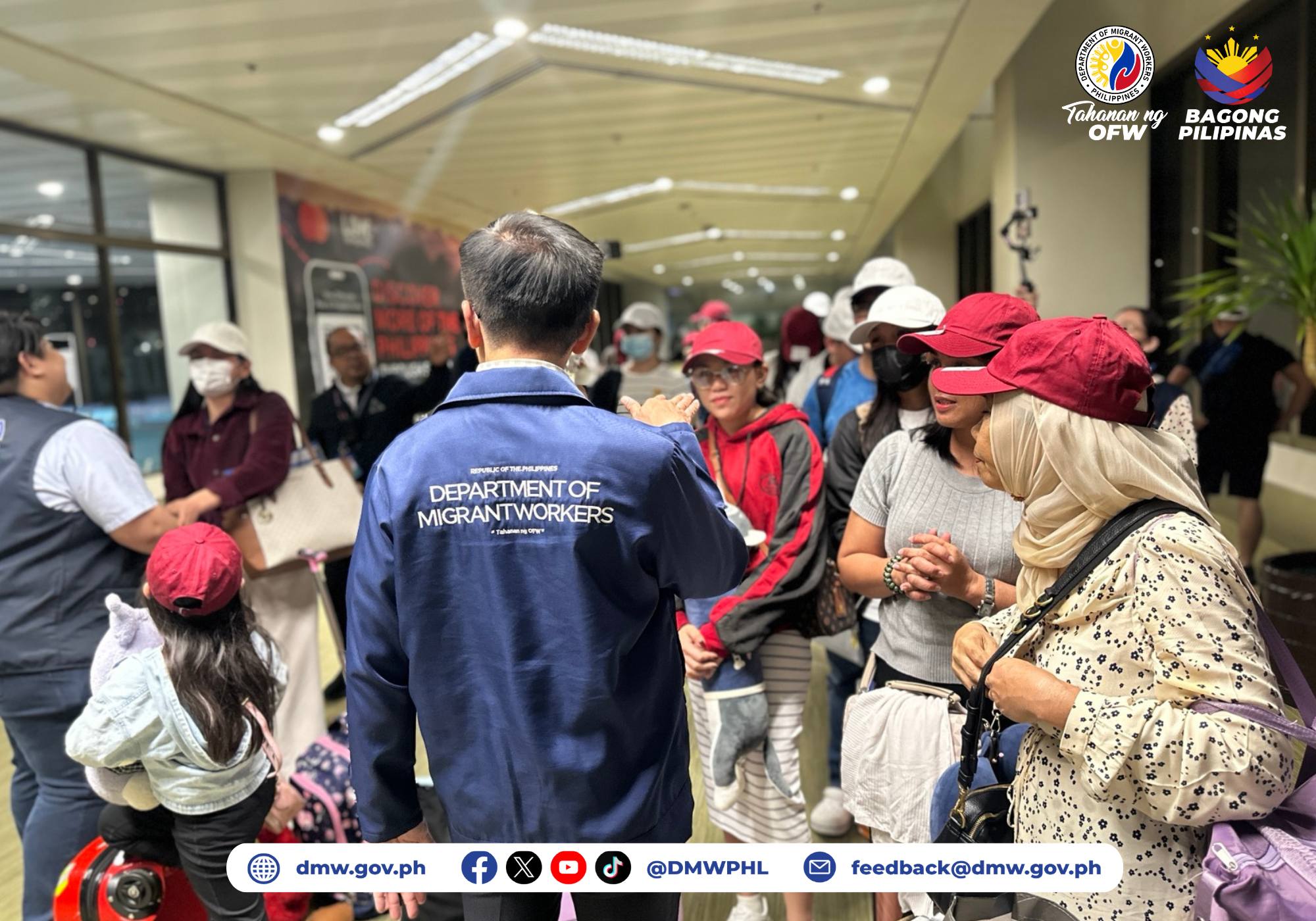

Nearly 300 Overseas Filipino Workers repatriated from the Middle East have already received government assistance, the Department of Social Welfare and Development disclosed, as the agency outlined a range of services it is preparing to extend to workers continuing to arrive from the conflict zone.

DSWD Assistant Secretary Irene Dumlao of the Disaster Response and Management Group said the agency is coordinating with the Department of Migrant Workers, the Overseas Workers Welfare Administration, and other government bodies to ensure aid reaches returning workers without delay.
“Ang DSWD ay nakikipag tulungan sa DMW, gayundin sa OWWA at iba pang ahensya ng pamahalaan para sa maayos at maagap na pagpapahatid ng kinakailangang tulong sa ating mga kababayan,” Dumlao said.
Among the first services deployed upon arrival at the airport is a psychosocial assessment, where social workers evaluate each worker’s emotional and psychological condition before determining what support is appropriate. Stress debriefing, counseling, and interviews are conducted as part of this process, with referrals made to the Department of Health for those requiring medical attention beyond what the DSWD can provide.

Workers who have no immediate arrangements to return to their home provinces can access temporary shelter through the agency’s centers and residential care facilities, though Dumlao noted that none of the repatriated OFWs are currently using these facilities.
Financial support is available through the Assistance to Individuals in Crisis Situation program, which includes transportation allowances to help workers reach their provinces.
Longer-term reintegration is being addressed through the Sustainable Livelihood Program. Workers under the employment facilitation track receive job-aligned training and help processing pre-employment documents. Those who opt for the microenterprise development track undergo capacity-building training and may qualify for seed capital to establish a small business.
Dumlao identified livelihood as one of the most pressing concerns among workers who have returned, noting that economic reintegration weighs heavily on many as they transition back to life in the Philippines. The SLP is positioned as the primary mechanism to address that gap.
