



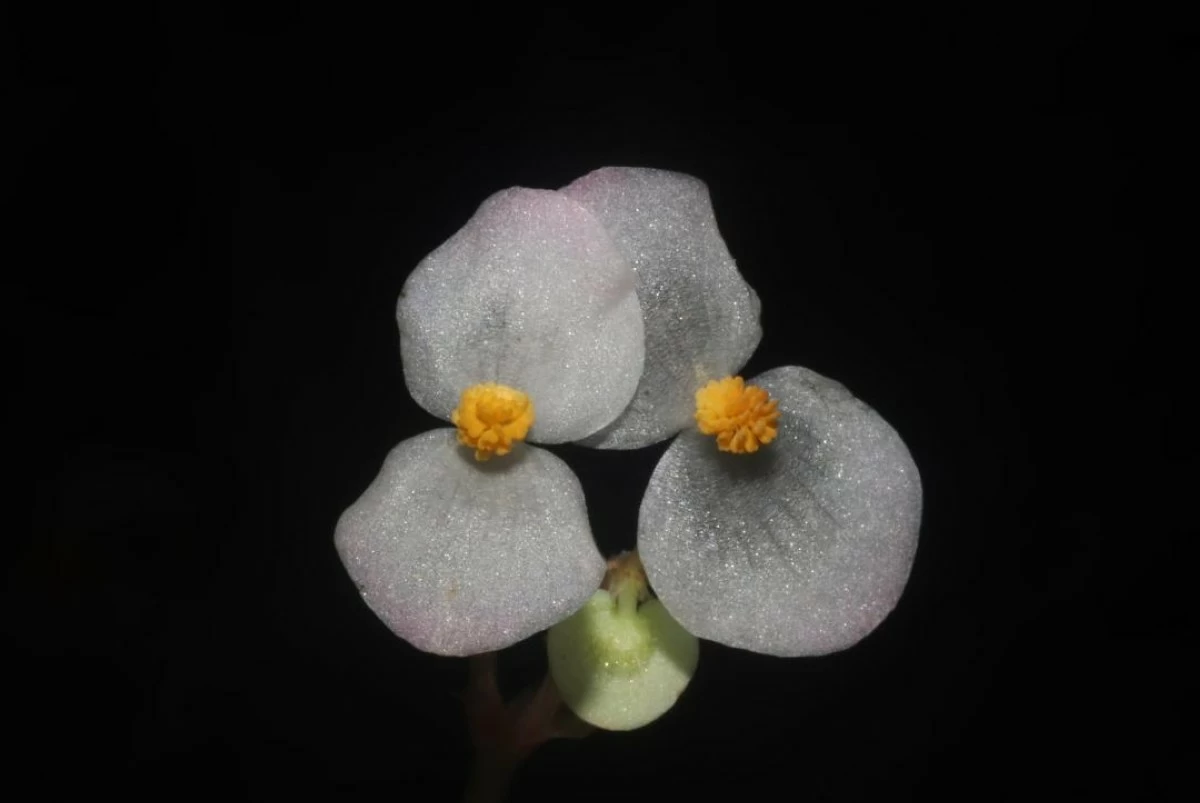

A newly identified plant species in Capiz, named Begonia jurgenneae, has been flagged for urgent conservation after scientists revealed its fragile status in a study published this month in the scientific journal Taiwania.

The team behind the discovery—Dr. Harold O. Buenvenida, Dr. Lillian Jennifer V. Rodriguez, and Mark Arcebal K. Naive—recommended that the species be added to the International Union for Conservation of Nature (IUCN) Red List of threatened species. So far, only around 100 individual plants have been documented.
The rare begonia, which thrives in moist limestone habitats at elevations of 60 to 600 meters, is distinguished by its lance-shaped leaves, white flowers, and elegant bell-shaped seed capsules. It was named after Dr. Jurgenne Primavera, a renowned mangrove scientist.

Dr. Buenvenida emphasized that the discovery carries weight beyond science, describing it as a testament to both nature and heritage. “This plant carries the story of Panay Island’s ancient landscapes, the commitment of Capiz to conservation, and the collaboration that made this work possible,” he said.
The finding was made possible through the support of the Capiz Provincial Environment and Natural Resources Office (CaPENRO) and the efforts of the Capiz Ecology and Conservation Center (CECC) at Capiz State University–Pontevedra Campus, where Buenvenida is a faculty member.
