



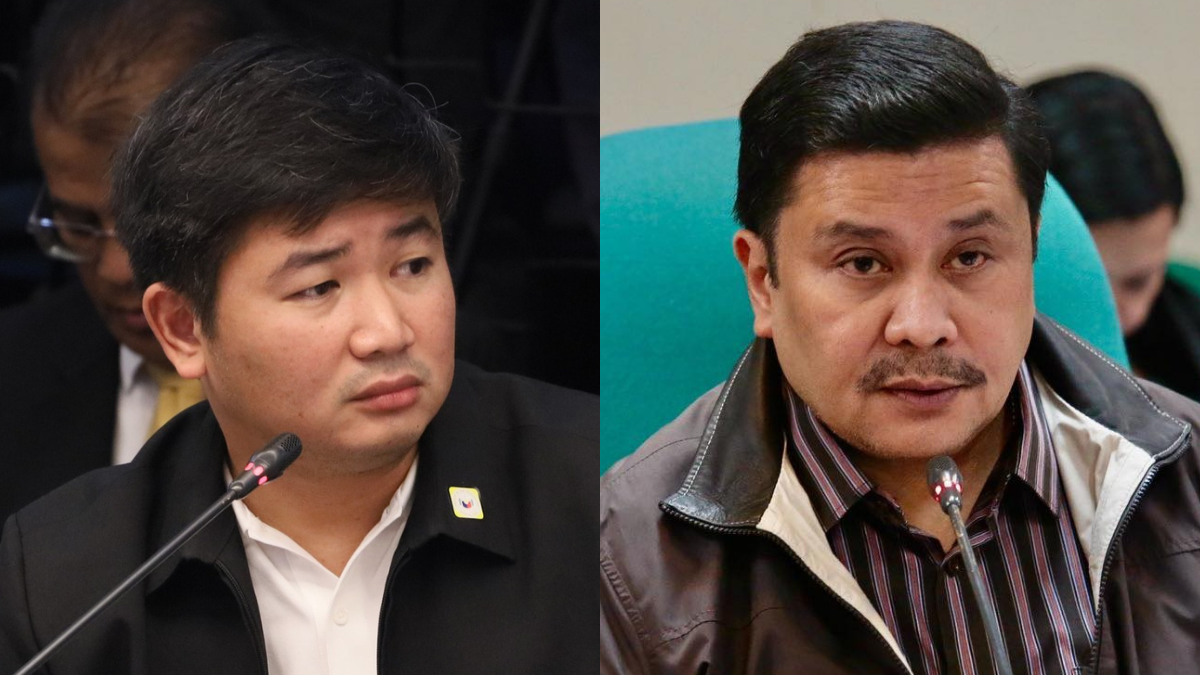

The Quezon City prosecutor’s office has junked the perjury complaints lodged by Sen. Jinggoy Estrada against a former Department of Public Works and Highways official, citing insufficient proof that the statements in question were deliberately false.

In a 12-page resolution, prosecutors said the evidence presented failed to meet the threshold needed to indict former district engineer Brice Hernandez for perjury, emphasizing that criminal liability requires more than disputed or inaccurate claims.
The case traced back to Hernandez’s testimony during a hearing of the Senate blue ribbon committee, where he alleged that Estrada received millions of pesos in kickbacks connected to flood control projects. Estrada later filed four counts of perjury in October, arguing that the statements were demonstrably untrue.
To counter the accusations, Estrada submitted his Statement of Assets, Liabilities and Net Worth as part of the complaint. Prosecutors, however, ruled that perjury hinges on proof of a “willful and deliberate assertion of falsehood,” not simply on whether a statement turns out to be inaccurate.
“Applying these principles, this Office finds that the complainant has not substantiated the required malicious intent,” the resolution read.

The ruling noted that Hernandez consistently asserted his allegations were grounded in his own experience and involvement within the Department of Public Works and Highways, a factor prosecutors said undercut claims that he knowingly lied under oath.
“The subsequent denials and the SALNs do not, by themselves, conclusively prove that the respondent knew his statement was false at the moment he swore to it,” the resolution read.
“As the Supreme Court has held, the complainant must prove not only that the statement was false, but also that the defendant did not believe it to be true,” it added.
Prosecutors further said conflicting accounts alone do not amount to perjury unless backed by independent evidence showing which statement was intentionally false. “In sum, while the respondent’s statements may have been inaccurate, reckless, or made with poor motives, the evidence on record does not sufficiently demonstrate that he made them with the evil intent and legal malice that Perjury requires,” the resolution stated in dismissing the charges.
