



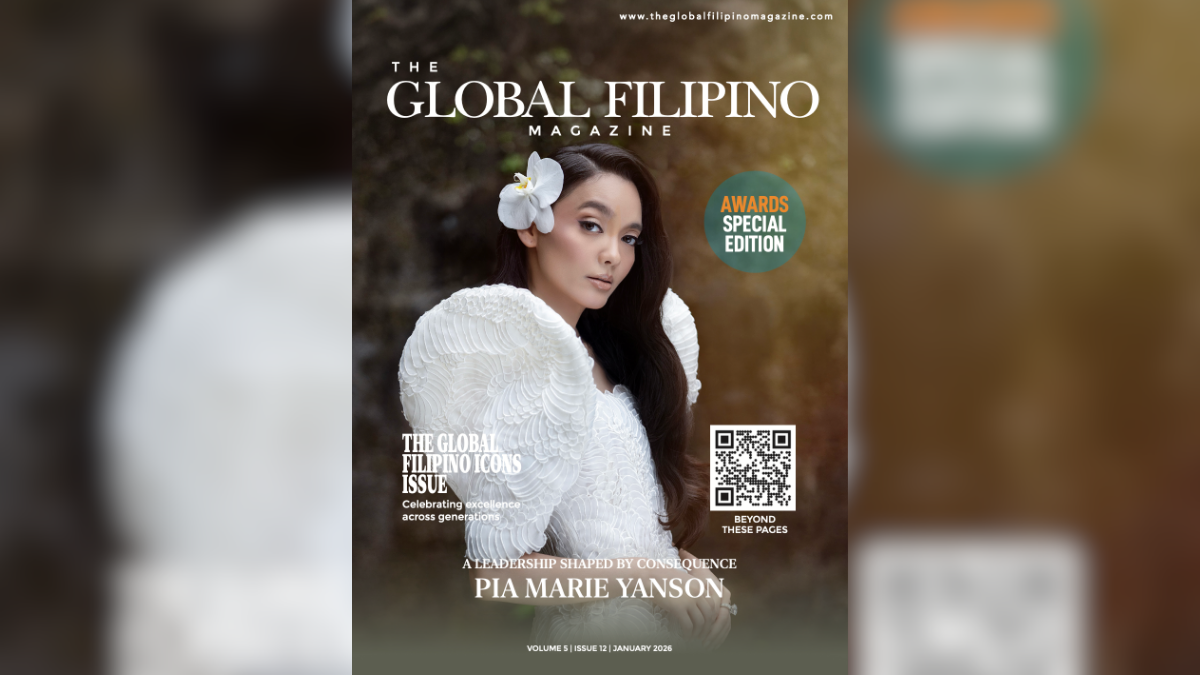

There are people who lead by asserting themselves—and then there are those whose presence quietly settles a room. With Pia Marie Yanson, authority arrives without announcement. It reveals itself in composure, in restraint, in the way decisions are weighed rather than rushed. Power, in her world, is never separated from accountability.

Purpose, as she defines it now, is neither abstract nor ornamental. It is practical, lived, and demanding. “Purpose, for me, is using God-given strengths and influence to create opportunities for others,” she says. The statement is direct, almost spare. For her, leadership is a daily act of intention—across business, community work, and motherhood—measured by consequence rather than applause. Purpose, she adds, is both anchor and responsibility, something that steadies her and obliges her in equal measure.
Where leadership became personal
Her leadership style did not emerge from a single defining success. It was shaped, instead, by accumulation—of wins, missteps, and moments that quietly recalibrated her sense of duty. Over time, resilience replaced urgency. Confidence learned to coexist with caution. “My life experiences—both successes and challenges—have shaped who I am today,” she reflects, noting how those years sharpened her instincts and deepened her sense of integrity.
The shift came when decision-making stopped being theoretical. “A defining moment for me was realizing how many people depend on the decisions I make—my family, my teams, and the communities I support,” she says. Leadership, at that point, ceased to be about authority and became about consequence. The result is a style that is firm without being inflexible, decisive without losing empathy. Courage and compassion are not competing traits in her view; they are required to coexist.
Service rooted in solidarity
Her humanitarian work follows the same philosophy. It is not framed as generosity from a distance, but as proximity—standing close enough to understand what endurance actually looks like. She speaks often of Filipinos whose strength is rarely spotlighted: mothers who absorb sacrifice quietly, children who keep ambition alive despite limited means, communities that refuse to surrender to fatigue. “Humanitarian work is not just generosity; it is solidarity,” she says. “It is standing with people and believing in their potential.”
What stays with her most are the smallest reactions—the moment a child smiles, a parent exhales, a family feels briefly unburdened. Those moments, she admits, recalibrate her sense of scale. They remind her that impact does not need to be grand to be meaningful. It needs to be sincere, and it needs to be sustained.
Holding multiple roles without fragmentation
Balancing leadership roles with advocacy and motherhood is often romanticized. She does not indulge that framing. Instead, she speaks of alignment—of making choices that do not fracture her values. “Grace, because I know I cannot do everything perfectly,” she says, describing the mindset that keeps her steady. Grace allows room for imperfection. Positivity fuels resilience. Alignment ensures that her public decisions do not contradict her private principles.

Peace, for her, is not passive. It is actively chosen. She prioritizes what brings clarity, even when circumstances remain demanding. Calm, she believes, is not the absence of chaos but the ability to remain grounded within it. That grounding is what allows her to move between roles without losing herself in any single one.
A quieter measure of success
Asked about achievement, she does not point to business milestones. She speaks first of motherhood—and then of the unseen work of becoming. “My proudest achievement is my role as a mother,” she says plainly. Guiding her children toward independence, moral grounding, and self-awareness carries a weight no professional title can rival. Watching them grow into thoughtful, capable individuals is, to her, life’s most enduring reward.
Yet she also names a different kind of pride—one that rarely earns public recognition. The patience learned through transition. The resilience built during uncertainty. The discipline of compassion when circumstances invite retreat. “These personal victories, the ones no one sees, remind me that the deepest growth happens in silence,” she reflects. Success, in that sense, becomes internal: not something claimed, but something lived.
What she hopes others see
If there is a misconception she hopes to quietly dismantle, it is the idea that leadership requires flawlessness. “Leadership does not require perfection—only sincerity, courage, and the heart to serve,” she says. Strength, as she defines it, is steady rather than loud. It is kind without being soft. Rooted, not reactive.
She hopes that those who encounter her story—briefly or closely—come away with a sense of possibility. That difficulty does not disqualify. That quiet resolve can outlast spectacle. And that change, when approached with honesty, is accessible to more people than they are often led to believe.
Looking toward 2026
The year ahead is not framed as reinvention. It is framed as continuation, with refinement. She speaks of deepening work already in motion—community programs that support families, businesses that provide livelihoods, time protected for the people who matter most. There is also room for expression, for allowing her affinity for fashion to exist alongside responsibility, not in competition with it.
“2026, for me, is about intentional growth,” she says—expansion guided by discernment rather than momentum. Leadership, in her view, is less about scaling outward than about remaining answerable as influence widens. Every space she occupies, she believes, comes with an obligation to leave it steadier than she found it.Pia Marie Yanson highlights why humanitarian work should be about solidarity, not charity
