



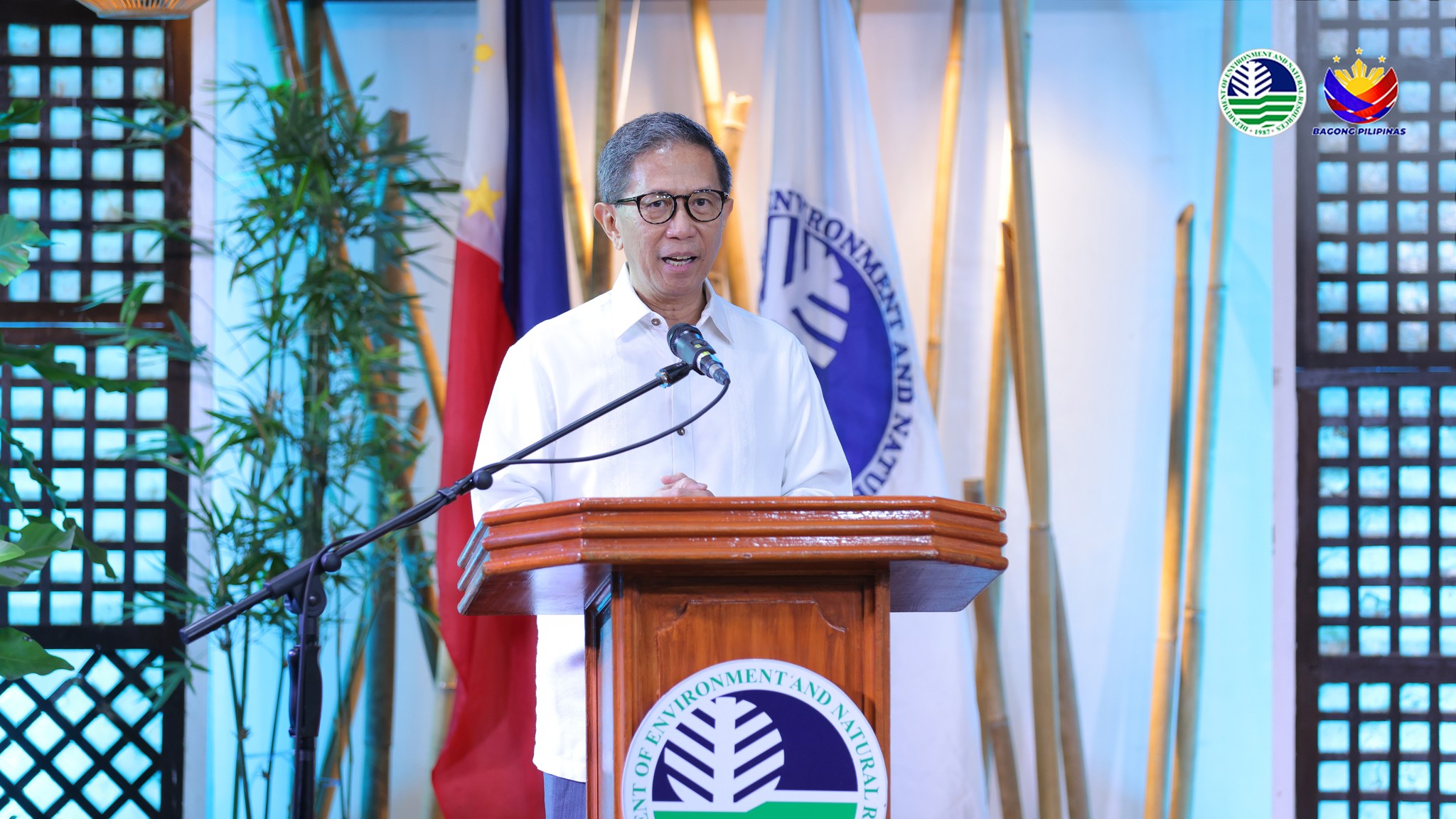

The Philippines will need an estimated $72 billion—or nearly ₱4 trillion—in financing to meet its climate commitments and cut carbon emissions, Environment Secretary Raphael Lotilla said at a recent climate summit hosted by investment platform GenZero.

Lotilla stressed that the funding would be critical for transforming key sectors such as energy, transport, and agriculture as part of the country’s pledge under the Paris Agreement. “Mobilizing this capital from public, private and international sources is critical to achieving the targeted reductions in greenhouse gas (GHG) emissions from these sectors,” he said.
Signed in 2016, the Paris Agreement commits the Philippines to reduce its greenhouse gas emissions by 75 percent by 2030. Lotilla noted that the Marcos administration is preparing to update the country’s nationally determined contribution (NDC) to align with long-term strategies to move away from fossil fuels. He explained that for the energy sector, the revision would follow the Philippine Energy Plan, emphasizing renewable energy expansion and efficiency measures.

The Department of Energy (DOE) is also pushing for a carbon credit policy for the power sector to attract more clean energy investments. The proposed guidelines would cover the issuance and monitoring of carbon credit certificates (CCCs), tradeable permits representing one ton of carbon dioxide equivalent reduced or removed from the atmosphere. Eligible projects include coal plant retirements, renewable energy development, energy efficiency improvements, biofuels, and electric vehicle adoption.
DOE Undersecretary Felix William Fuentebella said the policy framework is set for release by next month. “If we don’t do this, other agencies won’t take action,” he warned.
Currently, coal dominates the country’s energy mix at 63 percent, while renewables make up only 22 percent. Private firms are beginning to step in, with Ayala-led ACEN Corp. planning to retire its Batangas coal plant by 2030 and replace it entirely with renewable energy. “We started to divest our coal plants and basically invest everything into renewables in the Philippines,” said ACEN president and CEO Eric Francia, affirming the group’s goal of going fully renewable by the end of the year.
