


A job posting by the Philippine Statistics Authority’s Cavite Provincial Statistical Office has gone viral on social media, drawing widespread mockery — and serious legal questions — after netizens flagged a stark mismatch between its qualification requirements and its compensation offer.

The official flyer, shared on the PSA-Cavite Facebook page, advertised a single Administrative Clerk position on a service contractor basis at a daily rate of ₱600.00 for eight hours of work. It listed a bachelor’s degree as a preferred qualification, along with experience in office operations, computer literacy, good communication skills, and a willingness to work on Saturdays, Sundays, holidays, and beyond 5:00 p.m. “if necessary.” Female applicants, the flyer specified, must not be pregnant. The application deadline was set for March 20, 2026, at the agency’s office in Trece Martires City, Cavite.
The post spread rapidly after commenters noticed the advertised pay, drawing immediate comparisons to what construction workers, market vendors, and informal laborers say they already earn without a college diploma.
“600 gusto bachelors degree pa ang depungal,” wrote commenter Ron Ron Daracan — a remark that drew over 600 reactions.
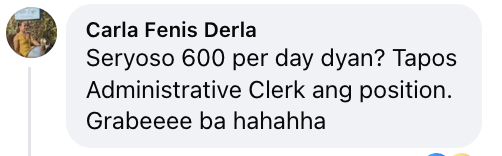
“Seryoso 600 per day dyan? Tapos Administrative Clerk ang position. Grabeeee ba hahahha,” added Carla Fenis Derla.
Others turned the irony inward. “D ako graduate pero lagpas n ako ng 600 dinaig pa ay,” said Gillian Jane Napa, suggesting that non-graduates were already out-earning the advertised rate in their current lines of work.
The criticism extended beyond the pay itself. “Hindi na to below minimum — below the belt na to HAHAHA,” wrote Edgar Cruz. Beth Villarubi framed it bluntly: “Bachelors degree tapos 600 for 8 hrs? Galing nyo.”

To contextualise the figure: the minimum daily wage in CALABARZON — the region covering Cavite — ranges up to ₱525 for non-agriculture workers in certain municipality classifications, with a second tranche effective April 1, 2026. The ₱600 daily rate technically clears the regional minimum wage floor, but critics argued it fell well short of what a degree-level position with weekend and after-hours obligations should command.
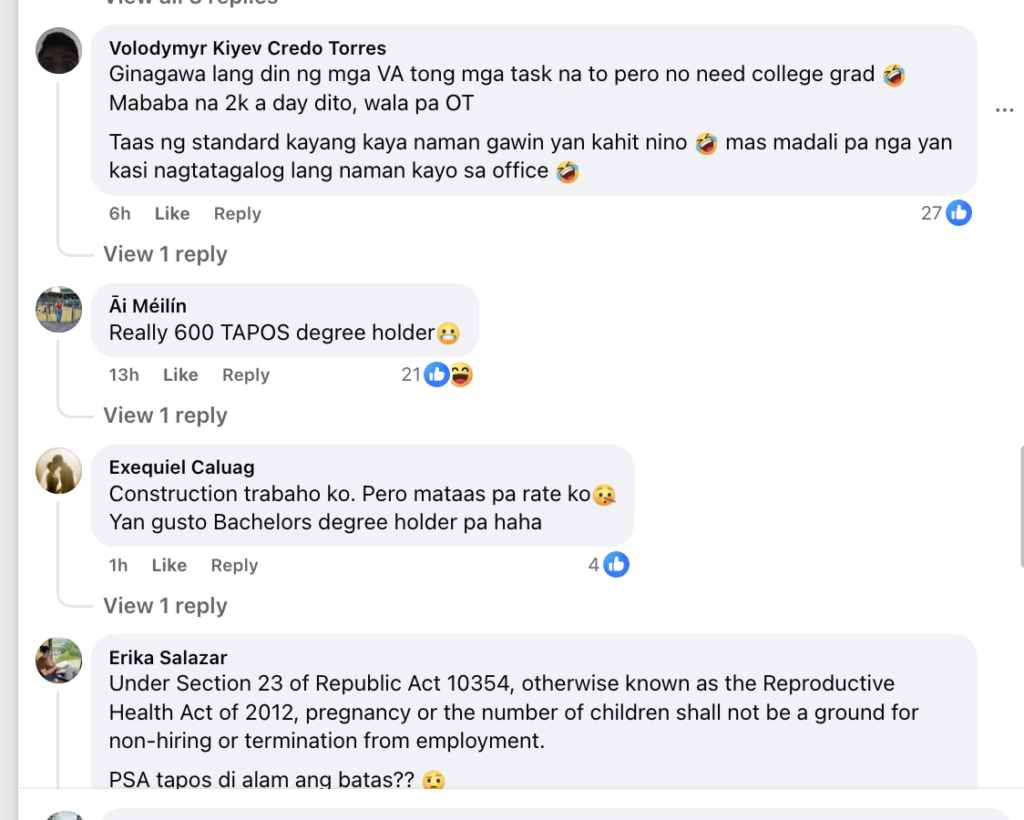
The contrast was sharpened by commenters who noted that virtual assistants, construction workers, and informal traders reported earning significantly more. “VA na undergrad na sumusweldo ng 1.5k above per day be like,” wrote Briones JB. Commenter Exequiel Caluag noted: “Construction trabaho ko. Pero mataas pa rate ko. Yan gusto Bachelors degree holder pa haha.” Another, Tar Ius, wrote: “600 sa loob ng 8hrs? 1k na ako sa trabaho ko als graduate pa.”
Beyond the wage dispute, one commenter flagged a potentially more serious issue embedded in the qualifications. The flyer explicitly states that female applicants must not be pregnant — a condition that legal commenters pointed out runs afoul of Philippine law. Commenter Erika Salazar cited the statute directly: “Under Section 23 of Republic Act 10354, otherwise known as the Reproductive Health Act of 2012, pregnancy or the number of children shall not be a ground for non-hiring or termination from employment. PSA tapos di alam ang batas??”
Under Republic Act 10354, any employer who uses pregnancy as a ground for non-hiring commits a prohibited act, and public officers found liable face penalties beyond fines and imprisonment — including suspension or removal from office.
The legal exposure is compounded by the institutional identity of the office involved. The PSA is the government agency responsible for producing the country’s official labor, wage, and demographic statistics. The prospect of the country’s lead statistics body posting a job condition that appears to violate a 13-year-old law was not lost on the public.
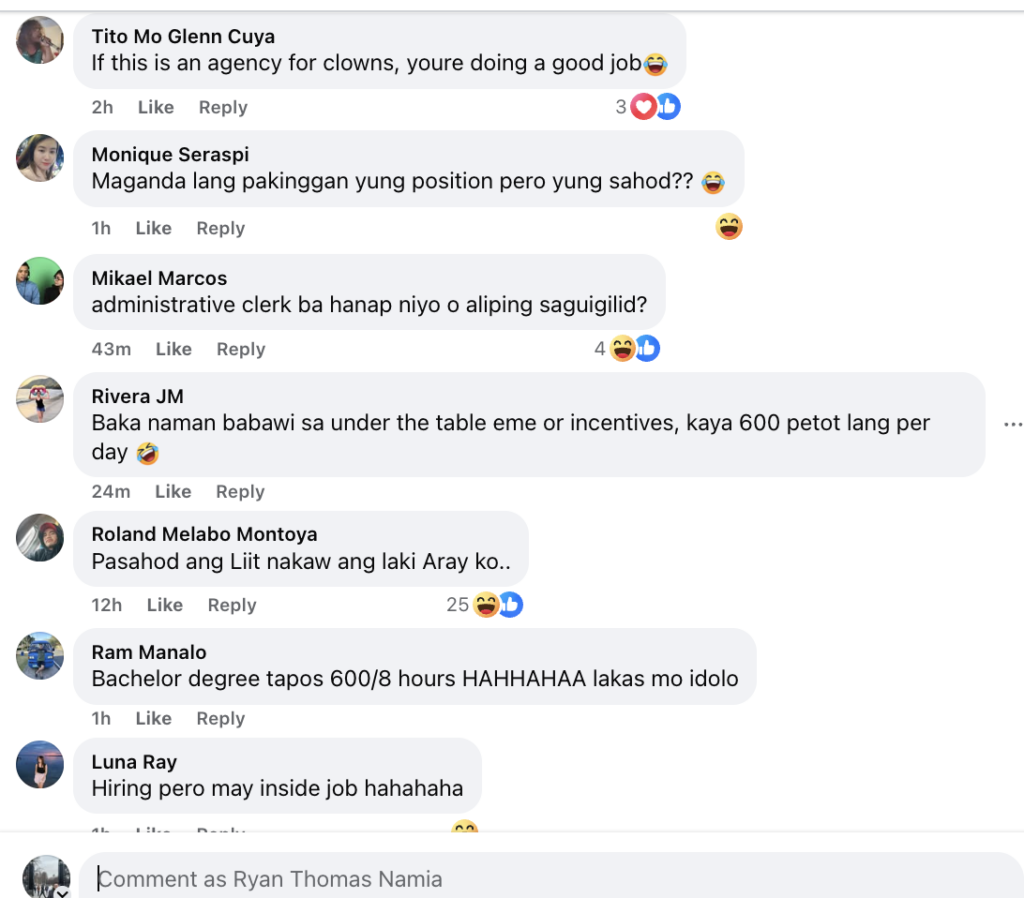
Several commenters also questioned whether the posting was more formality than genuine recruitment. “Mema post pero ang totoo may mga naka reserved na talaga,” wrote Bhin Otico. “Hiring pero may inside job hahahaha,” echoed Luna Ray. “Ang daming qualification pero yung may Backer lang ang tanggap,” said Chardie Garcia — remarks pointing to a broader public distrust of government hiring processes.