



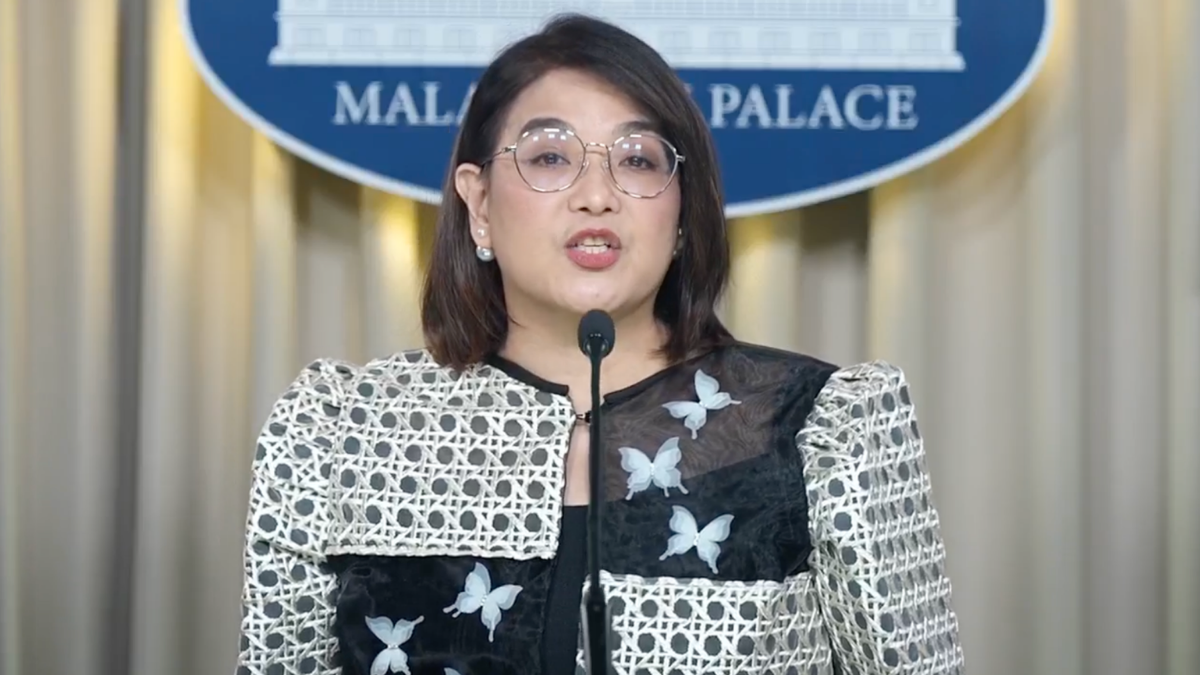

A Malacañang spokesperson is calling on those linking the current administration to drug-related killings to back up their claims with specific details — names, locations, and circumstances — rather than raw numbers alone.

Presidential Communications Undersecretary Claire Castro issued the challenge after defense lawyer Nicholas Kaufman, representing former president Rodrigo Duterte at the International Criminal Court, cited data from the University of the Philippines’ Dahas Project to argue that lethal police operations have continued well into the Marcos years.
“Whoever is saying this, whoever is providing this kind of information, they should complete it, not just numbers, but where it happened, who was involved,” Castro said.
The Dahas Project, run by the UP Third World Studies Center, tracks media-reported killings linked to drug operations and recorded 1,183 such deaths since Marcos took office, as of Feb. 23. Its data covers incidents involving both police and unidentified suspects.
Kaufman raised those figures during Thursday’s confirmation of charges hearing at the ICC in The Hague, arguing they undercut the prosecution’s framing of the drug war as a Duterte-era phenomenon.
“The report for the first year of the Marcos administration showed that out of 342 killings, 160 were at the hands of state agents and the figures and the statistics just kept on rising with the second year of the Marcos administration,” Kaufman said, citing the Dahas project.

He pressed further: “Clearly, I’m forced to ask myself whether anyone on the other side of this room has thought of investigating the Marcos regime and the related phenomenon and holding someone accountable.”
Castro pushed back, saying President Marcos would not shield officials who misuse their authority. “The President would not want those who abuse their power to go unpunished,” she said, adding that extrajudicial killings are incompatible with the legacy Marcos intends to leave.
She also noted that the Philippine National Police, the Criminal Investigation and Detection Group, and the National Bureau of Investigation have standing authority to investigate such killings without waiting for a presidential directive.
One complication the defense did not address directly: the ICC has no jurisdiction over killings committed after March 16, 2019, when the Philippines formally ceased to be a party to the Rome Statute — a withdrawal Duterte himself set in motion in March 2018, shortly after the then-prosecutor announced a preliminary examination into the Philippine drug war. ICC senior trial lawyer Julian Nicholls made that point in the prosecution’s closing argument. Duterte’s case is legally confined to incidents between November 1, 2011 and that withdrawal date.
Neri Colmenares, who represents families of drug war victims, was unimpressed by the defense’s strategy. “It’s good that they are somewhat using legal arguments and no longer political propaganda, but he still mentioned weak points and evidence,” Colmenares said in The Hague. “When there is a trial, they will have a really hard time because they have no evidence to prove that he has nothing to do with the drug war.”
Castro, for her part, closed the door on any public debate over Duterte’s interim release — already denied by the ICC — but extended a characteristically colorful olive branch to his lawyer. She said that if Kaufman ever visits the Philippines, she would gladly take him out for balut, kwek-kwek, and adidas.
