



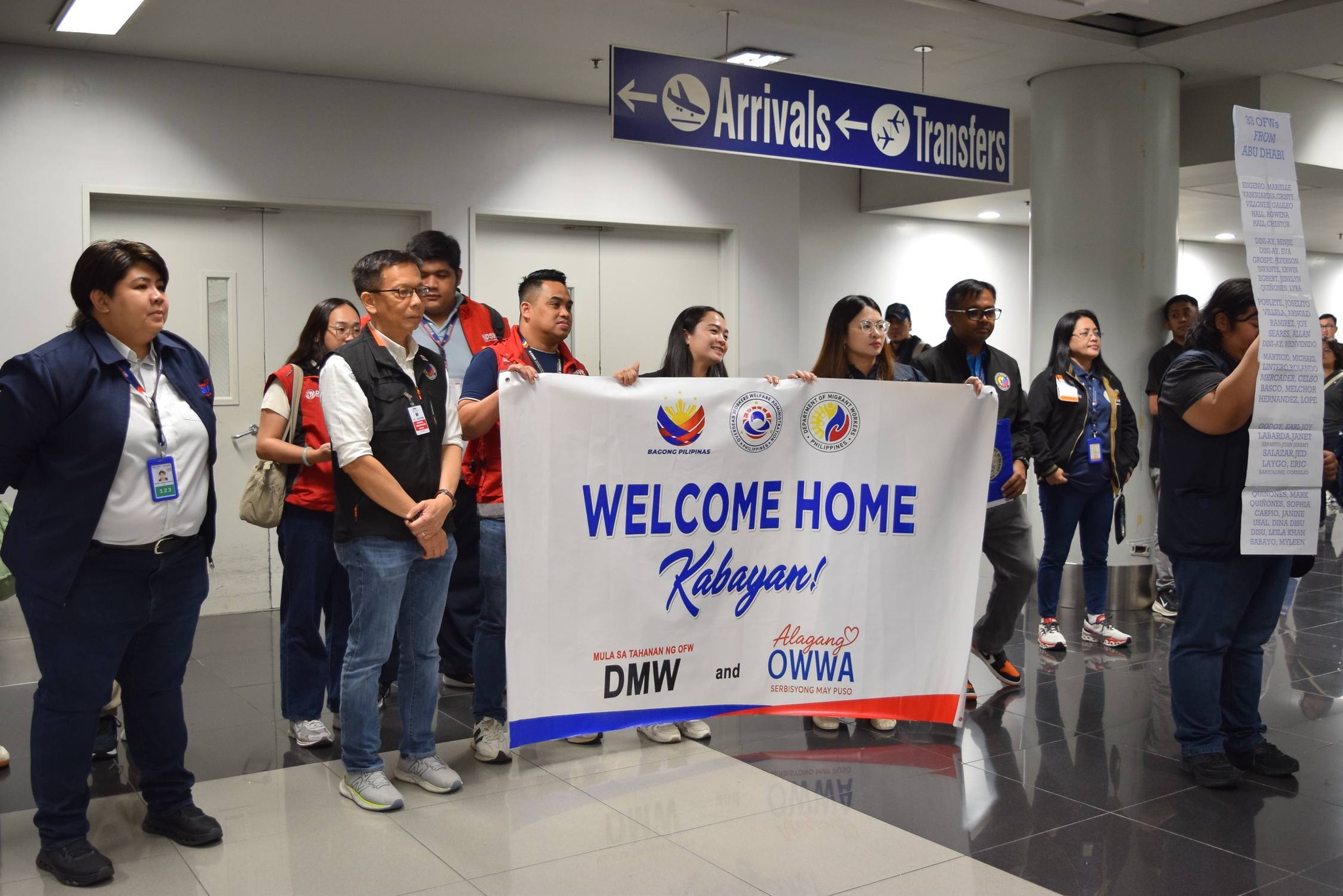

The Philippines faces a funding shortfall of roughly P7 billion to cover a full-scale repatriation of overseas Filipino workers should the Middle East conflict spiral further, Senator Sherwin Gatchalian disclosed in a radio interview Sunday.

The 2026 national budget already sets aside P6 billion for repatriation operations, but Gatchalian pegged the total requirement at P13 billion — a figure that accounts for undocumented workers as well.
“Ang computation natin, kung talagang worst comes to worst, ke-kailangangin natin is P13 billion kasi meron pa tayong mga undocumented,” he told Super Radyo dzBB.
“So kung meron na tayong P6 billion, P13 billion ang kailangan, so kulang na lang natin is about P7 billion, so yun yung dapat hanapan,” he added.
The Department of Migrant Workers had previously indicated it would need a supplemental budget to finance repatriation under a worst-case scenario. The Overseas Workers Welfare Administration, meanwhile, noted that per-person repatriation costs — originally placed between P135,000 and P140,000 — could now climb to P150,000 following the escalation of hostilities.
The widening conflict has also rattled global petroleum supply lines, with the Department of Energy flagging steep fuel price hikes expected next week: diesel by P19.00 per liter, gasoline by P9.00 per liter, and kerosene by P31.00 per liter. Gatchalian urged the DOE to closely watch oil companies and retailers for any profiteering amid the projected increases.
Despite mounting pressure to provide relief at the pump, Gatchalian cautioned against removing excise taxes on fuel, calling it inequitable and fiscally risky. He estimated the government would forfeit around P15 billion monthly — or P159 billion annually — if the levy were scrapped.
“Last resort na ito dahil pag sinuspende natin ang excise tax, dalawang bagay ang mangyayari. Una, nababawasan ang collection ng gobyerno [at] sigurado ako may mababawasan na serbisyo,” Gatchalian said.

“Pangalawa, last resort ‘yan dahil ang mas maraming gumagamit ng krudo ay ‘yung mga may kaya o mayayaman. [K]aya ko sinasabing last resort ‘yan dahil hindi siya equitable. Hindi pantay ang ganitong approach,” he added.
He was similarly opposed to suspending the value-added tax on petroleum, arguing it would create complications for fuel suppliers who depend on input tax credits.
“Ang VAT, mas complicated ‘yan dahil mayroong input-output VAT. Kung ako ang tatanungin, ‘wag i-suspend ang VAT dahil complicated ‘yan. Kapag sinuspinde natin ‘yan, mawawala ng input tax ang magsu-supply nung petrolyo,” the senator said.
Parañaque City Second District Rep. Brian Yamsuan took a different stance, telling dzBB in a separate interview that a preemptive excise tax suspension could prevent a cascade of price increases across basic goods.
“Ang sa atin lang, preemptive lang ang iniisip natin kasi nagbabadya na ang pagtaas ng presyo ng langis,” said Yamsuan, who serves as vice chairperson of the House Committee on Transportation.
“Ang comprehensive approach ko i-reduce natin ang fuel use, i-lower natin ang fuel taxes tapos ‘yung fuel subsidy sa affected sectors, maghanda na rin tayo,” he added.
Yamsuan also called for amending the Tax Reform for Acceleration and Inclusion (TRAIN) Law to better address current conditions. Under the existing law, excise taxes on petroleum products are automatically suspended once global oil prices average US$80 per barrel over three consecutive months.
