



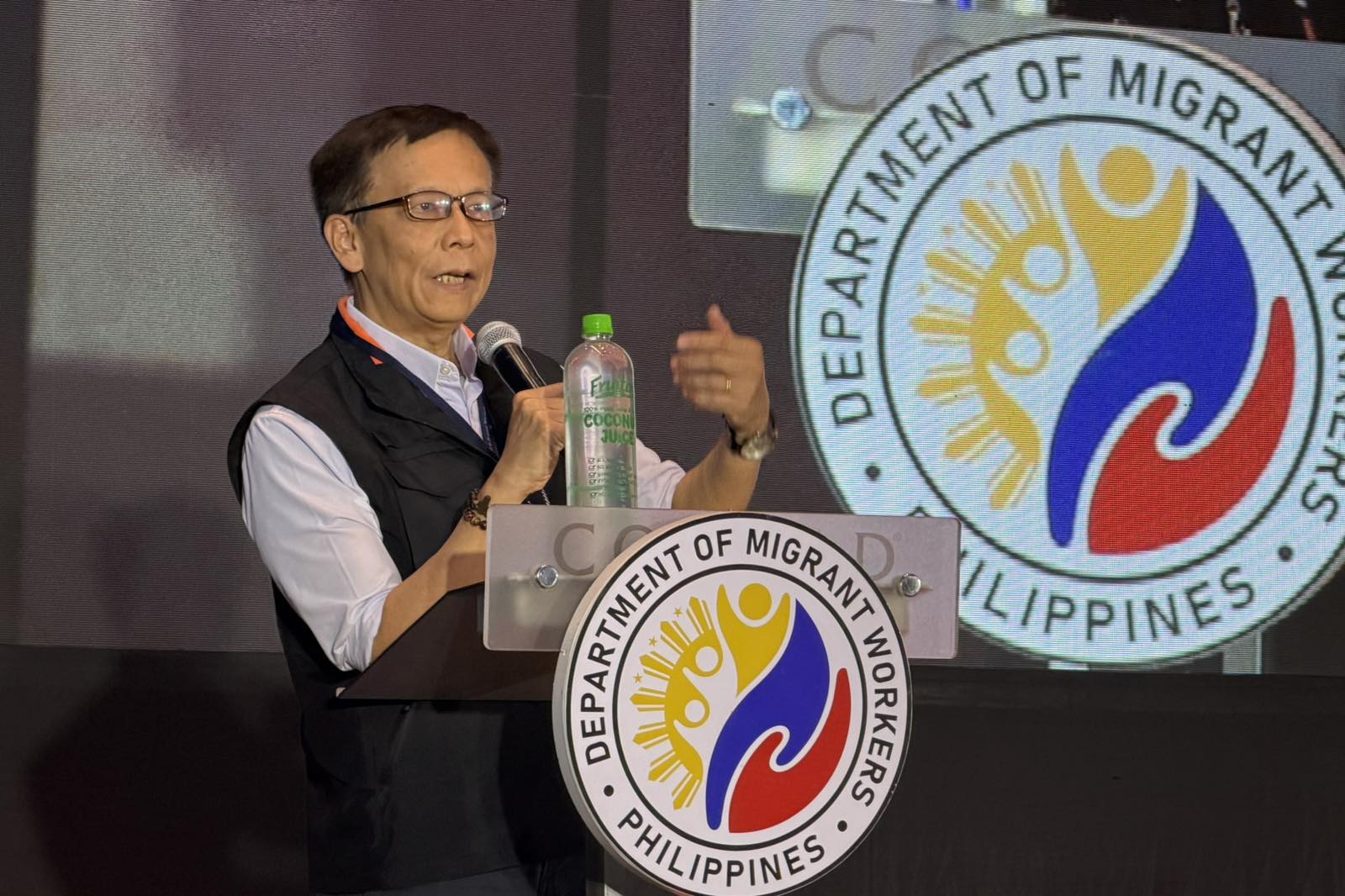

As overseas Filipino workers continue to post stronger economic contributions, the Department of Migrant Workers (DMW) said it is accelerating long-term reintegration efforts designed to support Filipinos returning home, according to a report by the Philippine News Agency (PNA).

During the celebration of the Month of Overseas Filipinos and International Migrants Day in Makati City on Thursday night, DMW Secretary Hans Leo Cacdac pointed to the latest Bangko Sentral ng Pilipinas data showing remittances climbing to USD 3.52 billion in October, up from USD 3.46 billion in September.
“We are once again so grateful to our dear overseas Filipinos and OFWs. And ito ay serbisyo sa ating mga pamilya of overseas Filipinos and overseas Filipino workers and to the country, ang mahal nating bansang Pilipinas (our beloved Philippines),” Cacdac said.
Rather than viewing overseas employment as a closed chapter, Cacdac said the government sees return and reintegration as a continuing process that begins once workers come home.
“For many, it marks the start of a complex transition back into an economy, a community, and a family that must be ready to receive them. Return and reintegration are not the end, they’re the beginning of a new chapter,” he said.
He explained that reintegration involves economic, social, and psychosocial dimensions that require coordination among national agencies, local governments, private institutions, and migrant communities.
The DMW has adopted a framework built around “kaalaman, kabuhayan at kalinga,” or knowledge, livelihood, and care. Under the “kaalaman” pillar, financial and business literacy programs are now integrated throughout the migration cycle, from pre-employment briefings to post-arrival orientations, to help workers and their families make informed decisions early on.

Cacdac said the agency is also working with TESDA, higher education institutions, and private sector partners to broaden access to skills training and micro-credentialing. One initiative is the Expanded Tertiary Education Equivalency and Acceleration program, which allows OFWs who did not finish college to earn degrees by crediting their overseas work experience.
He added that the government is expanding skills training beyond domestic work, particularly for women entering overseas employment, by promoting caregiving, hospitality, and other skilled occupations aimed at improving wages, job classification, and worker protection.
Under the “kalinga” pillar, Cacdac said the DMW has scaled up psychosocial support through wellness and “kamustahan” sessions for OFWs and their families. He noted that the OFW Hospital has delivered more than 200,000 services since 2023 as part of migrant welfare assistance.
Livelihood support also remains central to reintegration efforts. Cacdac said the National Reintegration Center for OFWs recorded 4,700 beneficiaries under its “Buy local, buy OFW” livelihood initiatives, the highest number since the program began nearly ten years ago. In 2025, the reach expanded further to more than 10,309 returning workers.
He also cited the DMW Aksyon Fund, which has provided financial assistance ranging from PHP 50,000 to PHP 100,000 to nearly 30,000 distressed OFWs facing medical, legal, and emergency concerns.
“As we mark International Migrants Day, we do so with gratitude and renewed resolve. We will continue to do more, to do better, and to serve better, so that every returning overseas Filipino is met with opportunity, dignity, and hope,” Cacdac said.
