



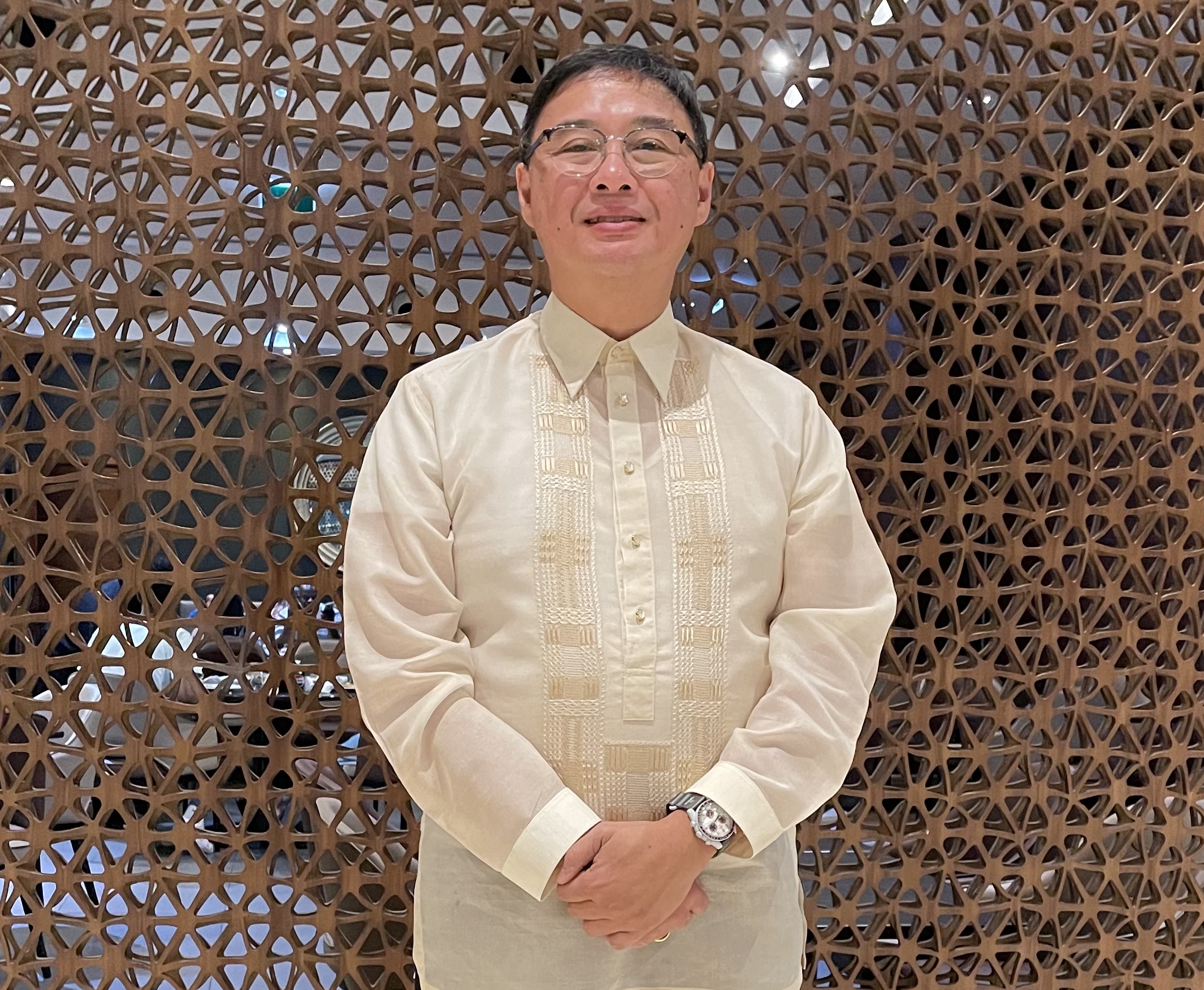

On May 9, 2022, at exactly 3 pm Dubai time when voting in the Philippines as well as in all foreign missions was closed, I recommended these five action plans to the eventual winner of the presidential election:

1. Address the gaps in the delivery of universal health services, specifically on the vaccination program to control Covid-19. The pandemic is not yet over as experienced by the Chinese in Shanghai.
2. Provide financial assistance to the daily wage earners affected by the pandemic such as public utility drivers who are critical to the economy as they transport people and even goods to keep the supply chain functioning.
3. Request commercial banks to write-off compounded interests and fines on loans extended to small and medium enterprises to give them a second chance to employ people, earn a decent income and realize their potential as entrepreneurs. You will never know, perhaps two or three of these entrepreneurs would become industrialists.
4. Deploy a task force of lawyers to countries where there are many Overseas Filipino Workers (OFWs) who are encountering labor disputes and legal problems not of their own making. In the Middle East, there are many OFWs who are unwitting victims of unscrupulous companies, agencies, and individuals.
5. Govern the country for the next six years following anti-graft and corruption laws and regulations.
The Khaleej Times in the UAE carried my concerns – https://www.khaleejtimes.com/world/asia/philippine-elections-filipinos-in-uae-hope-for-better-tomorrow-as-marcos-jr-claims-victory.
Fast forward today, September 8, these were the initiatives implemented by President Ferdinand ‘Bongbong’ Marcos Jr. as per Perplexity (https://www.perplexity.ai/):
On the Covid-19 situation: President Marcos Jr. issued these two major executive orders specifically related to Covid-19 control, Executive Order No. 3 (September 12, 2022) which allowed the voluntary wearing of face masks in outdoor settings and reiterated the continuous implementation of minimum public health standards during the state of public health emergency, and Executive Order No. 7 (October 28, 2022) which expanded the voluntary mask policy to both indoor and outdoor settings (with exceptions for healthcare facilities, medical transport, and public transportation), again emphasizing continued observance of minimum public health standards.
He also issued Presidential Proclamation No. 57 (September 12, 2022) which extended the national state of calamity due to Covid-19 until December 31, 2022.
On providing financial assistance to the daily wage earners affected by the pandemic: The Marcos Administration continued some forms of cash aid programs benefiting daily wage earners affected by Covid-19 such as Social Amelioration Program (SAP) which provided emergency subsidies ranging from ₱5,000 to ₱8,000 per month to low-income households and daily wage earners impacted by quarantine restrictions. These benefits were based on minimum wage rates per region and were meant for those with ‘no-work, no-pay’ arrangements, informal economy workers, and other vulnerable populations.

On requesting commercial banks to write-off compounded interests and fines on loans extended to small and medium enterprises: There is no public record or credible news indicating that President Marcos Jr. has explicitly asked banks to waive or write off compounded interest and fines on loans extended to Covid-19-affected small and medium enterprises (SMEs). The Bangko Sentral ng Pilipinas (BSP) has reacted to proposals for write-offs of penalties and other relief measures for MSMEs by focusing on regulatory relief policies that provide temporary exclusions and forbearance measures rather than outright write-offs.
On the deployment of lawyers to countries where there are many Overseas Filipino Workers (OFWs) such as in the Middle East: The Marcos Administration has been actively working on protecting and supporting OFWs through various measures. These include signing bilateral labor agreements with countries in the Middle East such as Qatar, the UAE, and Saudi Arabia to ensure safer and more humane working conditions. The government has made efforts to resolve deployment issues, such as unpaid salaries of OFWs in Saudi Arabia,
His administration has transferred the Assistance to Nationals (ATN) program from the Department of Foreign Affairs to the Department of Migrant Workers (DMW) to better support OFWs, including legal aid. The Migrant Workers Offices (MWOs) in countries like those in the Middle East provide legal, medical, repatriation, and shelter assistance to OFWs. This consolidation aims to offer a singular office for comprehensive support, including legal matters, to distressed OFWs abroad.
On governing the country following anti-graft and corruption laws and regulations: President Bongbong Marcos has governed the Philippines with a notable action regarding anti-graft and corruption efforts by abolishing the Presidential Anti-Corruption Commission (PACC), which was created during the Duterte administration in 2017 to investigate graft and corruption against presidential appointees. This abolition was formalized through his first executive order (EO No. 1) on June 30, 2022, which aimed to streamline government bureaucracy for ‘simplicity, economy, and efficiency.’ The powers and functions of the PACC were transferred to the Office of the Deputy Executive Secretary for Legal Affairs, which is responsible for handling related administrative cases now.
Lately, President Marcos Jr. is actively taking a strong stance against corruption, especially focusing on corruption in flood-control projects. In his 2025 State of the Nation Address (SONA), he declared war on corruption and promised investigations and filing of charges against government officials, contractors, and accomplices involved in corrupt flood-control projects. He expressed strong condemnation of bribery and profiteering in these publicly funded projects, warning that culprits will be held accountable. Moreover, he plans to sign an executive order to create an independent commission to thoroughly investigate allegations of irregularities and corruption in the Department of Public Works and Highways (DPWH) projects, initially focusing on flood control but potentially expanding to other infrastructure. He highlighted the need for mechanisms or legislation to curb corruption, emphasizing safeguarding systems to prevent future occurrences. His administration is also promoting transparency by publishing lists of projects for public scrutiny and auditing performance to verify taxpayer money usage.
Now is the perfect time to be involved in the future of the Philippines. Let your voices be heard dear readers. Send your feedback to https://sumbongsapangulo.ph/.
Note: The columnist is a 24-year resident of Dubai and is currently working as Head of Corporate Communications of a global energy logistics company. He used to be a former Filipino Community Leader as chairman of the Philippine Independence Day Execom in 2008 and as one of the founding officers of the Filipino Social Club in 2019. He can be reached at: artlosbanos@gmail.com
