



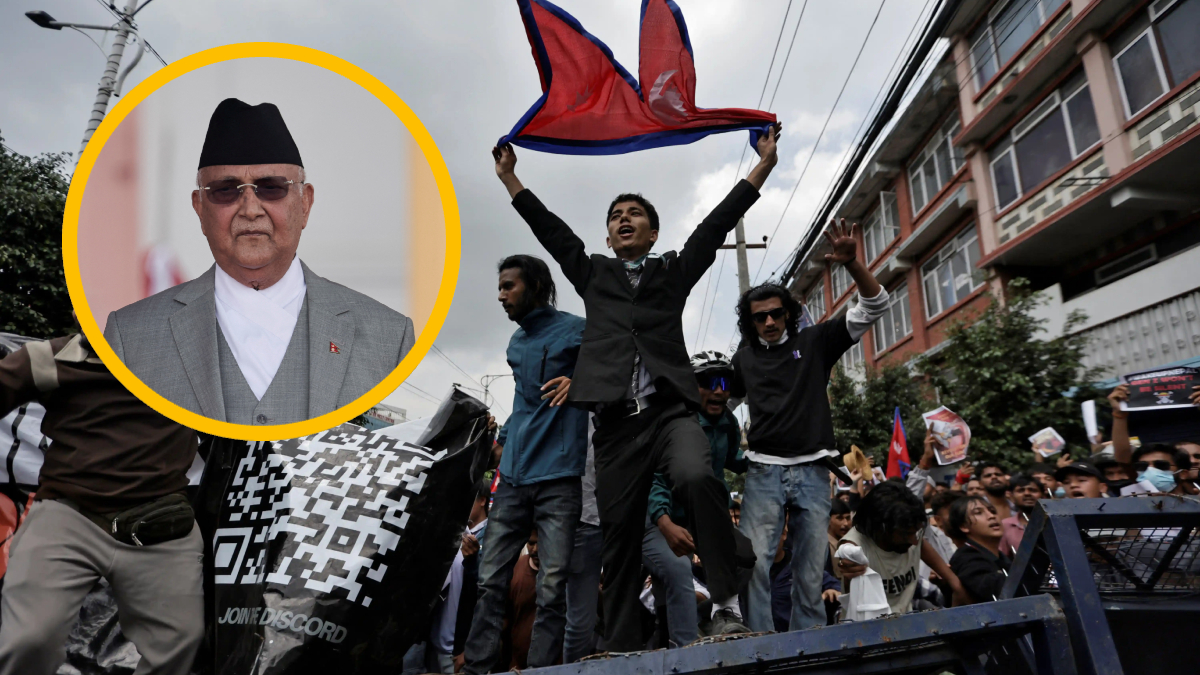

Nepalese Prime Minister K.P. Sharma Oli has stepped down amid an unprecedented wave of public outrage over corruption and a now-lifted social media ban, following violent clashes that left 19 people dead and over a hundred injured.

Oli, 73, tendered his resignation on Tuesday in a letter addressed to President Ramchandra Paudel, citing the nation’s deteriorating state as his reason for stepping down. “In view of the adverse situation in the country, I have resigned effective today to facilitate the solution to the problem and to help resolve it politically in accordance with the constitution,” he wrote.
The President’s office has confirmed acceptance of the resignation and is reportedly moving quickly to initiate the search for a new leader.
The turmoil began after Oli’s government imposed a ban on social media platforms, sparking fury across the nation. Protests escalated into deadly confrontations on Monday, with security forces firing rubber bullets and tear gas at demonstrators who attempted to storm the parliament building in Kathmandu. Despite the ban being lifted shortly after, the damage had already ignited a national crisis.
Protesters defied an indefinite curfew on Tuesday, setting tyres ablaze, pelting stones at riot police, and attacking the homes of political figures. Some ministers were reportedly airlifted to safety by military helicopters as chaos engulfed parts of the capital, according to local media. Reuters noted that it could not independently verify those reports.

The violent unrest marks Nepal’s worst political crisis in decades. Since the monarchy was abolished in 2008, the Himalayan nation wedged between India and China has struggled with political instability and fragile governance.
Despite an attempt at national dialogue earlier in the day—where Oli urged all political parties to reject violence and choose peaceful solutions—his failure to directly address allegations of corruption only deepened public dissatisfaction. He attributed the violence to “infiltration from different selfish centres,” without acknowledging protesters’ core demands for accountability.
Two of Oli’s cabinet members had already resigned Monday evening, citing moral grounds for their departure.
On X (formerly Twitter), the Nepali army issued a public appeal urging calm and restraint from all sides, emphasizing the importance of stability following the prime minister’s resignation.
Oli had only returned to power for a fourth term in July of last year, becoming the 14th prime minister since 2008. His departure throws Nepal back into political limbo at a time when the country is already grappling with economic challenges and a fragile democratic structure.
