



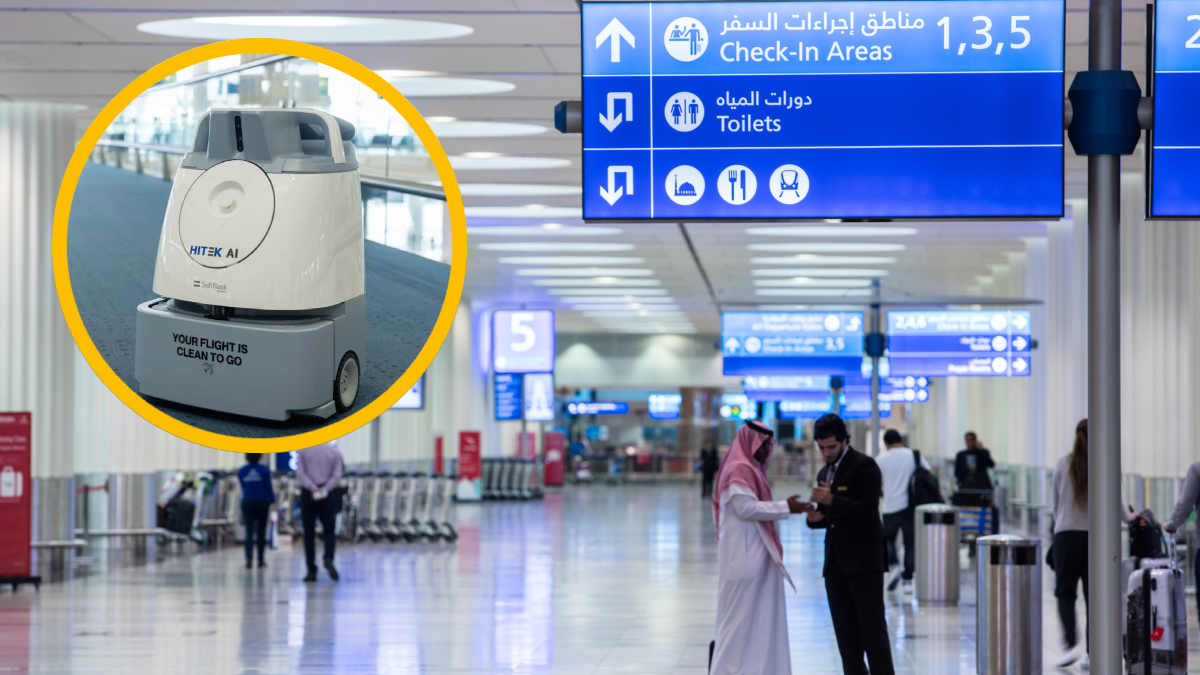

More than 30 autonomous cleaning robots are now deployed across Dubai’s airport network, marking one of the largest robotics-led cleaning operations in the Middle East’s aviation sector. The machines are active in Terminal 1, Terminal 2, Concourse D, Dubai Cargo Village, and Al Maktoum International Airport (DWC) under a five-year facilities management contract with Farnek.

The rollout is part of a wider push to modernize airport operations through automation and data-driven systems, with the robots working alongside Farnek’s in-person teams through the company’s Hybrid Unit model. By integrating technology, digital platforms, and sustainability features, the setup aims to deliver uniform cleaning standards while easing operational pressures on staff.
Essa Al Shamsi, Senior Vice President – Terminal Operations at Dubai Airports, said the shift toward robotics is anchored in operational efficiency. “The decision was driven by a simple goal – to make our operations smarter, more efficient, and more sustainable. Cleaning robots help us deliver a consistent level of service across the airport while using resources more efficiently. It’s part of how we’re applying technology to improve both the guest experience and the working environment for our teams, in line with Dubai Airports’ smart airport strategy and long-term sustainability goals.”

Farnek’s Group CEO Markus Oberlin highlighted the scale of the programme. “This is one of the largest robotic cleaning programmes in the Middle East’s aviation sector. It positions Dubai Airports as a global reference for smart FM integration — combining automation, digital platforms, and sustainability under one operational model.”
Oberlin added that the partnership’s extension reinforces the momentum behind the project. “The contract renewal marks a new chapter — one built on proven partnership, smarter processes, and a shared drive for continuous improvement. What we’ve achieved together is not just automation; it’s a model for how intelligent FM can operate at scale.”
Dubai Airports and Farnek are now evaluating next-generation robotic innovations, artificial intelligence tools, and sustainability metrics intended to build a real-time, adaptive cleaning ecosystem that responds to passenger movements and operational needs.
