




A resolution produced through a series of consultations across Mindanao is set to be forwarded to the United Nations Committee on Decolonization for possible deliberation, according to a source cited by Daily Tribune on Wednesday.

The source, identified as a United Nations official based in New York, said the consultations form part of the procedural requirements before the UN can consider questions related to Mindanao’s status, including arguments for recognition as a belligerent entity under international law.
“It will need only one UN member country to endorse or recognize the independence of Mindanao to start the decolonization process,” the source said.
The resolution was approved during a consultative meeting at the Limketkai Luxe Hotel in Cagayan de Oro City, where participants endorsed a peaceful campaign seeking to separate Mindanao from what organizers described as “Manila imperialism” and to pursue recognition as an independent federal state within existing international legal frameworks.
Organizers said the measure emerged from the ongoing Mindanao State of the Nation Conference, which convened leaders from Northern Mindanao provinces and focused on consolidating regional positions on political and economic concerns affecting the island.
In its text, the resolution frames Mindanao’s push as a response to long-standing economic and political conditions, calling for alliances among Mindanaoans and advocating nonviolent methods to pursue self-determination. It argues that unity among civic groups and communities is essential to address what it describes as systemic inequalities and development gaps.
The document further states that the resolution was formally adopted on 27 December 2025 during the People’s Consultative Conference in Cagayan de Oro City.
Organizers added that the measure will next be presented to a People’s Congress, with Cagayan de Oro City and Tagum City in Davao del Norte identified as possible venues.
Parallel consultations held in Western, Central, and Northern Mindanao reflected similar views, with participants emphasizing that political transition and claims for independence need not involve armed conflict.

Ranque said even the mainstream Moro National Liberation Front (MNLF), during a consultative conference at Jonel Hall in Tacurong City, Sultan Kudarat, submitted a resolution supporting a peaceful path toward Mindanao independence modeled on Kosovo’s experience.
“Armed struggle is already obsolete. We join the call for independence peacefully using the Kosovo model, urging the United Nations to conduct a plebiscite and let the people decide,” the resolution said.
“Armed struggle is already obsolete as proven in Syria and other countries. We adopt the peaceful strategy used by Kosovo in attaining self-rule,” it added.
The MNLF’s position followed earlier developments in which its founding chairman, Nur Misuari, proclaimed Mindanao’s independence in 2013 after peace negotiations with the Philippine government collapsed following the termination of talks on the 1996 agreement brokered by the Organization of Islamic Cooperation.
After that declaration, the MNLF flag was raised in Davao City, which was named the capital of the Bangsamoro Republik of Mindanao, before a subsequent attempt in Zamboanga City was blocked by government forces, resulting in weeks of fighting.
Organizers of the current consultations said the process is intended to produce a unified regional stance on national governance issues that they argue have led to Mindanao’s marginalization in development planning.
The consultations have so far been conducted in Sultan Kudarat for Central Mindanao and the Bangsamoro Autonomous Region, as well as in Northern Mindanao, with the final session scheduled in the Caraga region in January.
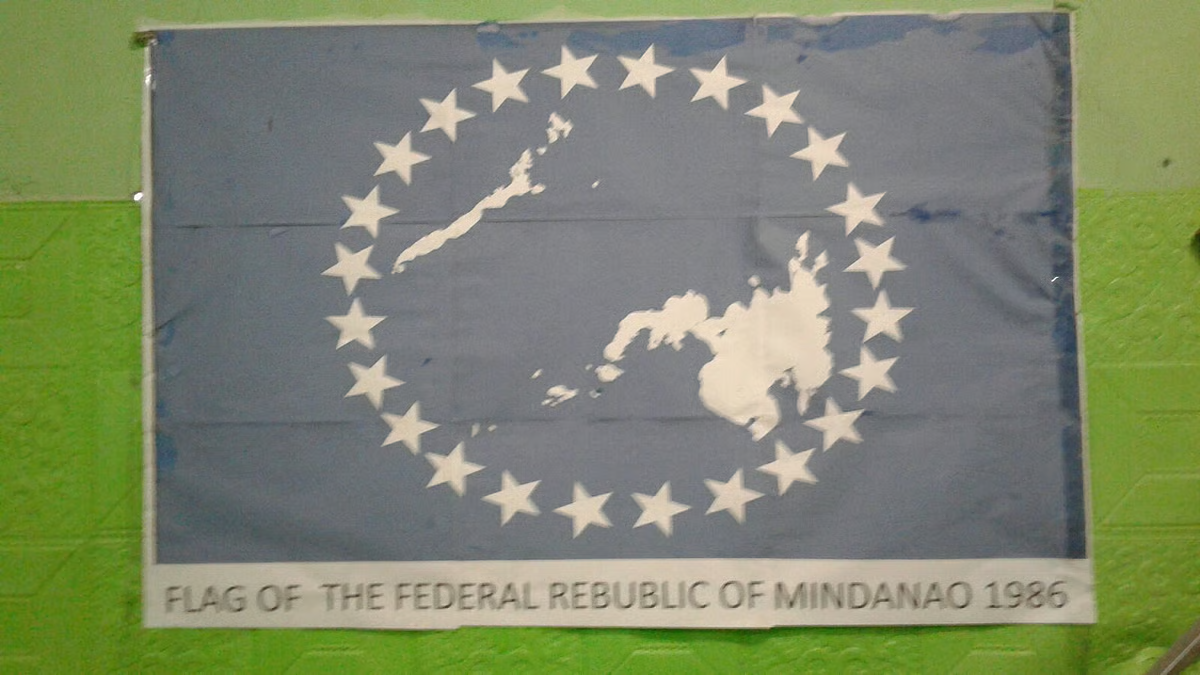
The idea of Mindanao independence traces back to 1986, when the late lawyer Reuben Canoy convened a convention to advance the cause, while a founding member of the Mindanao Independence Movement said the initiative could gain new legal standing if any sovereign state formally recognizes Mindanao as independent, potentially conferring belligerent status under international law.
