



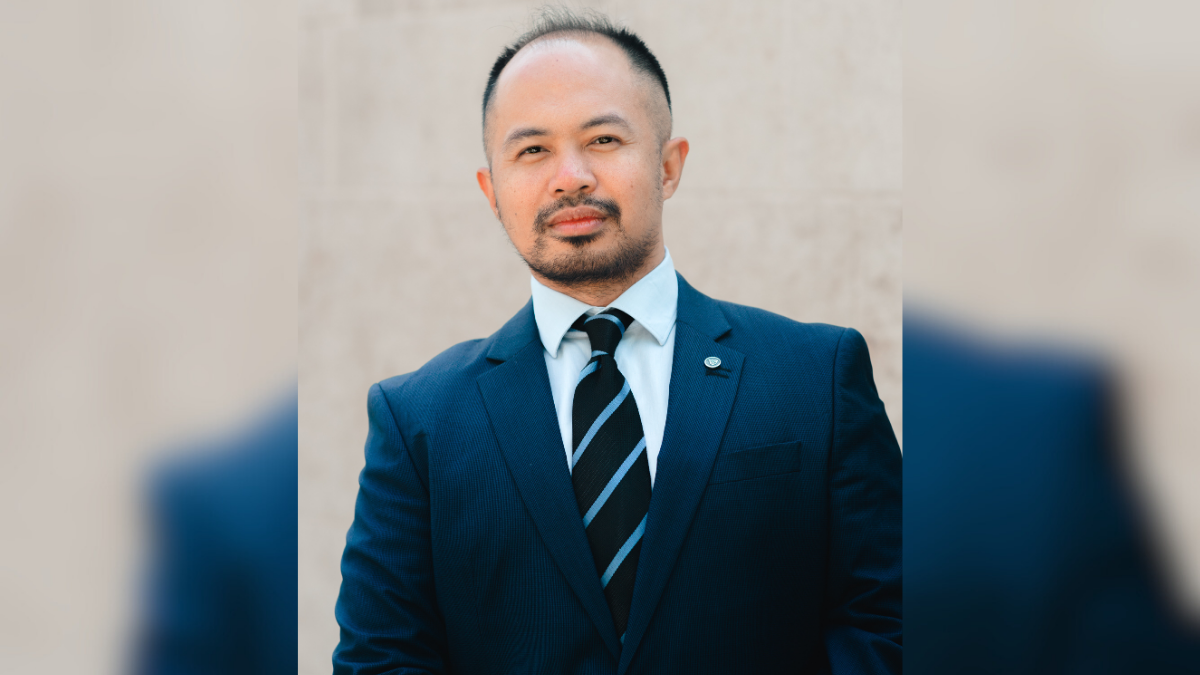

Some career shifts happen slowly, almost quietly—until one day you look back and realize you’ve crossed into an entirely different world. Novie Jay Onor, RN, USRN, Esq. knows that feeling well, having built a life that moved from hospital corridors to courtrooms, and from bedside care to cross-border legal work that now shapes the futures of migrants navigating the same leap he once made.

His story is not the usual “straight line to success” narrative. It is a journey marked by distance, sacrifice, and a constant return to purpose—one that began in a small town in Cotabato and expanded into a professional life spanning New Zealand, Australia, Paris, and eventually New York.
And through it all, he never stopped carrying the weight of what it means to be Filipino abroad.
A dream delayed, not denied
Onor grew up in Magpet, Cotabato, where practicality often decides the direction of ambition. Like many Filipino families, his saw nursing as the surest path forward. But inside him was another dream waiting patiently for its turn.
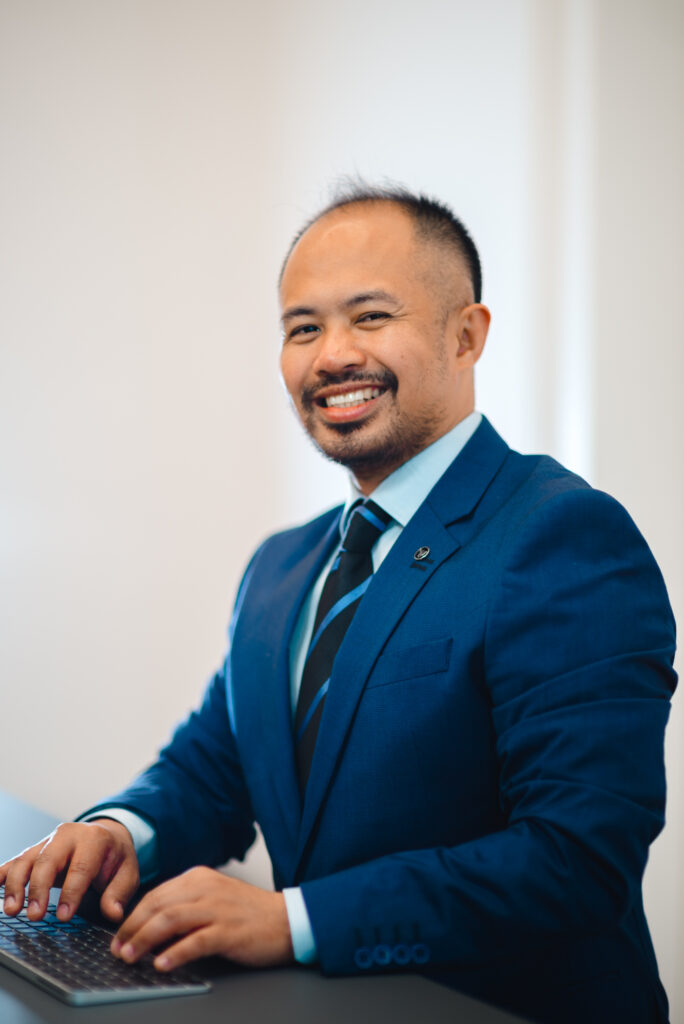

“My journey has not been linear. It came with detours, roadblocks, and reinvention,” he shared. “I grew up in a small town in Cotabato called Magpet, where my parents encouraged me to become a nurse, even though I had always dreamed of becoming a lawyer.”
He followed the path laid out before him, completing his nursing degree in the Philippines and beginning his career at St. Luke’s Medical Center—one of the country’s most respected hospitals. It was a strong start, but also a stepping stone to a larger life abroad. Nursing opened the door to New Zealand, then Australia, as he pursued opportunities that countless Filipino healthcare workers also chase: better pay, career growth, and a future that could support not only themselves, but their families back home.
Along the way, he discovered what migration truly demands.
“Nursing taught me discipline, empathy, and resilience,” he said. “Migration taught me humility.”
That humility, however, did not weaken him. It sharpened him.
Studying law while carrying the weight of responsibility
In Australia, the dream he once set aside began to resurface. The calling to law, he said, came back strongly enough that he decided to do what most would consider impossible: work full-time as a nurse while studying law full-time.

“I worked full-time as a nurse while studying law full-time, supporting both myself and family back home,” he said. “It was demanding, but purpose has a way of carrying you through.”
The sacrifice was not only academic. It was emotional and financial, rooted in the familiar OFW reality of balancing personal ambition with the responsibility of being someone’s lifeline.
For Onor, nursing and law were not separate identities. They were connected by something deeper: service. One involved caring for patients in vulnerable moments. The other would eventually mean protecting people navigating high-stakes decisions—visas, contracts, relocations, and the fear of making one wrong move that could cost years of effort.
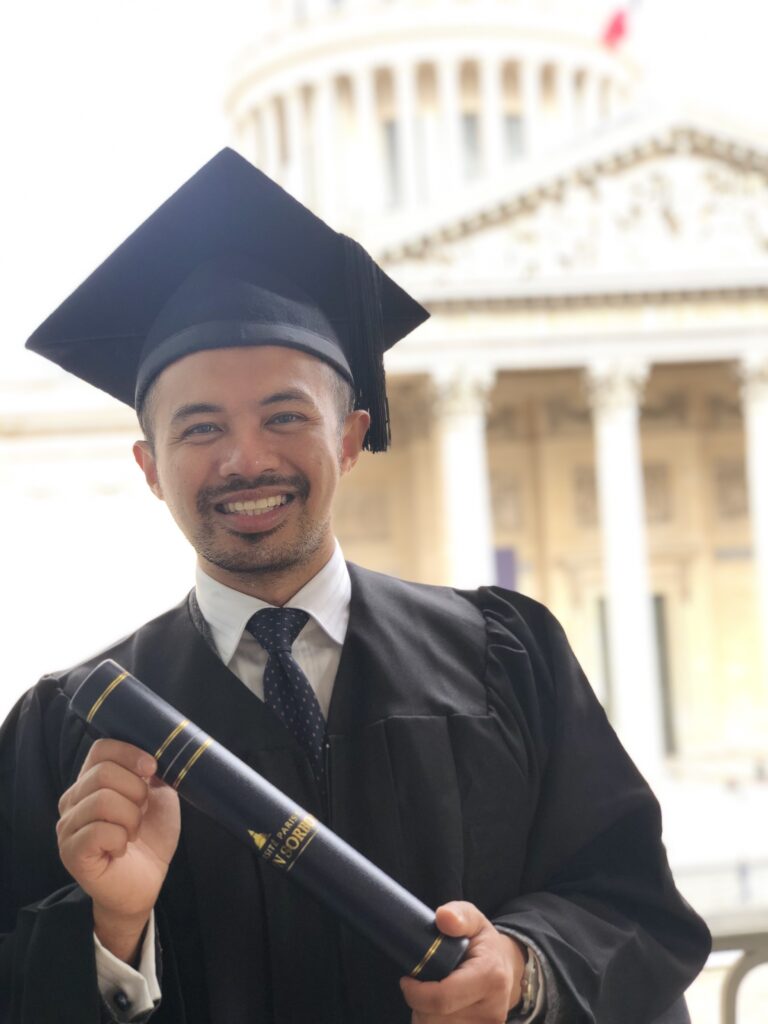
His legal journey did not stop in Australia. It expanded into Europe, taking him to Paris, where he studied at Université Paris 1 Panthéon-Sorbonne and worked across multiple jurisdictions.
“I later studied in Paris at Université Paris 1 Panthéon-Sorbonne and worked on international contracts and cross-border matters across France, Belgium, Luxembourg, the UK, and Germany,” he said.
It was global exposure that would ultimately lead him to pursue admission to the New York Bar—another leap, another reinvention.
Finding his place at the intersection of healthcare and law
When Onor finally became a lawyer in New York, the achievement carried more meaning than a title. It felt like a convergence of everything he had lived through.
“When I finally became a New York lawyer, I realized something important: every chapter of my life had been preparing me for work that sits at the intersection of healthcare, law, and global mobility,” he said.
Today, he leads ONOR Immigration Law, a New York-registered U.S. immigration law firm focused on federal immigration work, while also running ONOR Advisory, an Australian-based consultancy supporting broader migration realities—from credentialing and education pathways to workforce mobility strategy and compliance across the Asia-Pacific.
His work is not just about approvals. It is about protecting migrants from the messy, fragmented systems that often exploit their lack of information.


“I built both platforms because I saw a gap between legal theory and lived reality,” he said.
For him, the problem was clear: migrants often receive advice in pieces. One person talks about visas, another about employment, another about licensing. But in real life, these issues collide all at once.
“Most migrants receive fragmented advice: one person handles visas, another contracts, another career decisions. But immigration affects everything at once: employment, timing, finances, and family,” he explained.
His response was to create a structure where migrants could receive guidance that was not only legally sound, but realistic and strategic.

“The goal was simple: remove silos and replace them with coordinated, human-centered strategy,” he said.
The invisible burdens Filipino migrants carry
Onor’s dual background as a nurse and lawyer gives him an unusually grounded perspective. He understands the pressures Filipino migrants face not just professionally, but emotionally—because he lived them himself.
“There are several layers,” he said, when asked about the common challenges Filipino professionals face abroad.
He pointed first to something deeply cultural: the lingering effects of colonial mentality.
“As a nation shaped by centuries of occupation, many Filipinos subconsciously undervalue themselves,” he said. “We forget our strengths: resilience, attention to detail, service mindset, adaptability, and emotional intelligence.”
Then there is financial literacy—another issue that can quietly derail even the most hardworking migrant.
“Many Filipinos grow up in survival mode. Saving, investing, and long-term planning are rarely taught,” he explained, adding that this makes people vulnerable to exploitative contracts and rushed decisions driven by urgency.
But perhaps the most familiar weight is the pressure to succeed for family back home.
“That sense of responsibility can push people to accept unfair terms just to ‘make it work,’” he said.
In his work, he sees these patterns most clearly in healthcare migration: agency contracts with penalties, unclear pathways, and misinformation that spreads quickly through social media. And when the process is already overwhelming, migrants often fall into the trap of waiting too long.
“Starting early gives you leverage. Waiting usually costs more,” he said.
Redefining success through ethical migration
Onor’s approach to immigration law is rooted in something many migrants wish they had: someone who sees them as human beings first.
“I treat every case as both a legal matter and a human story,” he said.
His goal is not to sell false hope, but to provide clarity. That means setting realistic expectations, identifying risks early, and refusing shortcuts that compromise integrity.
“It also means advocating for fair employment terms and helping clients understand their rights, not just their obligations,” he said.
Because of his healthcare background, he is particularly sensitive to the emotional toll of migration—burnout, displacement, and the invisible fear of getting everything wrong.
“My role is to steady that journey,” he said. “I want clients to feel informed, protected, and respected, not rushed or reduced to paperwork.”
For Onor, success is not just obtaining a visa. It is arriving prepared, supported, and able to build a sustainable life.
A pride built from many quiet victories
When asked about the moment he felt most proud as a Global Filipino, Onor did not point to a single achievement. Instead, he described pride as something cumulative—built through the lives he has helped reshape.
“Every time a nurse signs a fair contract. Every time a family reunites. Every time someone avoids a costly mistake because they sought guidance early,” he said.
He takes pride in building a cross-border practice grounded in Filipino values, and in representing Filipino excellence in spaces where migrants are often underestimated.
“I built a cross-border practice rooted in Filipino values: resilience, service, and excellence,” he said.
He has also translated his life into writing through his memoir, Noble and Honorable Adventures, a personal reflection on identity, love and loss, and reinvention.
“It is for anyone navigating change, migration, or reinvention,” he shared. “Many readers tell me they see their own struggles in its pages, and that reminds me how universal our journeys really are.”
