




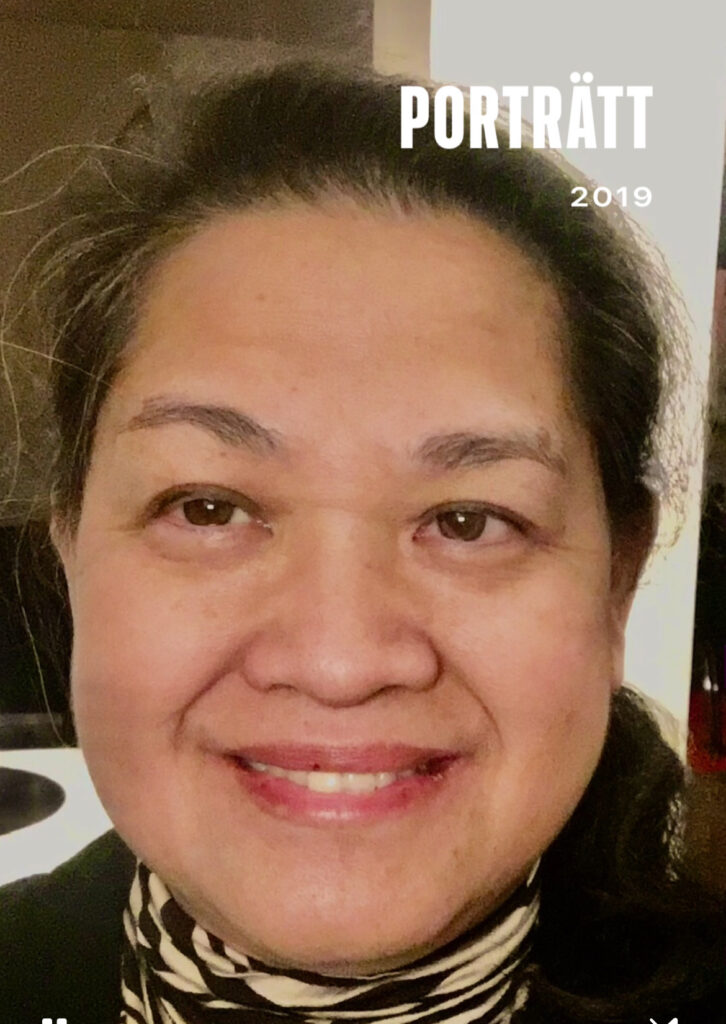
Running a small convenience store might not seem like the usual setting for political influence. But for Devinia M. Fatalla, a 60-year-old entrepreneur and advocate based in Skövde, Sweden, her shop became more than just a livelihood—it was her war room. Between customer greetings and stocking shelves, Devinia waged a years-long digital and political campaign that helped reverse a government decision thousands of kilometers away from her adopted home.

Her name may not appear in the headlines of international news, but her relentless efforts were recognized in 2025 by none other than Urban Ahlin, Sweden’s Ambassador to the USA, who certified that she was “the first Filipina who lobbied victoriously for the reopening of the Embassy of Sweden in Manila.”
Finding her voice in a foreign land
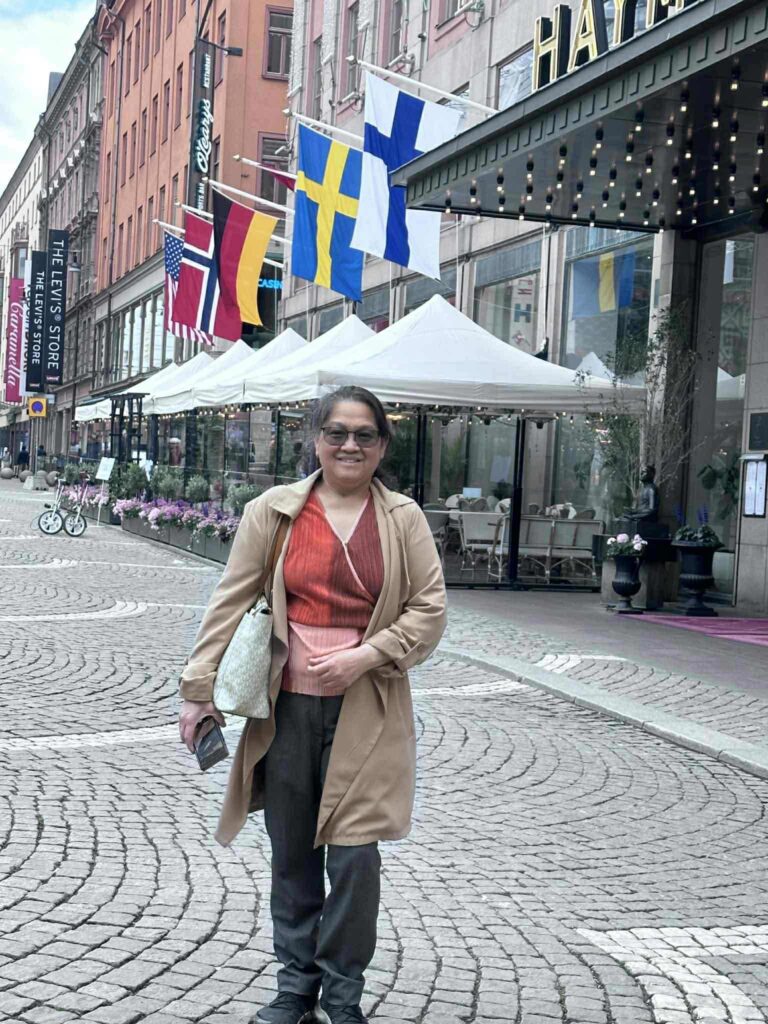
Devinia moved to Sweden in 1984 after graduating cum laude with a Bachelor of Accountancy degree from the Polytechnic University of the Philippines. Settling in Skövde with her then Swedish pen-pal-turned-husband, she faced the challenges of starting anew in a country with a vastly different culture, climate, and language. “Swedish is one of the most difficult languages in the world,” she shared with TGFM. “Homesickness was depressing. I lived in a small city of 10,000 inhabitants, and I was the only Filipina back then.”
She eventually earned a University Diploma with a specialization in Business Administration and worked for several companies as an accountant before launching D’ Mix Enterprise AB, her own convenience store, in 1995. The store became her sanctuary, a place where she had no boss and could pursue causes that mattered to her—like reconnecting Sweden and the Philippines through diplomacy.
Though the Embassy of Sweden in Manila had served as a bridge for Filipino-Swedish relations, it was closed in 2008 by then-Foreign Minister Carl Bildt under a cost-cutting policy. The closure, along with three other missions worldwide, deeply affected many in the diaspora and hindered Sweden’s direct engagement with the Philippines.
“At first, we sent appeals and collected about 1,000 signatures asking the Swedish government not to shut down the embassy,” Devinia said. “But we only received explanations. No mercy. The decision felt final.”
Turning digital resistance into political momentum
Determined not to give up, Devinia channeled her frustrations into the digital sphere. She actively engaged on Carl Bildt’s blog “Alla Dessa Dagar” under pseudonyms like 17000swedishcitizenofphilippineorigin and bestofmankind, where she debated, posted appeals, and challenged the rationale behind the embassy closure. Her blog, “Att stänga ambassader – Carl Bildts varumärke”, became a digital archive of her resistance.
“I knew it was almost impossible to persuade him to revoke his decision, but I wanted to catch his attention and fight for what is right,” she explained. For nearly eight years, this became part of her daily life—between handling customers and restocking her store, she wrote, argued, and inspired.


Her turning point came when she discovered Urban Ahlin, then the Shadow Foreign Minister and a member of the Social Democratic Party. Unlike the ruling Moderate Party, the Social Democrats were more aligned with her values. Without being a party member, Devinia attended the Social Democratic Congress in 2008 just to meet him. After days of unanswered calls, she took a seat next to him during the event, and he instantly recognized her.
“Of course he knew me—he had read my comments on Carl Bildt’s blog,” she said, recalling their conversation. The brief but meaningful interaction opened the door to a deeper connection. Devinia joined the Social Democratic Party, became a board member for Socialdemocratic Women in Skaraborg County, and volunteered as spokesperson for foreign issues. “It was not a paid job. It was dedication, commitment, and motivation to influence the reopening of the Embassy of Sweden.”
She taught Urban Ahlin how to use Facebook and Twitter, regularly sent him political articles, and earned his appreciation. In 2013, Ahlin wrote, “Big thank you for all the energy you’re giving me. When we soon present our export initiatives, I hope that you and your friends will be glad.” Eventually, he made a political promise: if the Social Democrats won the election, the embassies—including the one in Manila—would be reopened.
Victory for the people
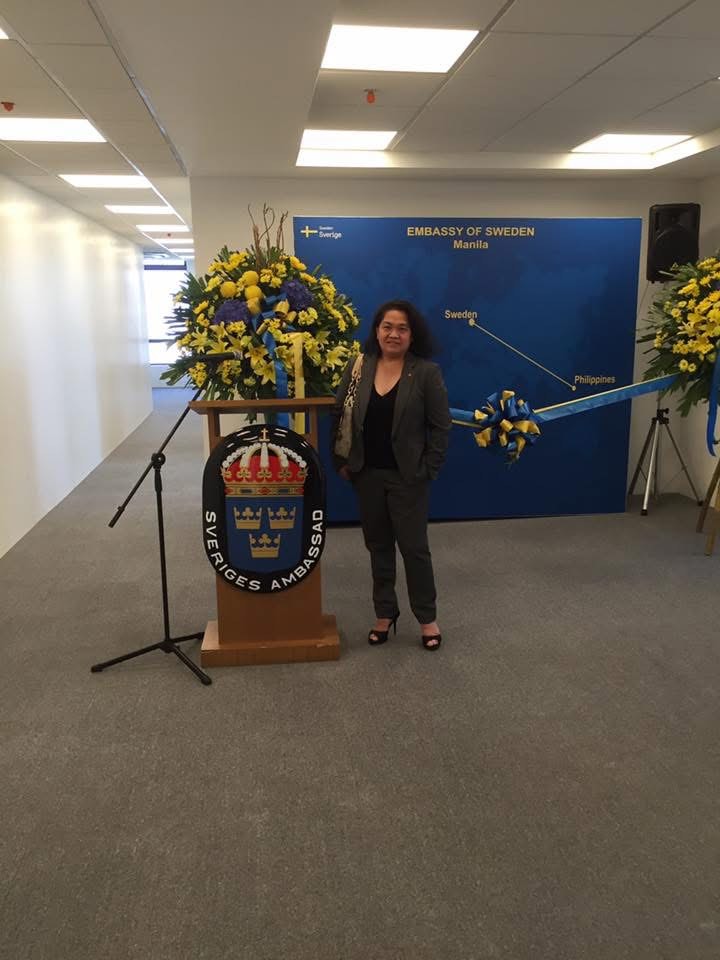
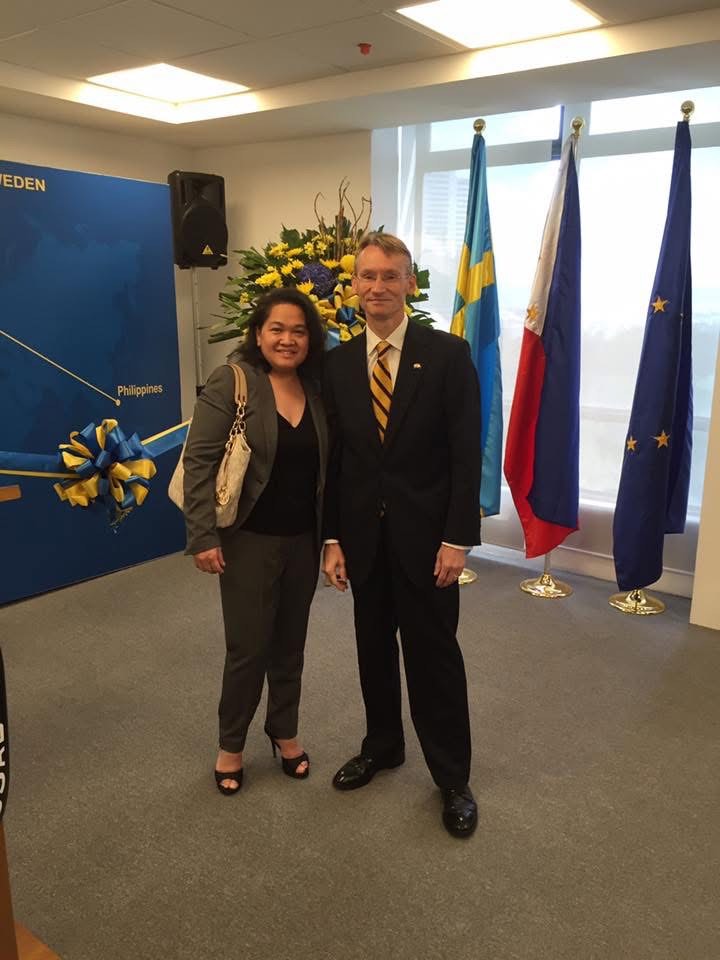
In 2014, the Social Democrats returned to power. And on November 8, 2016, the Embassy of Sweden in Manila was officially reopened. Devinia was invited to the inauguration as a guest of honor. Her years of unpaid, grassroots lobbying had succeeded in reversing a major foreign policy decision.
“I won the battle,” she said, referring to the years of digital dueling, lobbying, and volunteer activism. “Urban Ahlin himself wrote to me in an email: ‘You won.’ That’s all I needed to hear.”
Her efforts not only restored diplomatic ties but also had wider implications. According to Devinia, the reopening had “an invaluable social, moral, and economic impact to the Philippines and Filipinos.” The Philippines, in return, reopened its embassy in Stockholm, which provided cultural and consular support to OFWs and Filipinos married to Swedes.
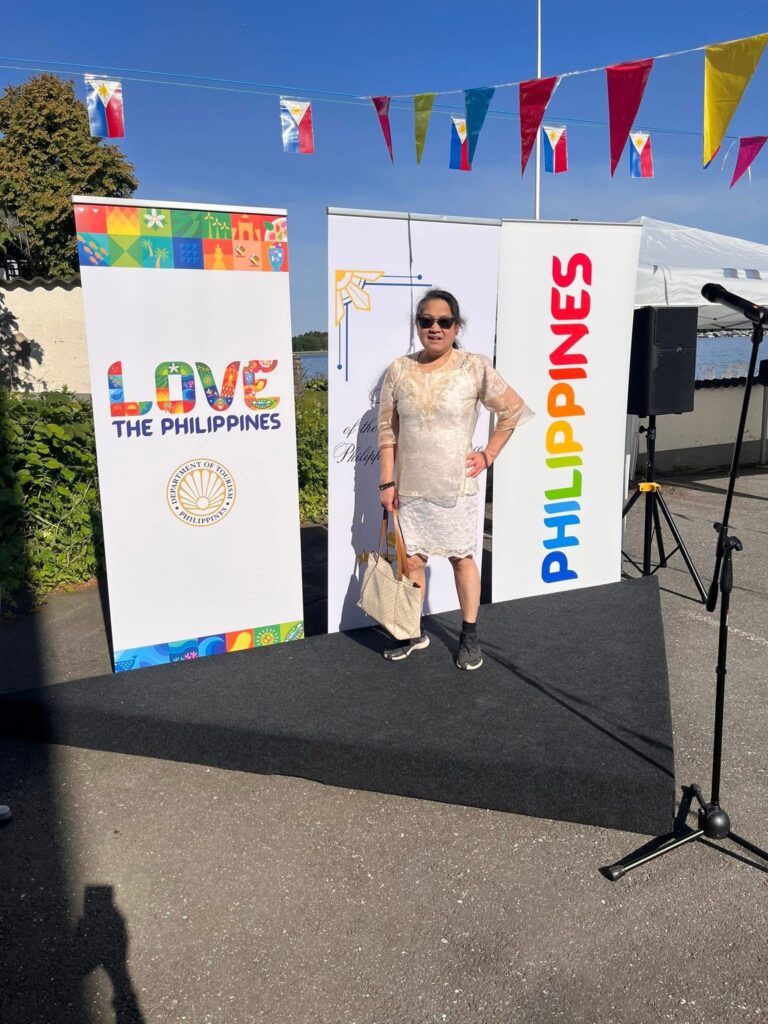
Now, after four decades in Sweden, Devinia continues to run her store, speak up on social media, and share her advocacy for democracy, human rights, and equality through organizations like Knights of Democracy. Her mantra, taken from Melinda Gates’ high school valedictorian speech, is something she lives by: “You are indebted to life until you help some less fortunate person, just as you were helped.”
Looking ahead, she dreams of retiring in the Philippines but remains active in her community and in online discourse. She advises fellow OFWs to stay connected to their roots, saying, “Visit the Philippines once a year if possible. Surround yourself with Filipino friends and foreigners who can make you happy. Smile even if you are hurting. Be honest. Be friendly. Believe in yourself!”
