


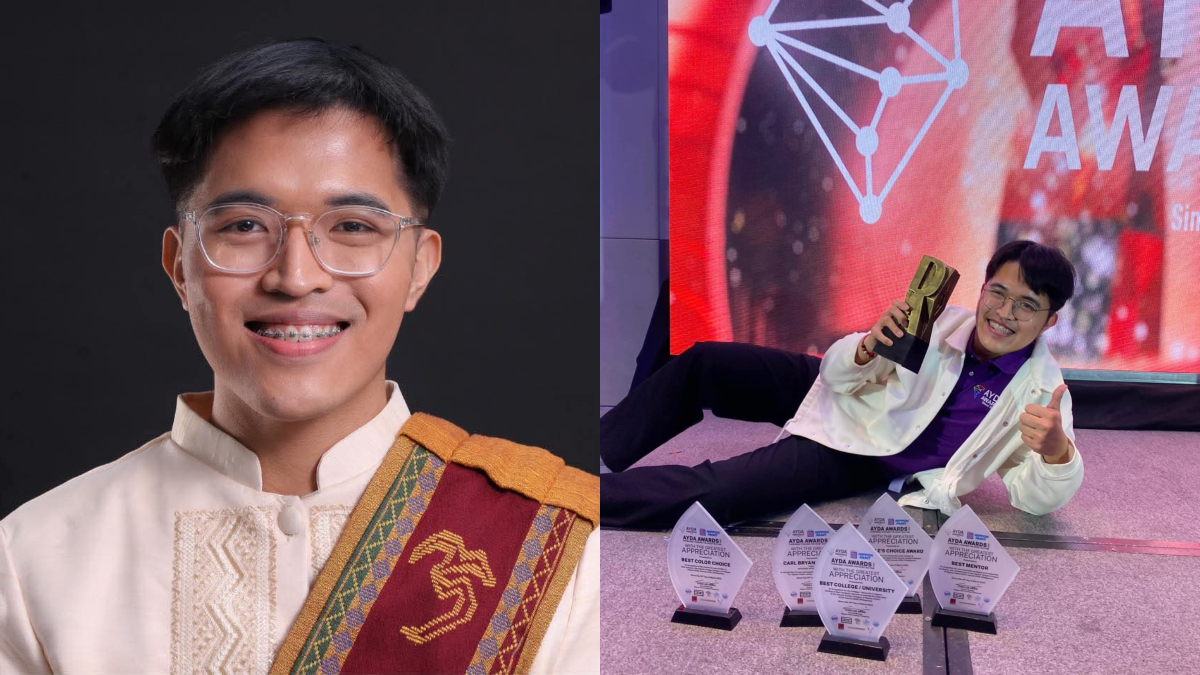

For many young designers, success comes after years of exploration. But for Carl Bryan Medina Valdez, that moment arrived early—through a series of bold choices, meaningful collaborations, and an unwavering belief that design should make people feel cared for.

Growing up in Dubai, Carl never imagined that interior design would become his life’s work. “Honestly, when I graduated from The Philippine School Dubai, I wasn’t completely sure yet what I wanted to pursue,” he shared with TGFM. “But when I moved to the Philippines for Senior High, I met a friend who mentioned he was planning to take up Architecture in college, and that really sparked my curiosity about design and the built environment.”
That spark turned into a calling when he entered the University of the Philippines Diliman. Although Architecture was his first choice in the UPCAT, he was accepted into Interior Design instead—a twist of fate that would define his path. “When the results came out, I was accepted into the Interior Design program, and that turned out to be one of the best things that ever happened,” he said. “As I learned more about the field, I realized how deeply Interior Design connects to people’s everyday experiences and how it shapes comfort, behavior, and emotion on a very human, personal scale. From then on, I never looked back.”
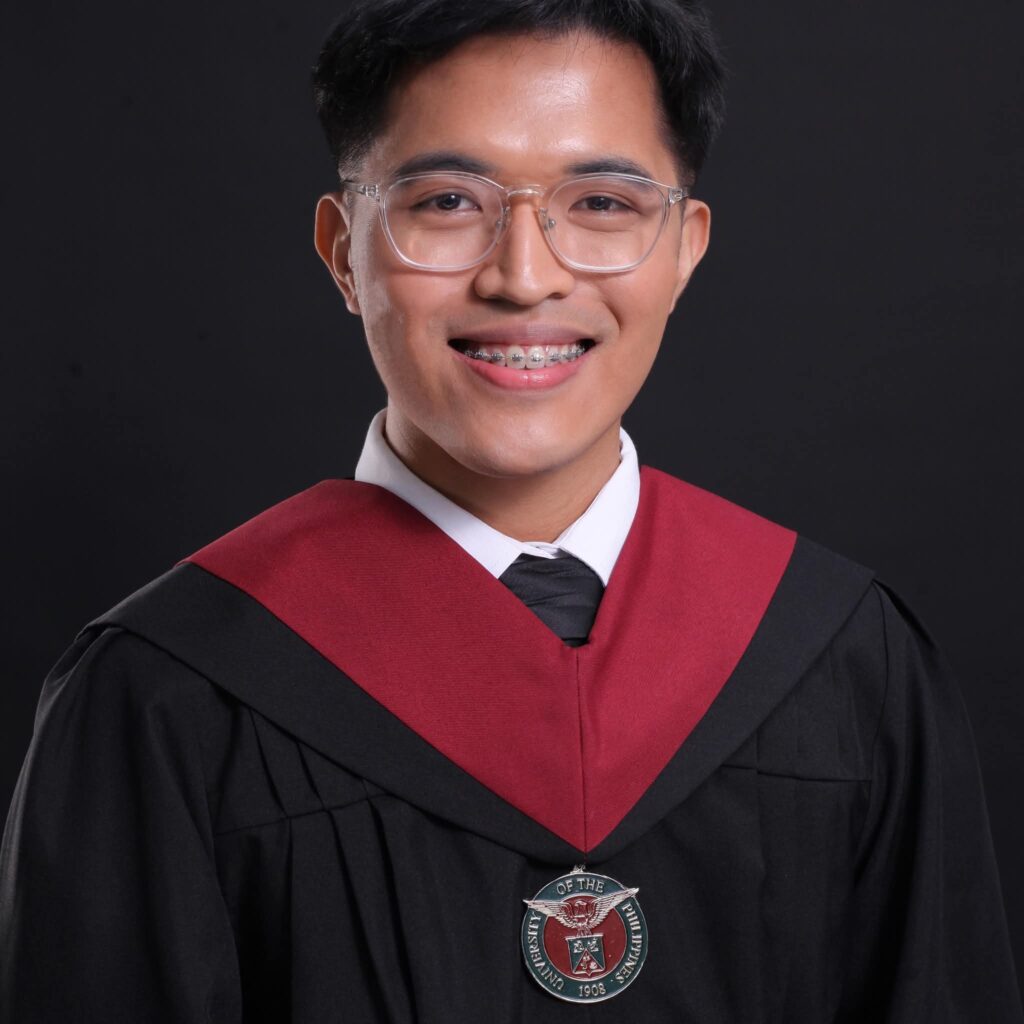
In 2024, Carl graduated magna cum laude from the University of the Philippines, already with a string of awards and a growing reputation in design circles. His academic journey reflected a blend of curiosity, empathy, and purpose—traits that continue to define his work today.
Creating awareness through design
Carl’s breakthrough came in 2022, during his college years, when he developed Project Kandili, a concept that merged creativity with social responsibility. “Kandili started from my desire to show how design can play a role in addressing social issues, particularly climate change,” he explained. “I was inspired by how EXPO 2020 created interactive spaces that didn’t just inform people but also moved them to care and take action. I wanted to bring that same sense of purpose and awareness into a Filipino context.”
Project Kandili: Temporary Structure / Permanent Impact was built around the Filipino word kandili, meaning “to look after or take care of those who are young and vulnerable.” The project envisioned a compact, multi-sensory space designed to foster empathy, education, and collective action in response to climate change. “It aims to remind Filipinos that while the effects of climate change are already severe, displacing families and taking thousands of lives every year, hope and change are still possible if we act collectively,” he said.
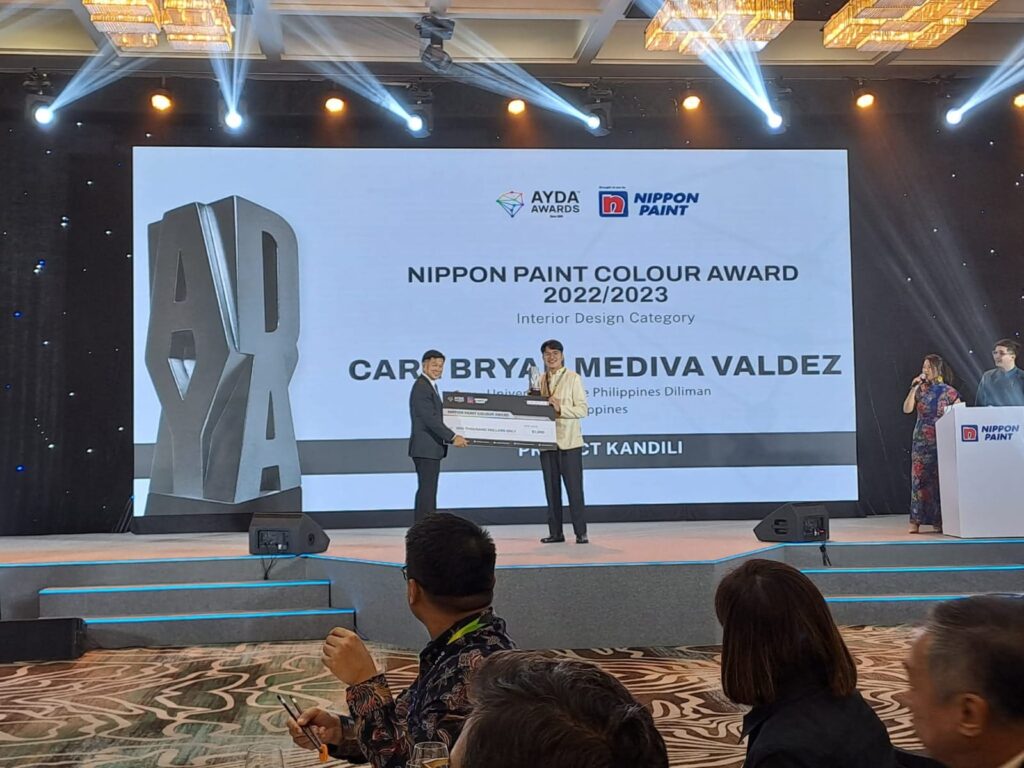
The project went on to win the 2023 Asia Young Designer Award (Interior Design Category), the People’s Choice Award, and Best in Color Choice, earning Carl recognition as one of the brightest young minds in design. He later represented the Philippines at the AYDA International Awards in Vietnam, where he received the Nippon Paint Colour Award (Interior Design).
“It was truly a life-changing experience,” he said of his international win. “Representing the Philippines on the international stage and receiving the Color Choice Award at the AYDA International Awards in Vietnam was both an honor and a humbling moment for me. Beyond the recognition, what made it most meaningful was the opportunity to learn from fellow designers across Asia. It reminded me that design is a shared language that connects us across borders and allows us to imagine better futures together.”
Building Studio CMV and reimagining spaces with empathy
In early 2025, Carl decided to take a leap of faith and founded his own company, Studio CMV, working with clients in both the Philippines and the UAE. “Studio CMV actually began from my passion for visualization, rather than design itself,” he shared. “The idea took shape after a short working experience in Dubai, where I saw how specialized and valued visualization services were in the design process.”
He noticed a gap back home and set out to fill it. “In the Philippines, this specialization wasn’t as established yet, and there was a real opportunity to fill that gap,” he said. “When I returned home, I started offering visualization services to different clients. At first, many were hesitant, thinking their in-house designers could already do the same thing. But through persistence and research, I was able to show them that dedicated visualization work not only enhances quality and realism but also allows design teams to focus more on conceptual thinking and client experience.”
Today, Studio CMV stands as a growing practice built on collaboration and creativity. “Our approach has always been human-centered,” Carl emphasized. “Whenever we start a new project, we make it a point to step back and imagine how people will actually experience the space—how they’ll move, feel, and interact within it. It’s about understanding emotion and behavior as much as it is about form and function.”
For Carl, storytelling is at the heart of design. “At Studio CMV, we believe that storytelling is essential to good design. Every project tells a story—one that allows clients to see themselves in spaces that don’t exist yet. By grounding our work in empathy and narrative, we’re able to create visuals and designs that truly resonate with people and reflect their needs and aspirations.”
Reimagining EDSA and empowering the next generation
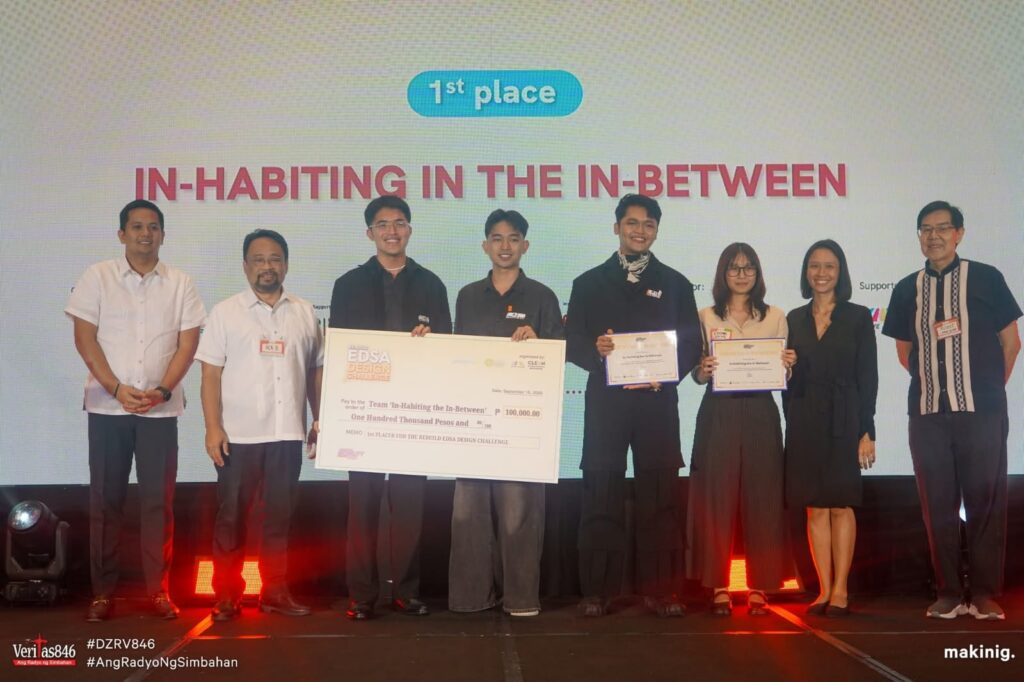
Later in 2025, Carl joined forces with fellow AYDA Gold Winners—Aldrich Remot and Adrian Guce—for the Rebuild EDSA Design Challenge. The competition brought together some of the brightest young minds in Philippine architecture and design to rethink one of Metro Manila’s most congested thoroughfares. Their entry, “In-Habiting the In-Between,” won 1st Prize and the People’s Choice Award, triumphing over some of the country’s top architectural firms.
“Collaborating with my fellow AYDA Gold Winners was such a fulfilling experience,” he recalled. “One of my teammates, Aldrich, was actually my architecture counterpart during AYDA 2022—we both represented the Philippines in Vietnam, so we already had a great connection and shared creative chemistry. AJ, on the other hand, we met during the 2024 AYDA awarding ceremony, and the three of us quickly clicked.”
Their project sought to transform EDSA from a traffic-clogged corridor into a space that fosters wellness, balance, and connection. “We wanted to tell a story about how EDSA could be reimagined as an urban lifeline that connects people, communities, and the rhythm of city life,” Carl explained. “We drew from the Filipino concept of ginhawa, which speaks of comfort, balance, and well-being—values we felt were missing from how we currently experience EDSA.”
He added, “Our proposal revolved around four core ideas: Wellness, by creating more human-scaled and breathable environments; Balance, by harmonizing mobility, commerce, and public life; Flow, by improving movement and accessibility; and Connection, by strengthening the bonds among people and communities. Ultimately, our vision was about care—care for the people who move through EDSA every day, for the stories embedded in its history, and for the future generations who will inherit it.”
