



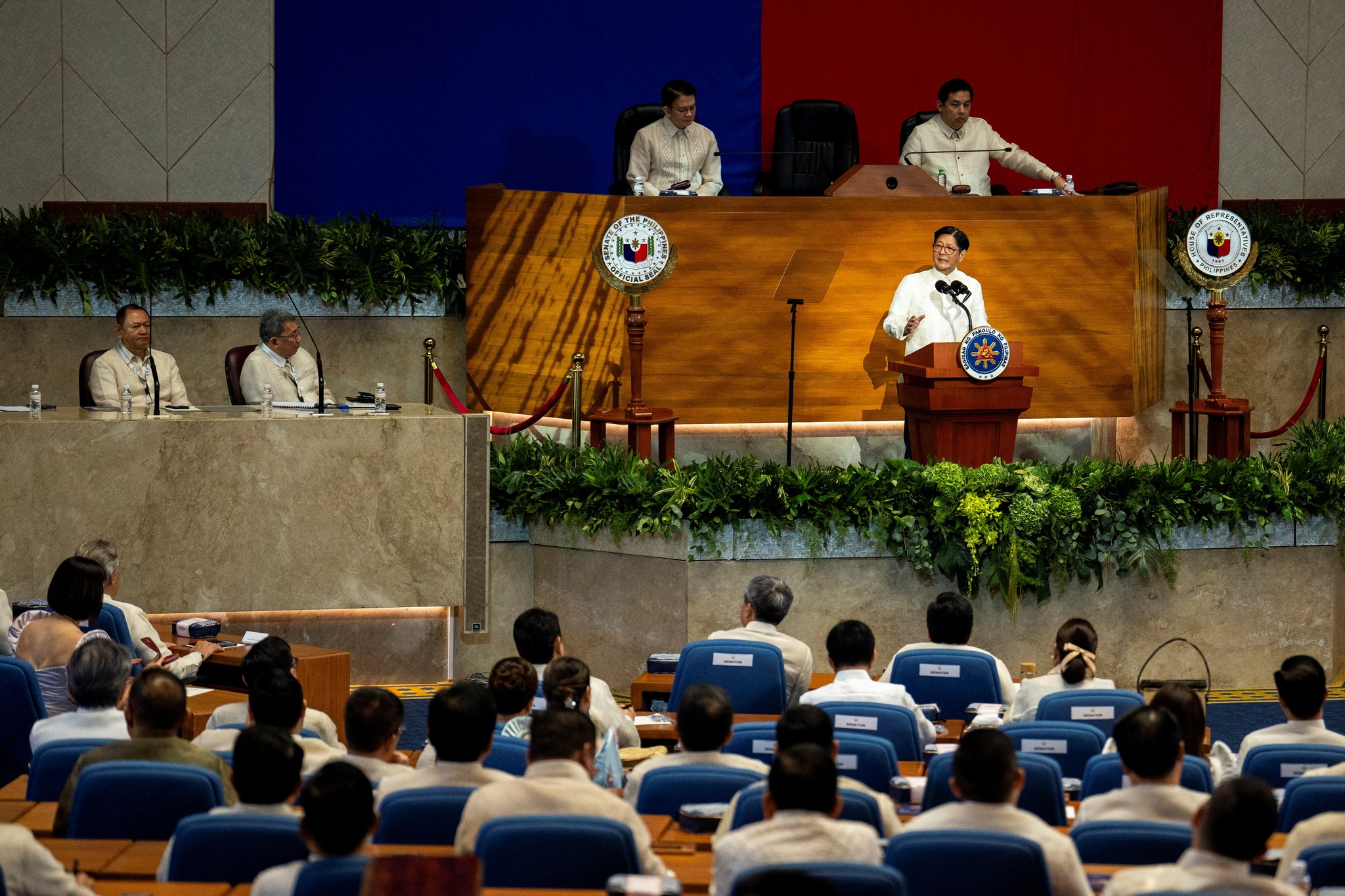

President Ferdinand Marcos Jr. has pledged to complete nearly 200 new power plants within the next three years in a bold push to expand the country’s energy capacity and end long-standing power shortages, particularly in rural areas.

Speaking during his fourth State of the Nation Address, Marcos said the new energy facilities are expected to supply electricity to four million homes, 2,000 factories, and 7,000 commercial establishments.
“Sa susunod na tatlong taon, halos dalawandaang planta ang ating tatapusin,” Marcos said, signaling a massive infrastructure rollout aimed at energy security.
Marcos revealed that when his administration began, 5 million Filipino households remained without access to electricity. Half of that figure—2.5 million homes—have since been energized in just three years, he said.

In a move to further democratize access to power, the President announced a large-scale rollout of solar power systems to over a million households. He also highlighted the introduction of a net metering program, which would allow solar-powered homes to sell their surplus electricity back to the grid, promoting energy sustainability and income generation for households.
Addressing recent concerns, Marcos promised that the power crisis in Siquijor would not happen again. He slammed the slow and disorganized response of local energy officials, citing poor generator maintenance and procurement lapses as reasons for the crisis. “Hindi ko palalampasin ang nangyari kamakailan sa Siquijor,” he stressed.
To help ease the burden on low-income families, Marcos said the government is extending the lifeline rate program—subsidizing electricity for the country’s poorest consumers.
Despite having some of the highest electricity rates in Southeast Asia, the Philippines continues to face seasonal power shortages, especially during the summer months. The President said fixing this imbalance remains a top priority.
