



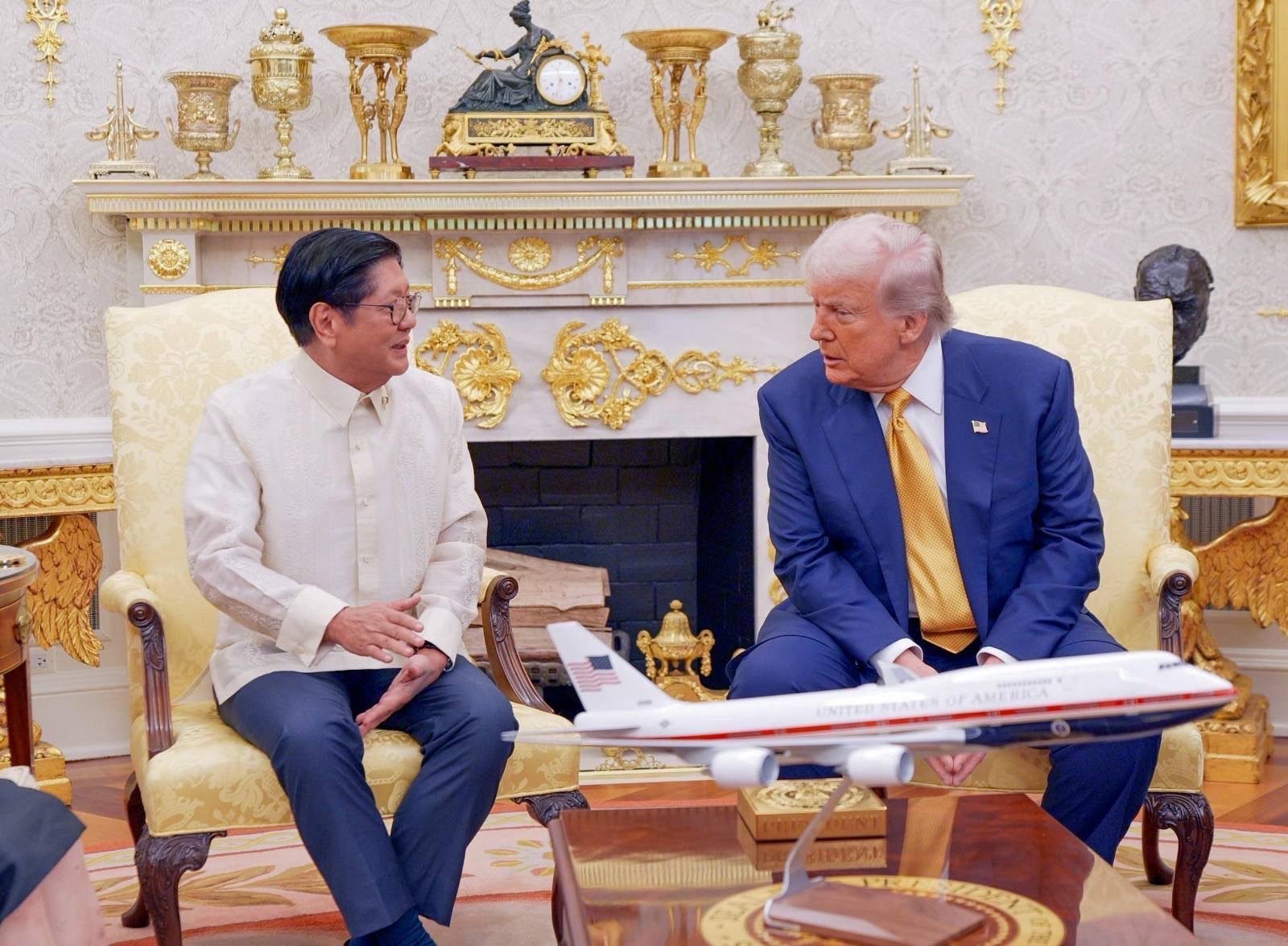

President Ferdinand Marcos Jr. returned to the Philippines on Wednesday night, July 23, expressing gratitude to the United States for its renewed commitment to the country’s development, including a pledged $15 million to boost private sector growth under the Luzon Economic Corridor and $48 million in fresh foreign assistance.

“We will continue to work with the State Department as well with the US Congress for the implementation of these programs,” Marcos said in a message upon arrival.
According to the US Embassy in Manila, the new assistance will support initiatives in energy, maritime security, and economic development. The funding was discussed during Marcos’ meeting with US Secretary of State Marco Rubio on July 21 in Washington, D.C.
Notably, the embassy highlighted that this marks the first announcement of new US foreign assistance for any country since the Trump administration’s realignment of aid policies.
Rubio revealed that the $15 million, if approved by the US Congress, will drive investment in transport, logistics, energy, and semiconductors—sectors identified as critical to job creation and long-term economic resilience in the Philippines.
Marcos’ meetings with Rubio, President Donald Trump, and Secretary of Defense Pete Hegseth reaffirmed what the US described as an “ironclad commitment” to the US–Philippines alliance. The discussions also opened avenues for deeper economic and strategic cooperation.

Beyond government meetings, Marcos shared that his trip yielded more than $21 billion in investment pledges from key players in global investment, healthcare, infrastructure, and semiconductor industries.
“Expanding our economic engagements to provide opportunities for building economic security and resilience was a key point in our discussions,” he said.
The President underscored the importance of the Philippines–US alliance in safeguarding peace in the South China Sea and the broader Indo-Pacific region. During his talk with Trump on July 22, he reaffirmed the two nations’ shared commitment to the Mutual Defense Treaty and stressed cooperation on cybersecurity, energy, and infrastructure resilience.
“The United States is our oldest and only treaty ally, and my visit to meet the new president is important in advancing our historic and dynamic cooperation, mutual respect, and shared strategic interests,” Marcos said.
He also revealed plans to host President Trump in the Philippines next year for the ASEAN meetings, which coincide with the 80th anniversary of Philippine-US diplomatic ties and the 75th year of the Mutual Defense Treaty.
